Dairy farmers fear for their future as costs rise

 BBC
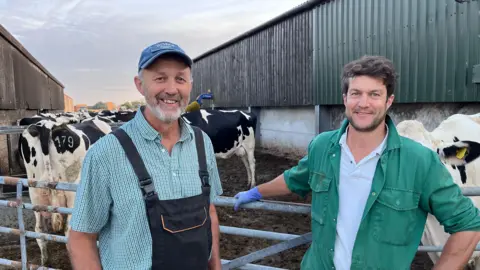
BBCOwners of a family dairy farm in Kent are uncertain whether they can continue for much longer because of numerous pressures facing the industry.
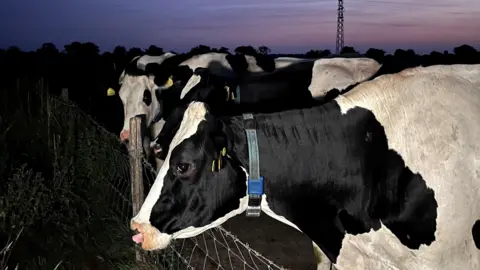
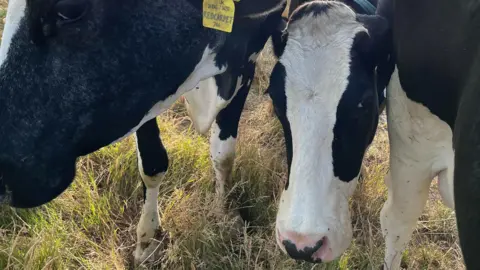
Tumble Tye Farm at Capel-le-Ferne between Folkestone and Dover has a herd of over 260 cows but its owners are struggling due to production costs far exceeding takings.
Fluctuating milk prices mean Rob Warnock, who co-manages the farm with his brother Will, has been facing a "financially tough environment" and "been producing milk at loss since December last year".
Environment Secretary Angela Eagle said: "We are backing our farmers with a record £11.8bn for sustainable and profitable farming over this parliament."
The government said: "Our farmers keep the nation fed, act as guardians of our countryside, and are at the heart of our rural communities across the country".
It added that a "new trade agreement with the EU will make it easier for British food to reach our largest export market".
However, the huge differences in monthly milk prices farmers are paid is making their future uncertain.
Susie Stannard, a dairy analyst from the Agriculture and Horticulture Development Board, told BBC News that while those who supply supermarkets with "retailed aligned contracts" are often paid more than their production costs, it is not the case for all farmers.
Yet those who supply companies which make dairy products such as butter, cheese and yoghurt have contracts aligned to the commodities markets.
A a global surplus means these commodity values "have fallen an awful lot", affecting farmers such as the Warnocks.
Figures published by Defra showed farmers were paid an average of 34p a litre for milk in May 2026. While in 2025, prices peaked at 46p.
Arla, a company owned by dairy farmers, buys milk from Tumble Tye Farm.
It said: "We recognise that farming businesses face different cost pressures, which is why we continually work to deliver a competitive milk price and additional value through the cooperative model, including the annual 13th payment."
However, it is not just falling milk prices that are causing Rob Warnock stress.
He says that fuel costs have gone up 50%, with fertiliser up 30% in the past year.
"At the moment the dairy job is really unsustainable," he said.
"We're having to speak to the bank manager literally just this week to see if we can increase the overdraft so we can pay the bills at the end of the month and you know the business can't go on like that indefinitely."
Finding other people to work on the farm is also proving difficult with other local firms paying more to their workers.
As a result, Rob and his brother work long shifts, which if broken down to an hourly rate would pay them half the minimum wage.
"I understand we have a roof over our head", says Rob, "but we still have huge mortgages to pay and large overdrafts at the bank so it's really really tough at the moment".
His brother Will echoed the sentiment when asked about whether he would like his children to continue the family farming tradition.
"I've got two two young boys, nine and seven, and it would be nice if they were interested and wanted to continue it, but farming is not as appealing as it was when I was young," he said.
"It feels like there's a lot of threats, whether it's climate change, heat waves we've had recently, staff shortages, the prices we're getting paid, all our input costs only ever go up, never come down.
"It's worrying times at the moment and it just feels like we're almost being encouraged not to farm now."
Environment Secretary Angela Eagle believes there is hope for Britain's farmers though, with a "25-year Farming Roadmap" setting out "a clear vision for the future so our farmers can have the confidence once more to invest and feed the nation with pride for generations to come".
Follow BBC Kent on Facebook, on X, and on Instagram. Send your story ideas to southeasttoday@bbc.co.uk or WhatsApp us on 08081 002250.
