Birds eating nurdles could be devastating - charity
Birds eating small plastic pellets spilled into the North Sea could have "devastating consequences", a charity has warned.
Tonnes of the pieces of plastic, known as nurdles, washed up on beaches in north-east England after a crash between two vessels at the Port of Tyne damaged two shipping containers.
The Royal Society for the Protection of Birds (RSPB) said at this time of year, birds were feeding both themselves and their chicks and the pellets could cause choking or starvation as they filled their stomachs.
It also warned the pellets could enter the wider food chain, affecting fish, seals and dolphins. An investigation by the Environment Agency (EA) is under way.
Footage shown to the BBC appears to show seabirds eating them on Low Lights beach in Tynemouth earlier this week.
RSPB marine policy officer Zia Fikardos explained predators - including birds - could eat prey, such as fish, which already had the plastic inside them.
The Tyne Rivers Trust said fish had already been found with nurdles in their innards, calling the situation an "environmental disaster".
Fikardos said birds could also eat the nurdles directly from the sea and beaches.
"If they've been in the marine environment for a long time, they can start to smell like food," she said.
"Plastics have been found in the stomachs of dead seabirds, and essentially, a stomach filled with plastic can't be filled with food."

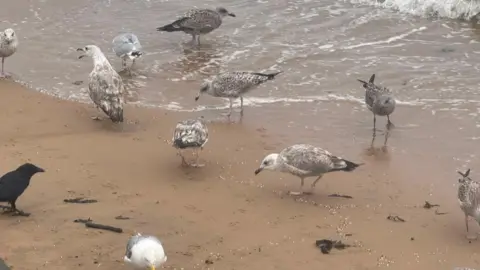 UGC/Sonja Bär
The RSPB said it would be difficult to know the precise impact of the spillage because plastic pollution was "already widespread in our seas and seabirds can travel huge distances".
It also said the impact could take years to emerge, because nurdles were "highly persistent" and could remain in the marine environment for decades if they are not recovered.
In the days after the spill, the plastic pellets were found as far as Northumberland and Sunderland, although Sunderland Council said the area's numbers were lower than elsewhere.
The RSPB noted it had not reported any sick or dead birds at its two nature reserves in the North East, Saltholme and Coquet Island, but it was not its role to monitor the effects of pollution incidents.
Seabird populations were in an "already precarious state" due to "significant pressures from climate change, declining prey availability, disease, bycatch and habitat loss", it said.
The clean-up response has been called too slow by campaigners and North East Mayor Kim McGuinness accused the EA of being "absent".
The Port of Tyne said it acted quickly to contain the spill and the EA said it had been "actively involved from the outset" and was "working closely" with local authorities, the port and other groups.
