Nesting boxes for swifts to be unveiled at church

 Getty Images
Purpose-built nesting boxes for swifts are due to be unveiled at a church.
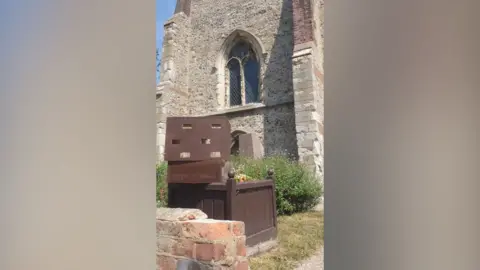
The dozen shelters were made by local volunteers and have been installed at St Peter's Tower in Maldon, Essex.
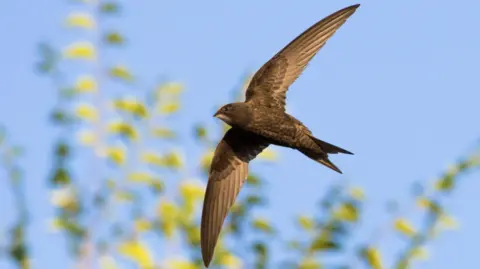
The boxes, which are larger than usual to accommodate a swift's 42cm (16.5in) wingspan, will be unveiled on Saturday afternoon.
John Le Seve from the Essex Swift Recovery Project said they were vital, and thanked those who had helped build them.
 Essex Swift Recovery Project
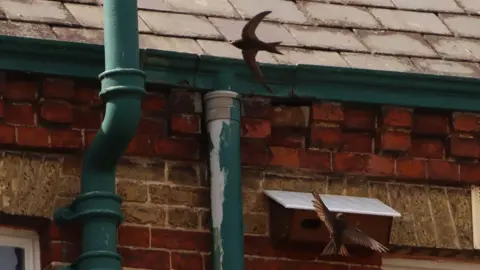
Le Seve told the BBC that swifts' main choice of nesting location - under the eaves of older buildings - was reducing in number across the country due to buildings being renovated and insulated.
But he said in the Maldon area, the swift population was healthy - including at least six nesting pairs at St Peter's Hospital - due to there being more older buildings that have not been renovated, and also because of good local feeding grounds.
The town council said the boxes would be unveiled at 16:00 BST on Saturday afternoon, after which a recording of swift calls would be played "to encourage the birds to investigate their new homes".
 Essex Swift Recovery Project
"When they leave their nests, their wings have got to be strong," Le Seve said, adding that the birds "actually do press-ups in their nests" to strengthen their muscles before they fly for the first time.
Le Seve said he was optimistic the nesting boxes would be successful.
"There's a church in Bury St Edmunds and last year they had 54 nesting swifts in the church towers, so we're hoping maybe eventually one of the churches in Essex will have a similar amount," he said.
Did you know?
- Swifts sleep, eat, bathe and mate on the wing (while flying), usually only landing when it is time to nest
- They are the fastest birds in level flight, with a top speed of 69mph (111km/h)
- Spending the winter in Africa, swifts migrate more than 6,000 miles (9,656km) twice a year, stopping off in places like France and Portugal to refuel
(Source: RSPB)
Maldon Town Council, which has led the initiative, said swifts were one of Britain's "most iconic migratory birds," but their numbers had declined by more than 70% since 1990 due to the loss of traditional nesting sites.
"Although they continue to visit Maldon each summer, suitable places to nest are becoming increasingly scarce," a spokesperson said.
Do you have a story suggestion for Essex? Contact us below.
Follow Essex news on BBC Sounds, Facebook, Instagram and X.
