Care home boss critical of foreign worker tax

 BBC
BBCProposals for a new tax on businesses that employ foreign workers have been criticised by the boss of a care home that employs staff from abroad.
Reform UK says if elected it would use the extra revenue to reduce the National Insurance paid by employers on British staff.
The boss of Sefton Hall care home in Dawlish says they have to employ foreign staff as British people very rarely apply for jobs there.
A Cornish MP said the policy would damage sectors such as social care and agriculture.
 Reuters
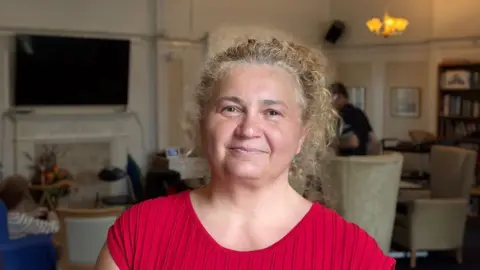
Gabriela Ogreanu is the manager of Sefton Hall where about 60 per cent of the care staff are foreign.
She said: "Probably we would survive because we have a very good business, a good reputation and we're supporting people with some complex needs.
"But for smaller businesses, for special care homes, I think they'll have to close."
Reform claims the policy would result in savings in benefits paid to unemployed British nationals who would be offered jobs.
Ogreanu said there was no interest in care home jobs from British people on benefits, despite the care home paying above the minimum wage.
She said: "Probably when they put the numbers together and when they add them up they will be better off on benefits than going to work so why would they choose work?"
 PA Media
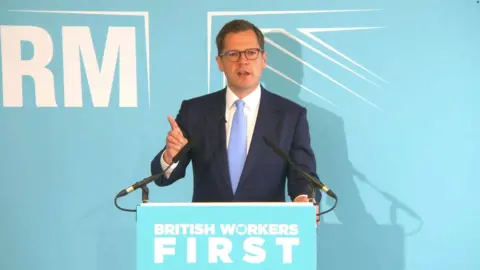
Announcing the policy, Reform's Treasury spokesman Robert Jenrick said the new tax would be targeted at lower-paid jobs and would end "the cheap migrant labour racket once and for all".
He said: "It will clamp down very hard on employers who are dependent on cheap foreign labour - employers who are choosing to employ foreign workers over Brits."
Perran Moon, Labour MP for Camborne and Redruth, said the proposals were "absolutely mad".
He said: "If we are overtaxing those businesses we'll see a collapse in our care system, we'd see our £100m daffodil industry under severe pressure and goodness knows what it would do to the NHS."
A charity that helps to get young people into work said the availability of low-paid jobs in areas such as agriculture and care did not necessarily mean young people would take those jobs on.
Ben Torrens from the Spear charity said the picture for young people entering the jobs market was "quite bleak" - particularly in coastal areas where there are fewer jobs in hospitality and tourism and more experience required to get jobs.
However he added that among some young people there was "a really low level of enthusiasm to get into work", particularly if they had not seen the benefits of work modelled in their family and community.
Follow BBC Devon on X, Facebook and Instagram. Send your story ideas to spotlight@bbc.co.uk.
