TfL urged to prioritise investment in escalators

 Getty Images
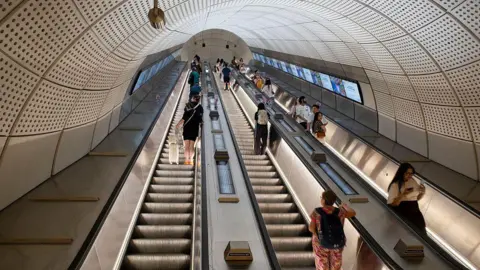
Transport for London (TfL) must spend more to refurbish and replace ageing escalators on the London Underground, a senior London Assembly member has said.
Elly Baker, the transport spokesperson for the City Hall Labour group, said this infrastructure needed to be prioritised to ensure the mayor's active transport targets were feasible.
Freedom of Information data released in July revealed 153 out of 566 escalators – over a quarter – on the Underground were operating beyond their expected shelf life.
TfL has said it works "hard to keep our escalators in good working order, and this includes regular safety checks and a proactive rolling maintenance programme".
 Kumail Jaffer/LDRS
In 2025-26, TfL spent £56.1m on escalators, including £38.6m of operating expenditure and £17.5m of capital expenditure to upgrade, renew and modernise the assets, according to the mayor's office.
In the same period, TfL spent £1.3m on "reactive maintenance call-outs for escalators".
Baker said: "It's really important that we make sure escalators are working on the Tube – [but] I am concerned that TfL aren't giving it enough of a priority."
City Hall has a target for 80% of journeys in London to be made by foot, bicycle or public transport by 2041.
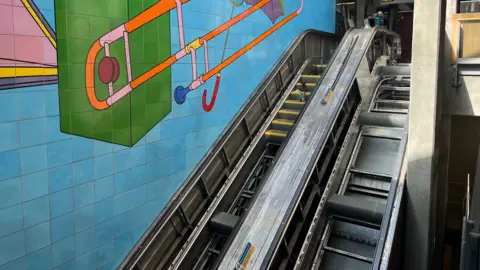
Baker said TfL had recently shifted from a model where they would refurbish escalators after 20 years and completely replace them after 40 years to taking a "risk-based approach", where escalators are closely monitored, to save money.
This had led to "more and more escalators going out of service unexpectedly", which in turn, risked putting people off using the network altogether, she argued.
 Kumail Jaffer/LDRS
A TfL spokesperson said 95% of escalators were available to passengers, "despite heavy usage", adding: "Inevitably, a small number of escalators have had to be temporarily withdrawn from service or are subject to increased maintenance and inspection regimes to ensure they can continue operating with acceptable levels of reliability.
"Funding for replacing these highly complex machines is subject to a prioritisation process which examines assets across the whole TfL network, looking at customer usage and the latest safety and condition assessments."
Listen to the best of BBC Radio London on Sounds and follow BBC London on Facebook, X and Instagram. Send your story ideas to hello.bbclondon@bbc.co.uk
