Think you can dance? Ashley Banjo backs bursary programme

 BBC
BBCAshley Banjo MBE said it could have been more difficult if his dance group Diversity were starting out today due to the way the world had changed.
In 2007, the street dance troupe was formed with 11 members from London and Essex, before winning ITV's Britain's Got Talent two years later.
The 37-year-old, who worries that the next big dance group could be missed due to rising living costs and reduced opportunities, has backed a programme to support 20 individuals in professional dancing.
It came as the number of working dancers and choreographers has been cut by a third since 2019, according to the Office for National Statistics.
Banjo, who grew up in Wickford, Essex, said the world is "very different" from when he started out and thinks the costs can be overwhelming.
"It's hard to imagine yourself saying, 'okay, well, I'm gonna put this aside for travel just so I can go and dance and do lessons'," he said.
"You feel guilty, don't you? For spending this time in the studio when you should be making ends meet."
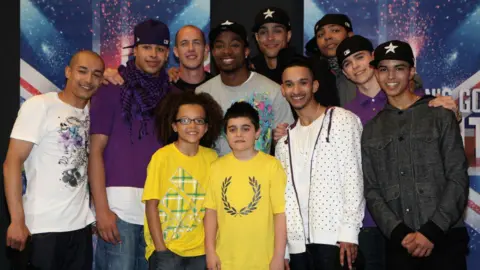 Tim Whitby/Getty Images
Banjo said the breathing space he needed to get creative was "made possible" because his parents had a dance school in Dagenham, East London.
He said: "They always supported me, and they gave me space to train and learn, and they gave space for those initial seeds of Diversity to grow."
"I wasn't thinking about anything pioneering or wasn't thinking, 'oh, this idea is really fresh'. I was just thinking, 'oh, this is fun, and I love what I do'."
'Right place, right time'
 Andrew Milligan/PA
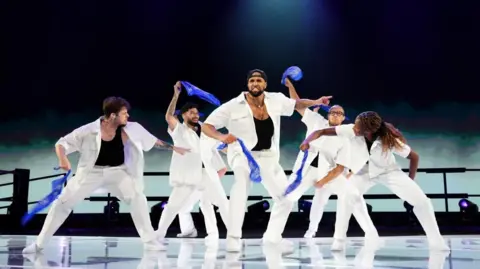
The era of Diversity's success was about seizing their moment, according to Banjo.
"We were in the right place, at the right time, with the right product, and the world is definitely very different now," he continued.
"We were right at the end of an era where people would wait for the release of music videos.
"I think that nowadays, to create moments is more difficult... people's attention spans and the sheer amount of content is so huge."
 BBC Studios
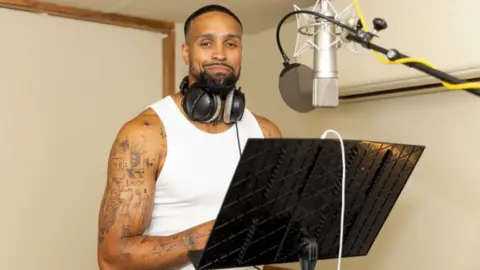
Banjo said even building a presence on social media could require financial support.
He continued: "If you've got the time and the money and the space to just be creating content left, right and centre and funding project after project, you can be noisier. You can rise to the top of the pile quicker.
"You have to either be extremely consistent and extremely noisy, or it has to be something huge."
In contrast, he said Diversity had the freedom to "hibernate" with their ideas and sit in "deep creative thought". Even for shows that lasted just a few minutes.
"For Diversity, we could focus all of our energy, and we could put it into a place that worked," he said.
"I think nowadays, we'd probably end up being slightly more scattered, and whether we would end up with the same creative output, it's hard to know. I just don't know. I have no idea."
'Muggle jobs'
 Supplied
Other performing artists said they had suffered in the cost of living crisis.
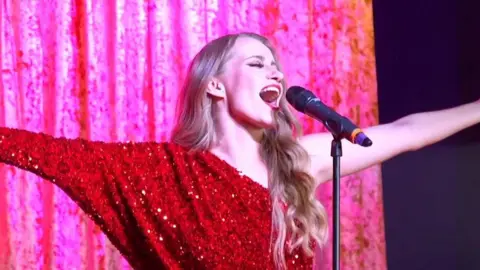
Hannah Kiss told the BBC she had to get "a regular job" alongside performing for the first time in her career.
The 32-year-old from Stanford-le-Hope said they are known as "muggle jobs" in the industry.
She added: "I've gigged in bars, clubs, pubs, that sort of thing as a singer since I was about 18... and the wages haven't changed. So, the amount that I would be paid when I was 18 years old is the same amount I'm paid in my 30s.
Kiss said her colleagues have been unable to attend rehearsals due to the cost of travel, including petrol rates or train fares.
 PinPep
Banjo said funding is "like a barrier to entry" for the arts.
"Especially people from certain areas and certain backgrounds," he added.
"That made me feel really sad."
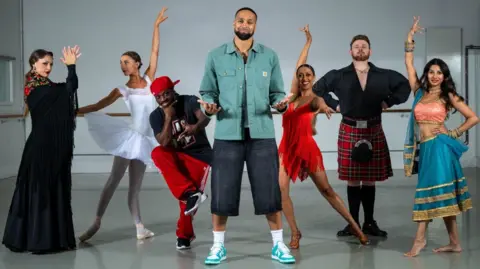
This week, he became an ambassador for The Julia Rausing Sky Arts Bursaries - a programme that will support 20 dance-makers with funding, mentoring, and professional development.
"What I would love to happen is for it to just turbocharge their creativity," he explained.
He hoped it will bring about "the next Diversity".
People aged over 18 whose creative practice is rooted in dance and movement can apply to the scheme up to 9 September.
Do you have a story suggestion for Essex? Contact us below.
Follow Essex news on BBC Sounds, Facebook, Instagram and X.
