'I felt so alone when my sheep caught bluetongue'

 BBC
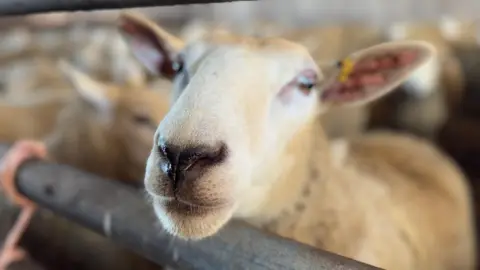
BBCA farmer has described how she "felt so alone" when her sheep started to fall ill with suspected bluetongue.
Cheryl Cottle-Hunkin, who farms in Torridge, Devon, said at first "we didn't know what was going on" and "we put it down to the heat and the heatwave and thought that was why the animals were being a bit lethargic".
She said she was now "worried to go out and check" on the animals as she dreaded seeing sick sheep. "You feel so alone because you don't know what's going on," she added.
A llama in Devon is one of the cases recorded by the Department for the Environment, Food and Rural Affairs and the Animal and Plant Health Agency, along with a number of sheep and cows in Devon and Cornwall.
Cottle-Hunkin is also a councillor and said she wanted to draw attention to the cases and how the virus was "hitting us hard in Devon". She believed she had lost eight animals to the virus.
She said the virus, which is spread by biting midges, could also have a "knock on effect" on livestock's fertility next year.
'Not much fun'
Cottle Hunkin said she thought vaccinating livestock against bluetongue would be "a thing of the future".
Launceston farmer Adrian Parsons, who is also a councillor, said: "It's not much fun going out and seeing your sheep at the moment."
He suspected he had cases on his farm but had not yet had the results.
"You go out every day and you do not know what you'll find. I might find a dead sheep."
He described seeing sheep "lying around under the trees" and feeling "something's not right".
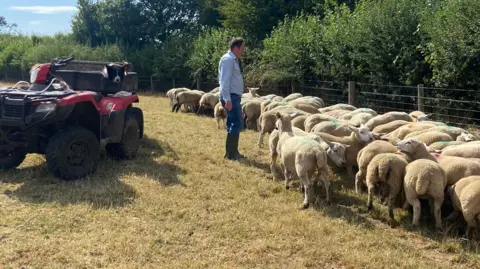 Adrian Parsons
Ian May, who is regional representative for the National Sheep Association, said there was huge demand for vaccination but supplies were "good".
He has spent three days vaccinating the flock on his north Devon farm and said it was an added cost for farmers. "Symptoms can be quite variable as well," he added.
He said sheep were already stressed by the heatwave and the resulting lack of grass and found vaccinations stressful too.
"Sheep like being left out on a nice green field," he said.
He added there were organisations available to support farmers, including the Exmoor Hill Farming Network, Dartmoor Hill Farm Project, Farming Community Network and RABI.
'Hot and humid weather'
A spokesperson for the Animal and Plant Health Agency said the virus was circulating "particularly in south-west England and parts of Wales".
"The recent period of hot and humid weather has been favourable for midge populations which has likely contributed to increased numbers of cases, in cattle and particularly sheep," they said.
The agency urged livestock owners to remain vigilant and report any suspicion of disease to them and to talk to their vets about vaccination "as this is the most effective way of protecting their animals".
