London sees 15% overall drop in neighbourhood crime

 BBC
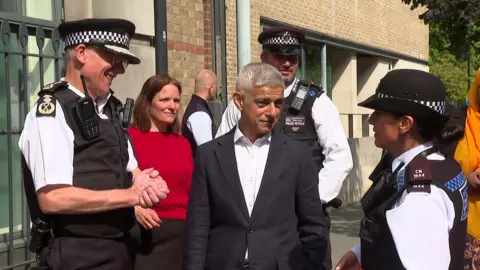
BBCNeighbourhood crime in London has fallen by 15% over the past year, according to new figures from City Hall and the Metropolitan Police.
The fall was driven by declines in theft, personal robbery and burglary, particularly in central London, where police have stepped up efforts to tackle phone snatching and street crime.
The figures, covering the 12 months to June 2026, come amid a wider debate over crime and London's reputation, and the mayor of London's push to challenge online disinformation and criticism of the capital.
While these offences have fallen, the wider picture remains more mixed, with some boroughs seeing small increases, as well as a stark rise in business robbery across London.
The data shows within the neighbourhood policing dataset, there were more than 35,000 fewer offences recorded across the capital, with the biggest reductions seen in central London.
In Westminster alone, neighbourhood crime fell by more than a third, with nearly 14,000 fewer offences recorded over the year.
The Met said phone thefts in the West End have halved following a major crackdown and a doubling of patrols in the area.
Police say their largest-ever operation against phone theft has resulted in 13,000 fewer mobile phones being stolen across London.
Statistics released by the Met also show theft from the person fell by 23%, equivalent to 23,311 fewer offences, while personal robberies dropped by 11%, and vehicle crime by 9%.
The mayor said the figures showed London was becoming safer despite criticism of crime levels in the capital.
He added: "We know many people online and across the world have been trying to talk London down, but the evidence is clear - London is one of the safest global cities in the world, crime is falling and we'll continue working together to build a safer London for everyone."
The neighbourhood dataset represents 22% of all recorded offences; overall crime in London is down 2.5% in the last year.
'We have momentum'
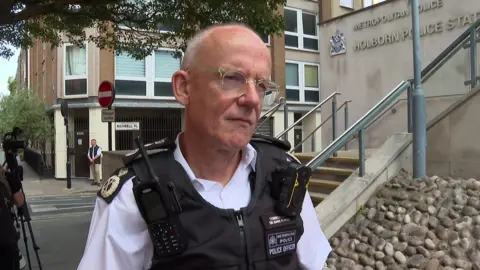
Met Commissioner Sir Mark Rowley said the force had "turned the corner on volume crime over the past couple of years".
"We have momentum which we're not going to give up on," he told the BBC.
Sir Mark added technology, such as live facial recognition cameras, drones and high-powered e-bikes, was increasingly helping officers identify suspects and prevent crime.
As a result, the Met said officers were arresting about 1,000 suspects every month, and were seizing knives, drugs, illegal e-bikes, stolen mobile phones and other suspected stolen property.
The bigger picture
However, opposition Conservatives said this announcement of a decline in neighbourhood crime should be viewed against a longer-term rise in theft offences in London.
Neil Garratt, Conservative London Assembly Member for Croydon and Sutton, said: "After the pandemic, mayor Khan lost control of crime in London, including a phone-snatching epidemic that saw over 340,000 phones stolen from Londoners and tourists alike.
"Nowhere else in the country suffered this problem, as theft is down 53% across the country since 2019 but in London it went the other way - almost doubling before the mayor took action.
"Today's impressive figures show that the targeted policing we've called for really works."
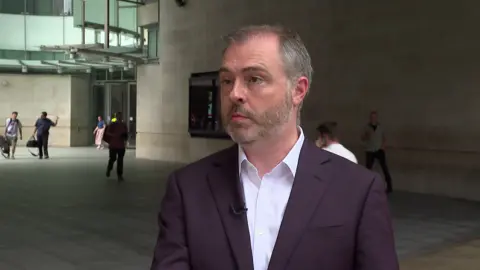
While City Hall highlights a 15% fall in neighbourhood crime, the borough-level figures suggest the experience has not been the same everywhere.
Westminster accounted for almost 40% of the total reduction across London.
When it is removed from the figures, neighbourhood crime across the rest of the capital still falls, but by 10.8% rather than 15%.
Only eight of London's 32 boroughs achieved or exceeded the headline 15% reduction - the typical borough saw crime fall by 8.9%.
Some areas moved in the opposite direction with neighbourhood crime increasing by 3% in Newham and by 2% in Kingston.
There are also limits to what the figures measure.
The Met and City Hall's definition of "neighbourhood crime" in this data covers offences such as burglary, robbery, vehicle crime and theft from the person.
It does not include major crime categories such as violence against the person, sexual offences, fraud, drug offences or weapons offences.
It also does not count shoplifting or business robbery, with the latter rising by 19.5% over the year according to the Met's crime dashboard.
'Fragility' of justice system
Sir Mark also acknowledged ongoing pressures facing both policing and the wider justice system.
"I don't like running a police force that's 3,300 smaller than it was three years ago but whatever money government decides to give us we will be as determined and focused as we possibly can be," he said.
He also raised concerns about court backlogs in the capital.
Sir Mark said: "I'm really, really troubled and concerned by the fragility of the justice system at the moment.
"This has built up over a long time and it's not something government can fix overnight.
"We've got hundreds of cases that are now listed for trial in 2030.
"That's a crazy amount of time to hold a victim in abeyance whilst waiting for justice."
The government has previously said it was "gripping the crisis" with reforms proposed to speed up the justice system.
Listen to the best of BBC Radio London on Sounds and follow BBC London on Facebook, X and Instagram. Send your story ideas to hello.bbclondon@bbc.co.uk
