Is it safe to extend the life of a nuclear power station?

 EDF
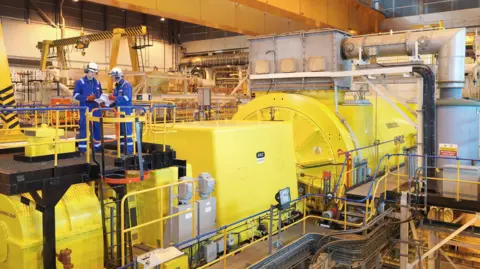
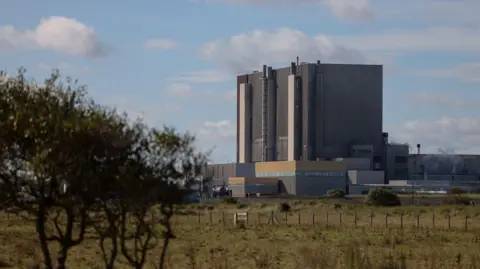
EDFWhen Hartlepool's nuclear power station came online in 1983, it had an initial lifespan of 25 years. Now in its 43rd year, its operator has announced another extension. While the news has been welcomed by hundreds of employees, is it safe to keep doing so?
"Yeah, absolutely," is the short answer from Mark Wenman, professor of nuclear materials at Imperial College London.
The Office for Nuclear Regulation (ONR), which Wenman describes as a "very stringent regulator", would not grant a licence unless they were sure it was safe to do so, he said.
Hartlepool is one of five sites, including Heysham 1 and Sizewell B, which have had their lifespans extended multiple times.
Even when French energy firm EDF took over all of the UK's working nuclear power stations in 2009, Hartlepool was due to stop generating electricity in 2014.
On Friday, it extended the lifespan again until 2030.
How can you extend the life of a nuclear power station?
Wenman suggests thinking of the extensions like a car's MOT.
Most parts in an advanced gas-cooled reactor (AGR) nuclear power station can be replaced.
That is, except for its radioactive reactor core and the boilers, which are regularly inspected.
"If parts need to be replaced, like the tyres, you can replace those parts, and it's still a perfectly good car," he said.
"It's the same sort of process for a nuclear reactor."
Wenman said if a car is well maintained it can be roadworthy for much longer than the manufacturer initially says.
He said the 25-year life estimate for Hartlepool was just to prove it would last long enough to pay for itself.
The physical design life estimate was more like 35 years, Wenman said.
"And even that was based on really conservative assumptions about how the material might degrade."
EDF said its extensions were forecasts, and the precise dates would be determined by the results of regular inspections and how those results were interpreted by it and the ONR.
 EDF
EDFIs it safe?
Both testing and modelling work is done to prove the equipment is safe, EDF said.
"We have a very stringent regulator in the ONR," Wenman said.
"They will not grant a licence to continue operating a reactor if they're not provided with the evidence that it's safe to do so."
Its inspectors would ensure the reactor could run in extreme conditions, such as strong earthquakes and major flooding events, the chief executive of the Nuclear Industry Association Tom Greatrex added.
However, opponents argue that while the technology might be clean and safe, it is not completely clean, or completely safe.
Nuclear power produces radioactive waste and disposing of it can be costly and comes with environmental risks, which Friends of the Earth says there is "no answer for".
The UK government is currently looking for a site to build an underground storage facility for its radioactive waste, some of which would have to be buried for thousands of years before its safe.
Why is the lifespan limited anyway?
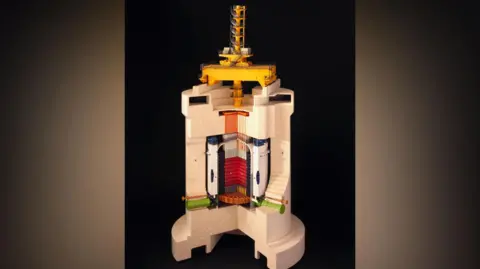
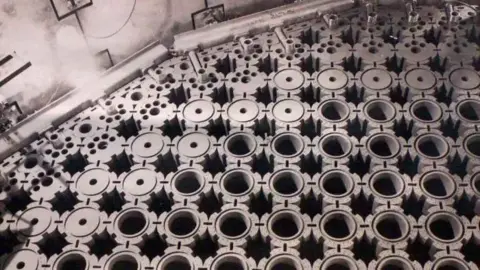
The radioactivity permanently degrades the nuclear reactor's core over time.
At about 10 metres (33ft) high, uranium fuel is channelled through the core.
The graphite bricks, which make it up, break down due to cracking and weight loss and cannot be replaced.
"Once they [the core graphite bricks] reach the end of their life, that is the end of the life of the reactor," Wenman said.
 Getty Images
 EDF
EDFCan they be brought back online?
You would not get another one in the exact same spot because it takes a long time to decommission a reactor, Wenman said.
"Remember, everything in there is radioactive," he said.
Equipment may be left to sit there for many years so it can lose its radioactivity over time.
"It will be quite a slow process, so where the actual AGR is built right now, they'll probably leave it there for quite a few years," Wenman said.
However, he expects some sort of reactor to be built elsewhere on the Hartlepool site in the future.
"It's got all the right kind of paperwork in place," he said.
How reliant is the UK on nuclear power stations?
At its peak in 1997, nuclear power contributed to more than a quarter of the UK's electricity supply, but safety concerns and costs saw new developments stall around the world.
Currently, the UK generates around 13-15% of its electricity from all nuclear power stations across the UK, Greatrex said.
Wenmen went on to say it was "absolutely crucial" to keep a small fraction of its base load electricity because relying entirely on renewable energy can be unstable.
Future nuclear development is expected to come in the shape of small modular reactors, which produce less electricity but will be cheaper and quicker to build.
Follow BBC Tees on X,Facebook, Nextdoor and Instagram and listen to Radio Tees on BBC Sounds.
