The history of the Isle of Man Parish Walk

 Manx National Heritage
Every June, the Isle of Man hosts one of its most demanding endurance events, the Parish Walk.
It covers an 85-mile (137km) loop, and takes participants through all 17 parishes of the island. The course begins in the island's capital of Douglas, and finishes on the promenade.
Competitors have 24 hours to complete the route on foot. The event is now one of the most popular sporting fixtures on the island.
Although the event in its current form dates from the 1960s, its origins can be traced back to the 1850s.
'A summer's day journey'
1852:
A newspaper called the Manx Sun published an article called "a summer's day journey," which told the story of John Cannell, a Douglas resident, who had the idea of touching the doors on all seventeen Parish churches of the island. He completed his 90-mile journey on horseback in 15 hours.
1853:
Cannell had a second attempt at the challenge, but this time on foot. It took him 23 hours and 45 minutes. The newspaper reported that the "extraordinary distance walked by Mr Cannell" was 86 miles. However, historians have revised this distance to around 76 miles. This was the first recorded completion of what came to be known as the Parish walk.
1878:
William Anderson was the next person to attempt the feat laid down by Cannell. The 48-year-old member of the Manx Parliament set off from Patrick church, he accomplished the challenge within 24 hours, but no official time was recorded.
1890: 12 years later, Anderson made another attempt, and recorded an official time of 19 hours and 39 minutes.
Early developments of the event
 Manx National Heritage
1913:
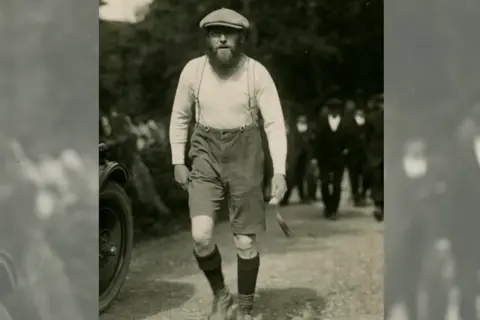
The first Parish Walk comparable to today was called the Parish Walking Match. 12 people set out on the journey, and only five made it to the finish line. The winner completed it in 18 hours and 23 minutes.
1923:
World War One caused a 10 year delay in any repetitions of the Parish Walking Match. But it eventually returned with only two entrants. One completed it in just over 20 hours, and the other retired.
Despite this brief revival of the event, it then lay dormant for many years.
The birth of the modern era
 Manx National Heritage
1960:
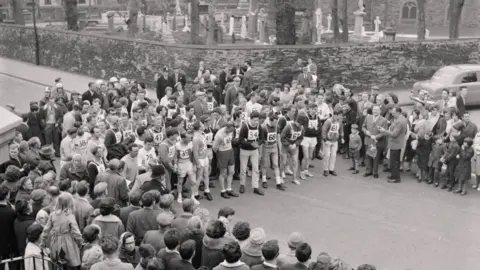
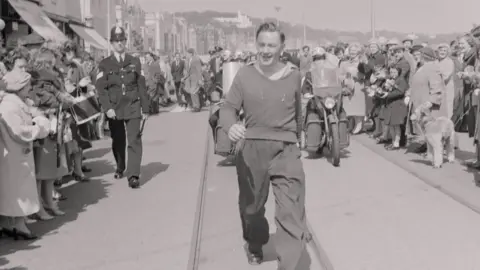
The modern era began in the 60s when the Manx Athletics Association announced plans to reintroduce the event.
The revival attracted 35 starters, many of whom were unprepared for the demands of an 85 mile racewalk.
With no specialist walking equipment or modern sports nutrition available, only four competitors completed the course. Douglas Postman Stan Cleator won in 19 hours 50 minutes, while runner-up Jim Harvey became the youngest ever finisher at just 15 years old.
 Manx National Heritage
1963:
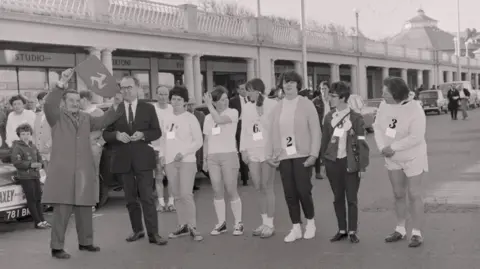
The first women to complete the event were Eunice Davies and Irene Cottier. Davies completed the event in under 21 hours.
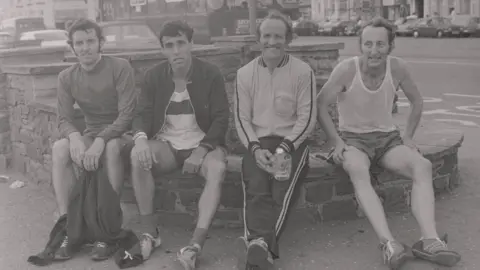
1960s-70s:
Despite a few cancellations in 1965 and 66, the event was becoming more popular, but entries did not pour in. However, a major lifeline to the survival of the event came in 1979, when a major sponsor, Mylchreest Motors, became involved, and guaranteed its future success.
 Manx National Heritage
1990s:
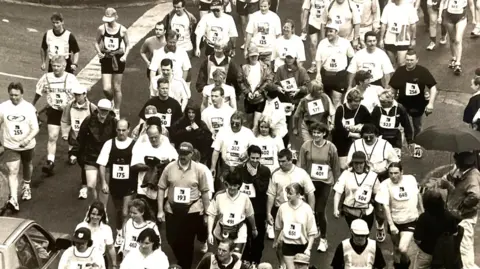
The event was becoming more popular than ever, attracting new sponsors. The 1990 event attracted 155 starters, including 60 women.
Towards the end of the decade, entries increased significantly, attracting international entrants.
 Manx National Heritage
2000s:
The new millennium saw the event approach nearly 1,000 participants a year, and the Parish Walk had become the island's largest sporting event, though not everyone managed to get over the finish line.
In 2008, entry numbers exceeded 1,600, fuelled by international interest of the event. A year later, a record 187 walkers completed the full course.
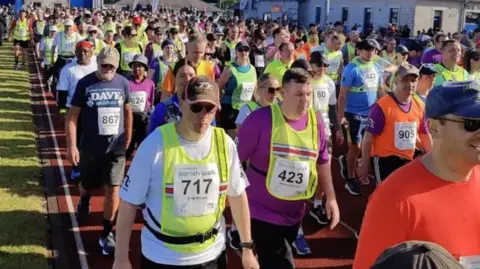
2012 saw the introduction of online tracking, live timings and text alerts, which became important features of the race experience.
In 2020, for only the third time since 1960, the event was cancelled due to the COVID-19 pandemic.
2026 and beyond:
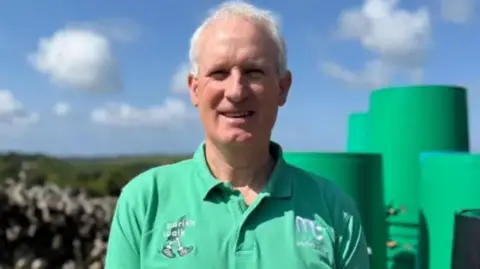
Ray Cox, the Parish Walk director, believes it to be an "absolutely unique event."
"The cheering, the crowds, the ambiance, there's a certain spirit that pervades on Parish Walk day that I do believe is unique.
"It becomes addictive, and that's why we have so many people who come back year after year.
"People tend to come back and do it again and again, over 50 per cent of this year's entrants are prior walkers."
"10% of the population of the Isle of Man get involved in some way every year."
Read more stories from the Isle of Man on the BBC, watch BBC North West Tonight on BBC iPlayer and follow BBC Isle of Man on Facebook and X.
