'We need to find ways to make aviation sustainable'

 Fiona Irving/BBC
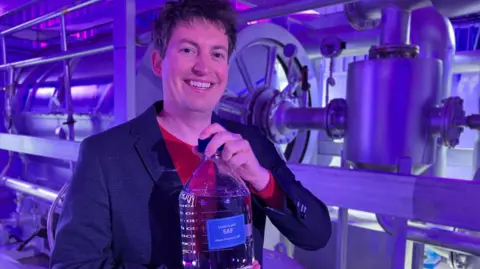
A new facility designed to convert waste plastics which cannot be recycled into sustainable aviation fuel (SAF) that drastically reduces carbon emissions has opened in Kent.
Because jet engines use fossil fuels which produce carbon dioxide when burned, there have been attempts to create SAF from renewable biomass and waste resources.
Clean Planet Technologies, part of the Clean Planet Group, has opened what they say is the world's first waste plastics to Sustainable Aviation Fuel (SAF) pilot facility in Sandwich, which aims to create jet fuel with a carbon emission that is "75% lower than what the alternative would be".
Chief executive officer Bertie Stephens said: "In a perfect world we'd have no emission aviation, but that's decades away before we get there."
'A great middle ground'
According to Stephens, each year the UK produces around two million tonnes of non-recyclable waste plastics which can only go to landfill, be exported, or incinerated.
This facility heats those plastics "to around 450 degrees in an anti-oxygen chamber", a process which produces a heavy synthetic oil that can be used to fuel aeroplanes.
While there is a smaller carbon emission reduction when the plane is in flight, the emissions "created prior to actually being in that plane" are significantly smaller, he said.
Digging the oil from the ground, transporting it across to a refinery, the refining process, and transfer to the airport are all carbon-intensive steps which this process sidesteps.
This effort is part of a wider government aim to decarbonise aviation fuel by encouraging the supply of SAFs.
Last year, the SAF mandate outlined an expectation that 2% of total UK jet fuel demand would come from this source.
This will increase to 10% in 2030 and to 22% in 2040.
Stephens believes this facility represents a "great middle ground" in the ongoing effort to decarbonise the aviation industry.
 Fiona Irving/BBC
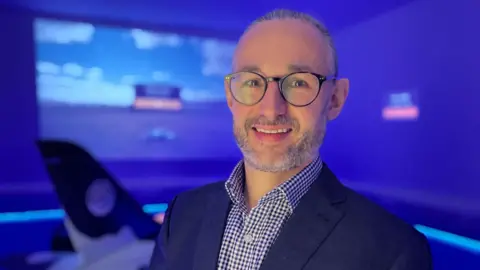
Matthew Jee, director of UK SAF Clearing House which supports this project, stressed that aviation was "not going away" so needed to be made more sustainable.
"In 2040, the aviation sector will be one of the leading sectors in producing carbon dioxide...we are approaching a time where aviation becomes more and more of a bad player from an environmental perspective," he added.
Alethea Warrington, head of aviation, energy and heat at climate charity Possible, believes the solution is rooted in "cutting back on wasteful flights" rather than sourcing alternative fuels.
She said the "more that the UK government and aviation industry continues to chase after these alternative fuels while also putting the narrative that we can continue with current behaviour....the further we get from implementing the kind of solutions that would actually work for the aviation industry and its impact on the climate".
Follow BBC Kent on Facebook, on X, and on Instagram. Send your story ideas to southeasttoday@bbc.co.uk or WhatsApp us on 08081 002250.
