Swindon, the 'bellwether' general election seat since 1983

 BBC
BBCSwindon is one of the West of England’s key election battlegrounds between the Conservatives and Labour, but it is also a key indicator for how the country votes overall. In every election since 1983 the Wiltshire town has consistently chosen MPs of the party which ends up in government.
Since 1997, the town has been split into two constituencies - North and South - which have continued that form for picking the party which ends up in power.
But what is it about the town which makes it such a reliable predictor of how the nation feels, known as a ‘bellwether’ seat?
None of this is an exact science of course, but it is thought to be largely down to the mix of the way the electoral map is drawn, alongside the nature of Swindon’s population closely mirroring what is typical of England.
“There’s no question it is by any statistical analysis a pretty average place - no insult intended,” polling analyst and Tory peer Lord Robert Hayward told me.
“If one looks at almost any element of demographics, Swindon comes out pretty close to the average, whether it’s in income, age or education."
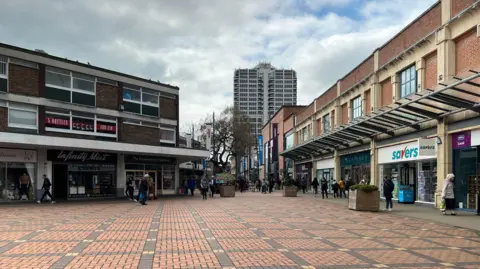
Not being a particularly ‘old’ place in terms of population, and not having a university to bring in disproportionate numbers of younger adults, Swindon has high numbers of working-age families with school-age children.
This is a key group when it comes to elections, according to the University of Bristol’s Professor of Political Sociology Paula Surridge.
“They’re the group who don’t tend to have a strong allegiance to one party or another,” Professor Surridge said.
"They tend to change a little bit more depending on the way the election is going, and that’s why we see these seats swing.”
But there are geographic reasons too - demographics have to be combined with how the town is split up at election time.
Many large towns or small cities of Swindon’s size have what Lord Hayward calls a “doughnut” formation, where the central area forms one constituency, around which other constituencies take in the suburbs and outskirts.

But Swindon is different. The constituency map uses the railway line through the centre to cut the town in half - resulting in both its north and south having a full spread of communities from the centre all the way out to the countryside.
“The result is you have two very, very interesting marginal constituencies that swing backwards and forwards,” Lord Hayward said.
While this means Labour and the Conservatives dominate in Swindon as they do nationally, Prof Surridge notes the town also usually reflects the national share of the vote for other parties "so we might see that trend continue”.
“If Swindon changes colour the government is likely to as well," Prof Surridge added.
Follow BBC Wiltshire on Facebook, X and Instagram. Send your story ideas to us on email or via WhatsApp on 0800 313 4630.
