How one city's high cost of living is putting off footballers

 Getty Images
Cambridge United are back in League One this season. But the newly promoted club admits the city's high cost of living could be deterring potential players.
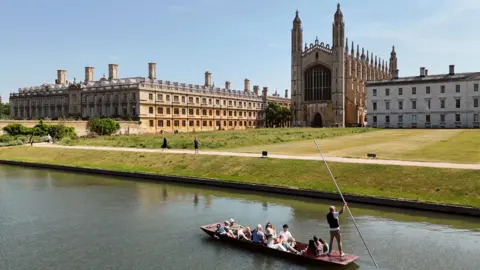
A university city known for its historic buildings and picturesque surroundings, Cambridge is often cited as one of the UK's most expensive places.
According to the Office for National Statistics, the average house price in May was £467,000, nearly £200,000 more than the national average.
Average monthly rents follow a similar pattern. In June, the figure for Cambridge was £1,804. Nationally, it was £1,388.
The city is also known for its science and tech industry, and former Chancellor Rachel Reeves had eyes on creating "Europe's Silicon Valley" by connecting it with Oxford.
But the BBC has been told it is difficult for some low-paid workers in the city to make ends meet without using food banks.
And while professional footballers tend to be much further up the income ladder, it seems even they are finding Cambridge too expensive.
Cambridge United's director of football, Mark Bonner, has said the high cost of living in the city has been a factor in why some players had opted not to join the club.
What did the club say?
 Getty Images
At a BBC Radio Cambridgeshire Fans' Forum on Monday, Bonner was asked: "We all know Cambridge is an extremely expensive place to live. Is that a factor, which players are saying when they provide their feedback on why they don't join the club, is the cost of living in Cambridge ever a factor mentioned?"
Bonner, who managed the U's for three years before returning to the club in his current role, responded: "Definitely, yeah. Cost of property, definitely… If you're not one of the higher payers but you've got the highest properties costs in the league, [it] is quite a difficult balance to overcome.
"We have a couple of rented properties where there's some shared accommodation that boys stay in, but outside of that, that is definitely a big challenge.
"We're not badly located, really, in the fact that we've got all major transport routes around us, but the cost is definitely prohibitive for us, I think."
What about the finances?
 PA Media
The U's won promotion out of the fourth tier at the first attempt last year, having been relegated in 2025.
The club has signed six players so far this summer, two of whom are on loan.
Kieran Maguire, professor of football finance at the University of Liverpool, says players take a lot into consideration when looking for a career move.
"Clearly the offer from the club is one of those, but they look at it from both an earnings and a cost perspective," he says.
"So if you're moving to an area which is subject to higher property prices, then that's certainly one issue which is taken into consideration."
Using the most recent accounts available, Maguire estimates that when Cambridge United were in League One in 2024-25 their average wage was £2,500 to £3,000 per week, making them the third-lowest payers in the division.
"One of the lowest wages on offer, you combine that with the high cost of rental properties, it will make it that much more difficult to recruit players," he says.
"If I've got a choice of two or three clubs, it's 'I can go to Barnsley or Stockport or Cambridge,' then that will be a factor."
What about the wider issue for Cambridge?
 PA Media
This is not a new problem for the city. A 2017 Centre for Cities report described Cambridge as the UK's most unequal city.
The club's ground is in Abbey ward, in north-east Cambridge, one of the city's most deprived areas.
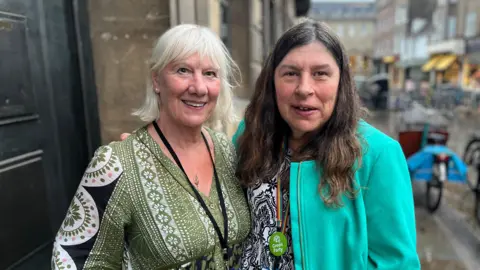
Naomi Bennett, leader of the city council's Green Party and Abbey ward councillor, says: "This is not just a problem for footballers.
"It affects the elderly, whose children cannot afford to live nearby, who are lonelier and may find it harder to live independently."
While the data is by region, the east of England has the third-highest median salary in the country, of £805 per week, which is about a third of a Cambridge United player's estimated average wage.
Bennett says a staff survey for the city's Addenbrooke's Hospital "is clear that our high housing costs don't just put off people on minimum wage but those earning well above the average city £40,000 wage".
She adds: "If we can't staff our hospital, it affects all of us."
In the draft Greater Cambridge Local Plan, one of the strategic priorities is to plan "for enough housing to meet our needs, including significant quantities of housing that is affordable to rent and buy".
That policy includes requiring 40% of housing on most new developments to be affordable and requiring developments to help meet the need for specialist housing, such as for older people.
Cambridge City Council, which is Labour-led, says it has "been a top 10 council housebuilder for two of the last three years".
It says it has built 879 council homes since 2018.
Do you have a story suggestion for Cambridgeshire? Contact us below.
Follow Cambridgeshire news on BBC Sounds, Facebook, Instagram and X.
