Therapy help for intensive care patients with PTSD

 BBC
BBCResearchers have found that a specialist talking therapy can help patients with Post Traumatic Stress Disorder (PTSD)
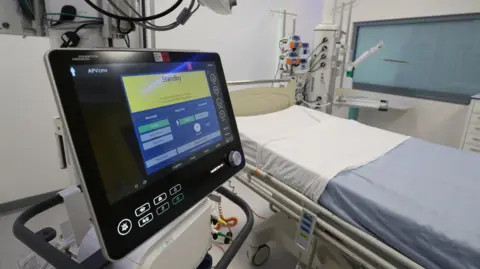
Around 200,000 people survive a stay in an intensive care unit (ICU) in the UK every year, but for many of them the road to recovery is far from over.
The experience of nearly dying alongside medication and a long stay in hospital leaves around one in four people with flashbacks, nightmares or anxiety long after recovering physically.
Eye Movement Desensitisation and Reprocessing (EMDR) was used at University Hospital Southampton, The Royal Bournemouth Hospital and Poole General Hospital, with early results said to be encouraging.
The EMERALD study, which was delivered through the National Institute for Health and Care Research (NIHR) Biomedical Research Centre in Southampton, assessed EMDR therapy on former ICU patients.
EMDR therapy has previously been shown to benefit war veterans and in this small study has seen improved symptoms for ICU patients with PTSD.
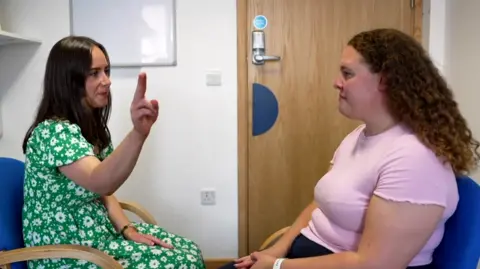
EMDR is a type of talking therapy that helps people process distressing memories. It is a recommended treatment for PTSD.
There are a number of techniques but can involve using your eyes to follow a therapists finger or listen to noises through headphones. It's been found to help your mind process a memory in a different and less upsetting way.
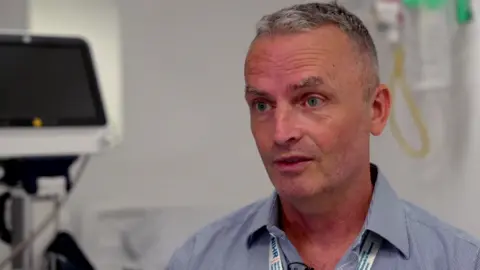
Dr Andrew Bates is chief investigator of the EMERALD study and a research fellow at University Hospital Southampton: "Many people survive critical illness but continue to live with the psychological impact of what they experienced in intensive care.
"Patients often tell us that frightening memories, nightmares and anxiety can persist long after they have recovered physically.
"Trying to manage these symptoms alongside an already complicated physical recovery can place an enormous burden on patients and families."
"Our study shows that it is possible to identify these patients, offer them specialist trauma-focused support and keep them engaged with treatment."
 PA Media
The early results are very encouraging, but this was a small study.
"The next step is a much larger national trial to find out whether EMDR improves symptoms and helps people rebuild their lives. This could provide the evidence needed for it to become part of NHS critical care recovery pathways," said Bates.
In January 2024, Hazel Southam from Hampshire was rushed to hospital with the sudden onset of a rare autoimmune condition.
She spent over two months in hospital in Southampton and London, including 43 days in intensive care and three weeks in an induced coma.
"I couldn't breathe and thought I had died at one point," Southam said.
"I was well cared for but experienced delirium, probably because of the medication. I was later told that I had post-ICU PTSD."
The experience in ICU left her with insomnia. After two rounds of EMDR therapy her symptoms of PTSD including her sleep improved.
"Before EMDR I was incredibly anxious, and stressed and suffered from insomnia, after EMDR I understood what had happened to me, it didn't hold as much fear and I could sleep."

The Southampton research team is working to gain further evidence that the treatment is both beneficial and cost effective.
Bates said: "We think that so many people are coming out of intensive care with this problem that what we want to do is create a pathway for them to access this sort of care.
"At the moment many people have to live with this condition, but we feel the responsibility as intensive care clinicians to develop that pathway and move them into that position, that's the legacy we want to leave."
Around 180 Intensive care patients have been involved in the study so far, a large national trial is now being planned.
You can follow BBC Hampshire & Isle of Wight on Facebook, X (Twitter), or Instagram.
