'Clinical trial helped me survive rectal cancer'

 Yorkshire Cancer Research
"You wonder whether you should have acted sooner, even though there wasn't anything obvious to suggest it was cancer."
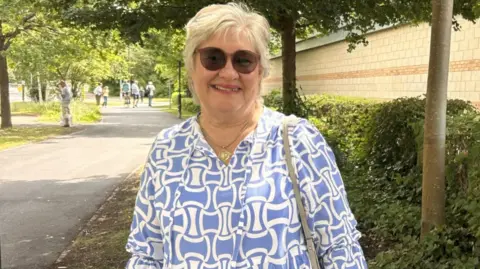
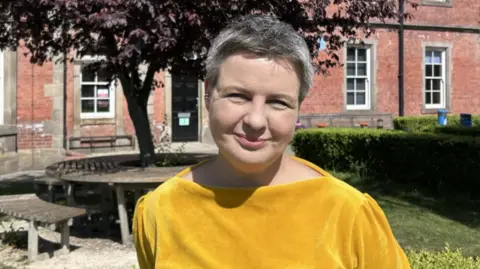
When Christine Skinner was diagnosed with rectal cancer two years ago, she questioned herself over why she hadn't spotted the symptoms earlier.
The retired professor and nurse from York had been to see her GP after noticing changes to her bowel habits, but as she had taken an at-home bowel screening test the previous year, she felt sure she could not have cancer.
Her GP sent her for investigations including a colonoscopy, a biopsy and several scans - which soon confirmed she had rectal cancer.
Faced with the prospect of major surgery, she was given the chance to take part in a clinical trial funded by Yorkshire Cancer Research that could improve the effectiveness of treatment for people with rectal cancer.
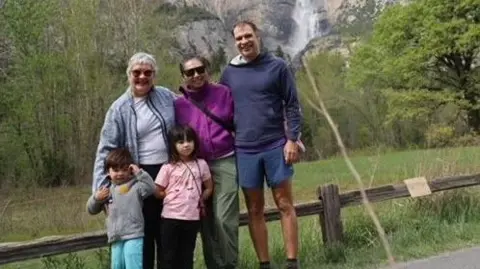
Christine is now cancer-free, and exactly two years after she finished her radiotherapy treatment, she welcomed her third grandchild into the world.
"That all felt like a triple gift really; being well and her being born on that day and being able to go out and spend time with her," she said.
Speaking about her diagnosis, Christine, 69, said: "I remember walking into the hospital with my friend feeling incredibly nervous.
"When I was told the cancer had spread to my lymph nodes, I was frightened.
"Like many people, I immediately started questioning myself. You wonder whether you should have acted sooner, even though my symptoms weren't the more commonly recognised signs of rectal cancer, such as bleeding."
 Yorkshire Cancer Research
Following her diagnosis, Christine was given a range of different treatment options including surgery and a stoma bag but instead she opted to take part in a medical trial, known as APHRODITE, which was funded by Yorkshire Cancer Research.
"In my early days in nursing, I did look after people with quite bad surgical situations with stoma so it wasn't something I was particularly keen to have," she said.
The APHRODITE trial, led by Professor Ane Appelt at the University of Leeds and Professor Simon Gollins at Bangor University, explores whether giving people a higher dose of radiotherapy than the standard could increase the likelihood of cancer disappearing completely.
The aim of the trial is to offer more people the possibility of successful treatment without the need for surgery.
"It wasn't a decision made quickly and I had plenty of time to do that and go back and get any extra information that I needed and so I felt ready to go for it," Christine said.
"I was also very reassured by the surgeon and the team that if the radiotherapy had not worked, I could still have surgery afterwards so it seemed to me worth the risk.
"I've spent my career involved in research, so I know how important clinical trials are.
"We only improve treatments by testing new approaches and by people volunteering to take part."
 Yorkshire Cancer Research
After being told she would be trialling the higher dose of radiotherapy through the trial, Christine began five and a half weeks of radiotherapy which meant travelling from York to St James's Hospital in Leeds every weekday.
However, Christine found the treatment in Leeds relatively relaxed.
"Other than physically going to the hospital each day for radiotherapy, I wouldn't really have known I was undergoing cancer treatment," she said.
"The only side effects I experienced came towards the end of my treatment, when I developed some sores and needed to go to the toilet more, but they were soon resolved."
Two years after completing her treatment, Christine continues to have regular tests which have shown no evidence of cancer.
She said: "If I'd been diagnosed 10 years earlier, my treatment options might have looked very different and the opportunity to take part in a clinical trial like APHRODITE may not have existed.
"The boundaries are being pushed all the time and that's because of research taking place here in Yorkshire.
"I'm incredibly grateful I had the opportunity to take part. It happened at exactly the right time for me, and it has made a huge difference to my life."
Listen to highlights from North Yorkshire on BBC Sounds, catch up with the latest episode of Look North.
