George Square statue to remain without sword over 'symbolism'

 Michael Dibb/Geograph
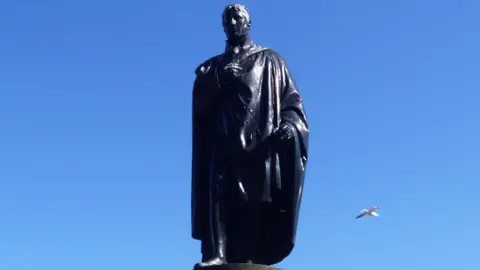
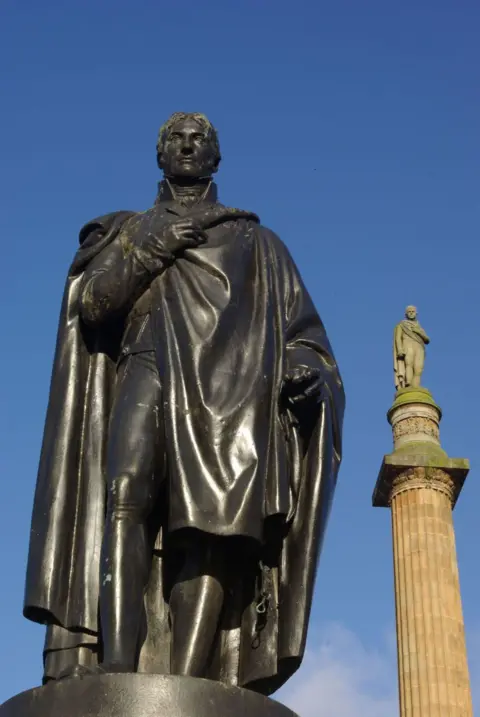
A statue of an Army general who upheld slavery will be left without a sword when it is returned to public viewing in Glasgow.
Returning the weapon to the restored Sir John Moore monument in the city's George Square would "convey symbolism", according to Glasgow City Council.
The sword went missing in 1980 and has been absent ever since, but recent conservation work to refurbish the statue included a recreation of the sword.
However the local authority decided not to bring back the blade after taking account of a report from the University of Glasgow, which said the statue celebrates all of Moore's military past, including a campaign to re-instate slavery of African people in St Lucia.
George Square is currently undergoing a major redevelopment that includes restoration work to its historic statues.
A council spokesman said: "The council has considered carefully whether to replace the sword and has taken detailed advice on the historical background to the Sir John Moore statue being displayed in the square.
"The sword disappeared almost 50 years ago and it has become the norm for the statue to be on display without the sword.
"On balance we believe it is appropriate for the statue to be retained in a way that the vast majority of Glaswegians will be familiar with. Restoring the sword would not have been a neutral act and it is also important we understand the symbolism the sword can convey."
The spokesman added that each statue will be accompanied by information providing wider historical context.
The sword recreation will eventually be placed into a museum in the city, again with information accompanying it.
 Stephen McKay/Geograph
When George Square itself reopens later in the year it will be part of a recently launched historic trail in the city that highlights Glasgow's role in the British Empire and the city's connections to the Atlantic slave trade.
City councillor Graham Campbell had previously expressed anger about the possibility of the sword returning at a council meeting.
Moore was a Glasgow-born army general who led British efforts to remove French control over the Caribbean island of St Lucia, where enslaved people had been freed as part of the French abolition of slavery in 1794.
In keeping with Britain's position at the time, Moore sought to reimpose slavery on the island.
He was killed in Spain in 1809 during the Napoleonic wars.
Glasgow's Lord Provost at the time voiced support for a plan to erect a monument in Moore's honour.
Funding for the statue came from public subscription and the statue was erected in George Square in 1819.
Several historic statues about Glasgow have ties to the slave trade, with a report in 2022 stating that they have direct connections to African trafficking.
