'I was a prisoner in my home': Drug gangs 'cuckooing' hundreds of homes a week, police warn

 BBC
BBCHundreds, if not thousands, of people's homes are being taken over by criminals every week in the UK, usually to store and deal drugs, police chiefs have told the BBC.
Perpetrators of so-called cuckooing often target vulnerable people, including elderly or disabled individuals, by forcing themselves into homes to carry out illegal acts.
In some cases drug users are exploited by gangs who move in and refuse to leave.
Cuckooing is not yet a specific criminal offence so there is limited data on how widespread it is.
However, figures shared exclusively with the BBC show 1,539 incidents of cuckooing were reported to police in London between May 2025 and April 2026. Of those, 1,275 of the victims were male.
The National Police Chiefs' Council (NPCC) said "horrific things" have happened to victims, who were often trapped in their own homes.
"We've had cases where they've been forced to eat dog excrement or perform sexual acts, and those will be recorded and then used as a form of blackmail for the perpetrator to say 'if you don't do as I say, then ultimately we'll share this with friends and we'll put this on social media'," the NPCC's Kirsten Dent, told the BBC.
"It's hidden and in people's homes, it's not always easy to detect."
Cuckooing - named after cuckoos, who frequently take over other birds' nests to lay their own eggs - is expected to become a specific criminal offence by the end of the year, carrying a maximum five-year prison sentence.
It forms part of the Crime and Policing Act 2026, but the government is yet to issue statutory guidance to police forces before the law can be enforced.
Ahead of the implementation of the law change, the BBC accompanied London's Metropolitan Police as officers visited suspected cuckooing properties and witnessed shocking signs of squalor.
We also spoke to victims who said they felt like prisoners in their own homes and feared going to the police in case of violent reprisals.
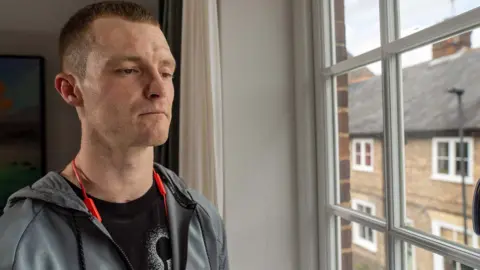
Jamie, 34, has brain damage after being struck over the head with a glass bottle and, as a result, he struggles to move and speak properly.
Two years ago, a criminal gang took advantage of his condition by befriending him, before moving into his home without his consent and using his flat as somewhere to sell drugs from.
"People went from being really nice and sound to me, to just taking whatever they can," he said.
"They robbed my clothes," he added. "They started taking everything worth taking at my house, like stealing it without you knowing. And when I did realise it was them, they would deny it."
He said one of the most demeaning things was being slapped by a teenager who was much younger than him. Jamie said he felt it was impossible to be assertive with the gang because of his condition.
"I [have] got brain damage and one decent punch could do a lot of damage. I can't fight, I can't argue," he said.
Earlier this year, he said he managed to escape from his flat and move to a different part of the country - fleeing the gang.
'Prisoner in my own home'
The NPCC visited 683 suspected cuckooed addresses in early March this year as part of a week focusing on county lines - the act of moving drugs from big cities into smaller, rural areas.
According to officers, county lines operations and cuckooing are intrinsically linked. Dealers moving drugs often look for properties to operate from.
"We suspect hundreds - if not thousands - of properties are being cuckooed across the country (UK) every week," said Dent.
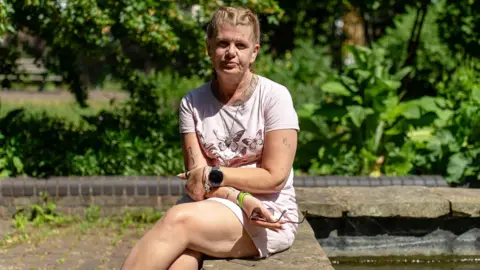
One of those was Jackie, who told the BBC she used to be a heroin and cocaine addict.
Her dealer allowed her to run up a large drug debt. When she could not pay it back, he added an extra £2,000 to the bill and said she had to have a dealer living with her until she could repay the money.
She said she was cuckooed for months, and became "a prisoner in my own home".
"I asked him to leave so many times and he said: 'My guy said I've got to stay here'".
"It just meant that I had to stay in one room. I tried to get access to the front room and the kitchen and he just went, 'no, you're not coming in'. I had to stay in my bedroom. Occasionally he might say 'I'll buy you chicken and chips or something' but it was very rare," she said. She said she used drugs to get through the ordeal.
After several months of occupying the property, the dealer finally left. Jackie said suspicion of police watching him made him leave.
She is now free from drugs after going to rehab, and works with various support groups to raise awareness of cuckooing and how it can happen to anybody.
"It's not just about drugs. It can be about anything. It can be partners [not leaving]. It can be family members. It can be anybody that refuses to leave your property and it can be used for all sorts, money, stolen goods, anything they think they can exploit you", she said.
When the BBC visited the London properties with the Met police, officers said squalid conditions were the norm when it comes to cuckooed premises.
Packets of food were strewn across the floor, doors hung off their hinges, and a pungent smell of faeces filled the air.
We were taken to a kitchen with raw chicken dumped in the sink. There were blood stains on a duvet, and a filthy folding table was used as a bed. A toilet in one bathroom was clogged. All the properties contained a putrid stench.
Repeat victims
Officers from the Met - Britain's largest force - said they were seeing a pattern when it comes to those taken advantage of.
"What the data is showing us is that if you're a white male between 40 and 49 and potentially drug-dependent, then you're highly likely to become a victim of cuckooing.
"We're also seeing repeat victims where sadly people who are once cuckooed moved to a different location or remain at the same location become victims again," said Insp Andrew Cameron.
Freedom of information figures obtained by the BBC show there were 380 investigations where cuckooing was flagged as a potential concern in the capital in the year 2023/24. This figure rose to 1,078 in 2025/26.
The Met said the rise was primarily down to more awareness in the force about what constitutes cuckooing, as well as additional drug dealers using the tactic as a business model.
The force said the methodology of collecting the data had also changed during this time, which also could account for some of the increase.
Until cuckooing becomes a specific offence, police officers said they were attempting to arrest suspects for other offences, such as drug possession or slavery offences.
Sources across several police forces in England said closure orders were being used more widely to stop cuckooing.
They enable police officers and local authorities to temporarily close down a property. A partial closure order can mean the tenant is able to stay, but named visitors and other individuals are barred.
But some victims are critical of the way it is dealt with.
"I have no faith in the police. They're useless," said one victim we spoke to on condition of anonymity.
They believe vulnerable people need support and that more should be done to stop them being exploited.
The NPCC said it was working to build confidence among victims and believed the law change to make cuckooing a specific criminal offence would help.
Dr Amy Loughery, a University of Leeds researcher, whose work focuses on cuckooing and county lines exploitation, said police did not always recognise when vulnerable people were being exploited.
"Victims of cuckooing were not necessarily being seen as victims because often they had previous experiences or contact with the police," she said.
While awareness of the issue has improved in recent years, she said "there is a significant way to go" and called for more guidance and policies to help identify exploitation and improve responses to cuckooing.
A Home Office spokesperson said the testimonies given to BBC News were "appalling".
They added: "We will do everything in our power to protect communities from the vile crime of cuckooing, including investing more than £34m this year in the County Lines Programme to target drug dealing gangs and organised crime groups."
If you have more information about this story, you can reach Sima by email at Sima.Kotecha@bbc.co.uk
If you have been affected by any of the issues raised in this story, information and support can be found at the BBC's Action Line.


Get our flagship newsletter with all the headlines you need to start the day. Sign up here.
