'Unacceptable risk' of battery energy storage site

 Hawkchurch Action Group
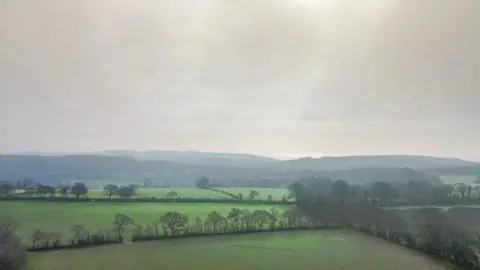
Plans for an industrial battery energy storage site (BESS) on farmland on the Devon and Dorset border have been thrown out by the planning inspector.
Clearstone Energy wanted to build more than 50 storage units on land near Axminster but had its plans refused by East Devon District Council in May 2025.
Clearstone appealed against that decision but the planning inspector dismissed it over concerns about fire safety, pollution of water supplies and harm to the landscape.
Clearstone said in its original application the development would store and export enough electricity to power 75,000 homes for 10 hours when fully charged. It has not responded to a request for a comment on the latest decision.
'Unacceptable risks'
Battery energy storage systems enable energy from renewables, such as solar and wind, to be stored and then released when the power is needed most.
Giving her reasons for dismissing the appeal, planning inspector Helen Heward said: "I could not rule out that the submitted scheme would not give rise to unacceptable risks in respect of fire and safety."
She added she could not conclude "that the fire safety and pollution control measures would be sufficient to prevent pollution of aquifers" - natural areas of underground water storage.
East Devon District Council had initially refused the plans in May 2025 on grounds of concerns over water pollution but then withdrew its reason for refusal in January and agreed the development should go ahead.
The BBC asked the council why it withdrew its opposition to the plans but did not receive a response.
The Hawkchurch and Monkton Wyld Action Group opposed the plans with support from Devon Campaign to Protect Rural England (CPRE).
Penny Mills, from Devon CPRE, said the decision to reject the appeal was "a victory for people power" which "should give encouragement to others opposing similar BESS proposals in the countryside".
She said: "While most people know little about them, this report and the inspector's decision show that the powers that be are starting to take notice of the very real fire and pollution risks, and the threat of industrialising the countryside."
Follow BBC Devon on X, Facebook and Instagram. Send your story ideas to spotlight@bbc.co.uk.
