UK pint prices up 36% since last World Cup – here's why

 BBC
BBCThe price of a pint in UK pubs has risen sharply since the last World Cup, outpacing inflation. So what's behind the increase – and where is the money going?
With millions of England and Scotland fans expected to flock to pubs over the next six weeks, many may be wondering why beer prices have climbed so steeply since Harry Kane led England out at Qatar 2022.
On average, the price of a pint has risen by about £1.50 – an increase of 36% – over the past four years. By comparison, overall inflation over the same period was around 16%.
Nathan Freeman, landlord of a sports bar in Bristol, said: "Everything going into the pint has gone up, to be honest with you."
So how did a pint get so expensive?

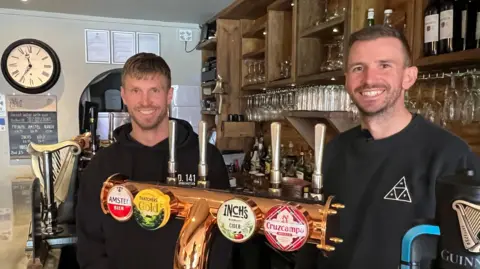
Nathan and his brother Ronnie Freeman run the Industry bar on Gloucester Road in Bristol.
Four years ago, it was packed with fans watching England play at the World Cup in Qatar.
"It's a big deal for us," Nathan said. "The place will be rammed, the bar will be busy, we just need England to put on a good run for us – quarter-finals at least."
But since Gareth Southgate coached his last match in 2024 - this time after the European Championships - the Freemans' business has faced a series of rising costs.
Recovering from the Covid pandemic, the brothers then faced the spike in energy bills from the Russian invasion of Ukraine.
Then the Chancellor put up national insurance contributions on their staff, widening the net to capture virtually every part-time bar worker.
"Every hurdle we've jumped, there's been something else round the corner waiting for us," Nathan explained.
Like a striker attempting to weave around defenders in the box, the brothers have had to dodge and weave to stay upright and it has meant some tough decisions.
"We've streamlined a little bit, the kitchen's taken a hit," Ronnie said.
"We've wound down our kitchen, it was natural for us to cut that and focus on what is front runner for the business, which is drinks sales."
Pint prices rising faster than inflation
On average, two pubs are closing every day according to the industry body, the British Beer and Pub Association (BPPA).
"The cost of doing business for our pubs and breweries is going ever upwards," said Emma McClarkin, chief executive of the BPPA.
As their costs rise, so the prices they charge have gone up.
Back in 2006, David Beckham led England in the tournament in Germany. The so-called 'Golden Generation' failed to deliver on the pitch, losing to Portugal on penalties.
Back then, drowning your sorrows was cheap. Beer was just £2.41 a pint.
By Qatar 2022, it had risen to £4.03. The latest official statistics are for 2025, recording a British pint topping £5.01.
"Since then a pint has added at least 50p," said Ronnie Freeman. "Our most popular Spanish lager is £6 now and that's not unusual."
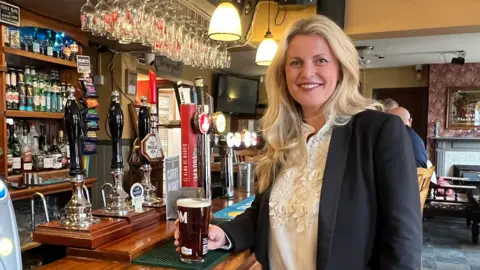
But haven't all prices gone up? Yes, but beer more than most.
According to the Bank of England's inflation calculator, goods costing £4.03 in 2022 would now cost about £4.70. Beer, at around £5.50 a pint, is about 36.5% higher than it was, more than twice the average increase.
Over the past 20 years, average prices have risen by about 77%, while beer prices have increased by around 128%.
Are pubs making a profit?
Some drinkers may wonder whether landlords are profiting from rising prices.
"No chance!", laughed Rob Moore, who runs two pubs near Bristol.
Leaning on the bar at the Rising Sun, on the banks of the River Chew in Pensford, he looks like the classic comfortable West Country landlord.
The bar is busy, the lunchtime crowd is steady for a Thursday, there are bookings in the new rooms upstairs.
So, I asked, how much profit has he made since the last World Cup?
"Absolutely zero!" he said. "Across the board, I've made enough to pay my staff, my suppliers. But in terms of profit on the business, I've made nothing at all – I've paid no corporation tax for four years."

So what's pushing up his prices? Some of the factors are global. The wars in Ukraine and Iran have driven up prices for energy, oil, even barley and CO2.
But landlords point to the heavy tax burden on a British pint.
To make their point, they have come up with their own World Cup league tables - for beer taxes.
This, it seems, is one contest the British teams can win.
How tax affects the price of a pint
McClarkin, at the BBPA, has been analysing excise duty on beer.
"We are currently paying 54p a pint in beer duty," she said. "If we contrast that with other countries in the tournament, we see Spain and Germany only paying 4p."
In fact only Morocco, at 90p a pint, beats the England and Scotland teams for beer duty.
"That's the kind of gulf that we've got," said McClarkin. "That's why we're asking the government to cut the taxation on our pubs, so we can keep a pint affordable for all."
On top of duty, pubs in England must charge 20% VAT. Combined, that means around £1.50 of the price of a pint is tax. But again, rival fans will be paying much less.
"Look at the big countries in the World Cup," said Moore.
"Germany, 7%. France, 10%. Most of the places in the US you're looking under 10%.
"So all of them seem to have this low VAT rate for hospitality, and we should be in line with them, we just want a level playing field."
Calls for change
A petition to cut the VAT rate in pubs, bars and restaurants has now had nearly 200,000 signatures.
Celebrity Chef Tom Kerridge is leading the campaign, arguing that pubs "bring people together and bring life to our cities, towns and villages, but they're under huge pressure from rising costs."
A government spokesperson said it was "backing hospitality by cutting VAT on family attractions and kids meals this summer".
Other measures to help pubs include "reforming business rates, with a £4.3bn support package to limit bills rises, capping Corporation Tax at 25%, and extending World Cup opening hours for pubs," the spokesperson added.
But for now, landlords say the rising cost of a pint reflects the growing cost of keeping their businesses running.
Follow BBC Bristol on Facebook, X and Instagram. Send your story ideas to us on email or via WhatsApp on 0800 313 4630.
