Diving at Les Écréhous is like 'being on the moon'

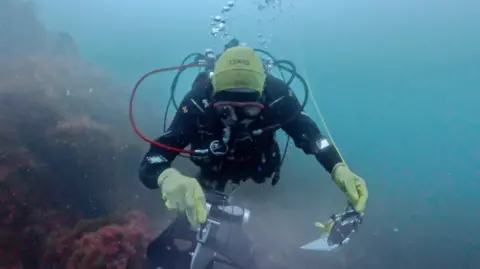 Jersey Marine Conservation
Six miles (10km) off the north east coast, Les Écréhous can look little more than rocks, sand and sea.
But underneath the surface is one of the island's most important marine environments.
The reef system lies between Jersey and France and for Kevin McIlwee, chairman of Jersey Marine Conservation, that makes Les Écréhous an important place to study.
He said: "Our reef systems are unique, we have an incredibly large tidal flow.
"We are on the edge of the British Isles, so what we are seeing here is actually an indicator of what potentially can happen to the UK waters."
McIlwee said the changing tide is the reason the area supports so much wildlife.
"It's a stop-off place, a lot of migratory species will come through that area, the tides are bringing high levels of nutrition, and of course we've got these warmer waters within the Bay of Granville, which again make it a unique environment," he added.

Yet McIlwee said while Ramsar identifies special sites, it does not mean they are automatically protected and a country was expected to put a management plan in place for the area.
He said: "We're looking at specific sites like the bird breeding areas where we're going to say 'you need to stay out of those areas while the birds are breeding'.
"Then we're also looking at the risks to different areas, we're just trying to keep a general eye on things and not necessarily change things through legislation, but change things through education so people are taking an ownership."
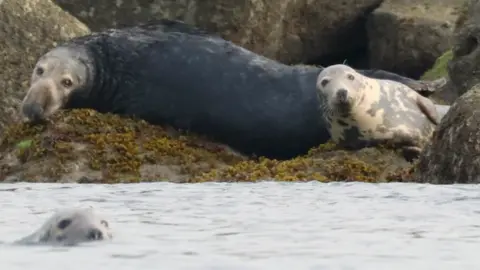 Jersey Marine Conservation
Since 2014, Jersey Marine Conservation has been involved in monitoring the reef and looking at how habitats are changing.
McIlwee said the work began after years of harm to the seabed.
He said: "The area was open to bottom trawling and there was a massive amount of damage done and what we've been looking at is whether it can recover and what is actually happening as it recovers from a biodiversity perspective."
Since then, he said the team has seen wildlife populations increasing.
McIlwee said: "Seeing a seal pupping was amazing.
"We see some of the the larger cat sharks, we see beautiful fish, like the bass, the bream and the sand eels.
"It's absolutely wonderful to be down there, I feel very special when I'm diving, it's such a unique experience - I compare it with being on the moon.
"It's definitely that sort of environment that's special, that you just wouldn't encounter anywhere else.
"You don't need to travel halfway around the world to see incredible things - they're actually here."
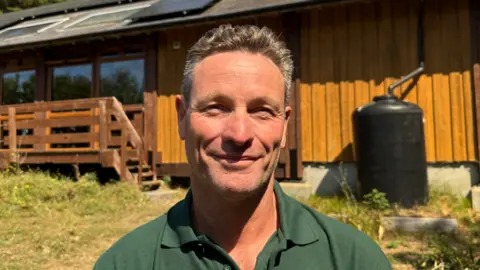
It is not just the waters around the reef which make Les Écréhous special, the head of the Jersey National Park Greg Morel said the surrounding rocks were an important habitat for seabirds.
He said: "We have a roost to the north and the south of the island, they provide a refuge for various life stages for nesting for some of those species, but also for roosting, and time when they can just rest and recuperate after either feeding or mating at different parts of the season.
"Seabirds are under pressure in many places across their range and Jersey's no different, so these areas perform a really vital and important function in trying to help those species continue and thrive."
Morel said it was important areas like Les Écréhous were managed properly but acknowledged that visiting the reef could show people how important it is for it to be protected.
"If people understand why certain things are happening, why behaviours make a difference, then they're inclined to behave in a way that protects everyone and they still get the experience, the pleasure of being there," he added.
Follow BBC Jersey on X and Facebook. Send your story ideas to channel.islands@bbc.co.uk.
