Deepfake victim urges better regulation of 'dangerous' AI

 BBC
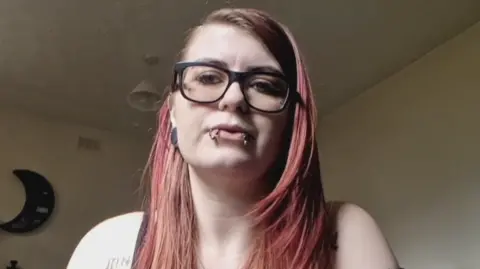
BBCA woman whose modelling photographs were used to create sexually explicit images without her consent is calling for better regulation of artificial intelligence (AI), saying: "It's dangerous."
Georgia Horton said she was horrified after discovering pictures taken from her social media accounts had been manipulated using AI to create pornographic images.
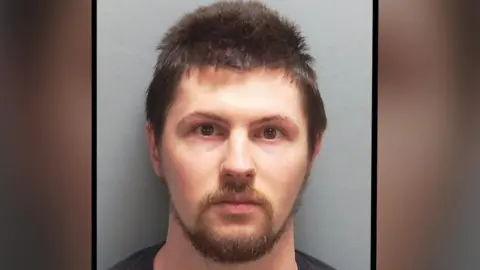
And the person responsible was someone she knew - old college friend Ethan Orchard.
Orchard, from Southsea, was jailed for three years and four months in July after creating and sharing fake explicit images of Georgia and two other women.
Orchard had also posted violent and sexually explicit fantasies about the women online and asked other men to share theirs.
"He would make people choose between us, or ask what they wanted to do to us," said Georgia.
"One of the posts was, 'What would you do if you had five minutes alone with her?' And it got so much worse from there.
"The worst one I saw was, 'Would you save her? Would you rape her? Or would you sell her?'."
 Hampshire Police
Georgia and Orchard had attended college together in Hampshire and she had believed they were friends, she told the BBC.
She said she was speaking publicly about her experience now in the hope of raising awareness of what she describes as the "darker side" of artificial intelligence.
"Everyone seems to be so pro-AI, thinking it's just a bit of fun on a computer screen," she said, adding: "But it's dangerous."
'Becoming much easier'
Earlier this year, new legislation was introduced, making it a criminal offence to create sexually explicit deepfake images of a person without their consent.
The law builds on existing offences covering the sharing of non-consensual intimate images of adults.
Georgia said while "it's a start", the legislation does not go far enough.
She said: "When I heard the law had been introduced, I was so relieved. My case was still going through the courts and we were all pleased to see that progress.
"But it's now come to a standstill.
"The technology to make these images and videos is still out there and still widely available.
"There needs to be more regulation and much tougher safety features built into the programmes themselves.
"The big tech companies say they're tightening safeguards but you can still get around them with just a few changes to the prompts.
"Self-regulation isn't working. It's also becoming much easier for people to create their own AI models and those are completely unregulated."
'So many predators'
The Department for Science, Innovation and Technology said it was taking the issue seriously.
A government spokesperson said: "The creation and sharing of non-consensual sexual deepfakes is utterly vile and we will not allow abusive images to spread online."
They added: "The law also makes clear [that] it is illegal to create, possess or share child sexual abuse material, including AI-generated content, and platforms must proactively identify and remove it.
"We're holding tech companies to account, from forcing platforms to remove non-consensual intimate images within 48 hours of a report, to holding company bosses personally liable when they fail to comply with Ofcom's decisions on intimate image abuse."
During the police investigation into Georgia's case, officers uncovered what they described as a "truly horrifying" website containing more than one million child sexual abuse images.
Georgia urged parents to be more vigilant about sharing photographs of their children online.
"Photos of children being posted online should be banned," she said.
"There are so many predators out there and you really don't know who is seeing those pictures.
"It only takes one photo to be put through AI and limitless images can be created. The damage that can be done is enormous."
