A&E waits unacceptable, say hospital bosses

 Jozef Hall/BBC
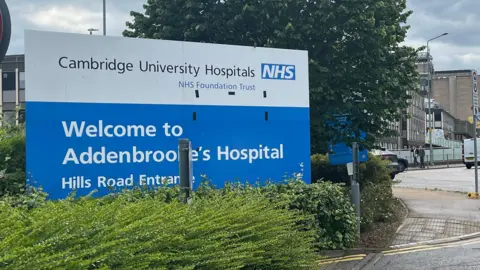
Senior officials at Addenbrooke's Hospital have said too many patients are waiting for too long in its accident and emergency department.
Cambridge University Hospitals NHS Foundation Trust board papers said the delays were "not acceptable". It said the hospital was facing a shortage of beds and that there were staffing issues in several departments.
"The trust continues to take [urgent care performance] seriously and is focused on the pace of recovery," the hospital's executive team wrote in a report.
Despite the pressures, the hospital's diagnostic waiting list fell by about 3,500 patients between March and July.
Trust executives told a previous board meeting its urgent and emergency care teams were 7% busier in May when compared to the same period last year.
"In urgent and emergency care, in particular, too many patients are waiting too long and current performance is not acceptable," said the report, prepared ahead of a board of directors' meeting on Wednesday.
The trust said its priorities included reconfiguring its emergency receiving units and making changes to its workforce.
More from Cambridgeshire:
The comments follow a critical incident which was declared at the Addenbrooke's A&E department on 30 June and stood down the following day.
The report said across the trust – which also manages the Rosie maternity and neonatal hospital – both the number of patients and the length of time they were waiting to be discharged, worsened in July.
According to the report, more than 230 beds were "lost to external delays" compared with 176 in July 2025.
'Rota gaps problematic'
The meeting agenda also highlighted ongoing staffing concerns in the cardiology, general surgery, haematology, trauma, and orthopaedic departments.
Dr Serena Goon, the trust's guardian of safe working hours wrote that rota gaps were "problematic", which had "implications for working hours and patient safety and educational opportunities."
Goon added that work schedule reviews were ongoing and that the trust was "looking forward" to rolling out an electronic rostering system which "should improve visibility of gaps".
Do you have a story suggestion for Cambridgeshire? Contact us below.
Follow Cambridgeshire news on BBC Sounds, Facebook, Instagram and X.
