Wool joins whisky, salmon and lamb with Scottish origin guarantee

 BBC
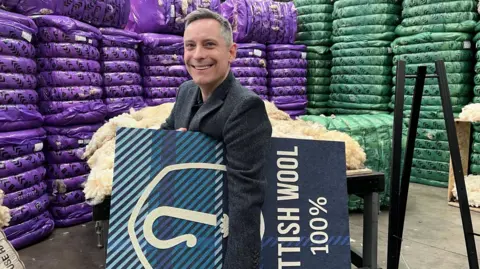
BBCWool has become the latest product to be officially branded as coming from Scotland.
Joining the likes of whisky, lamb and salmon, Scottish wool now has its own logo and certification to protect it from cheaper and inferior fabrics.
Not only does the new certification provide assurance over the wool's quality, but it also allows the raw material to be traced to its source.
And as demand gradually moves from fast fashion to longer-lasting and more sustainable garments, the popularity of Scottish fleeces is expected to grow.
Graham Clark from British Wool said: "We are finding more and more consumers are making considered purchases and want to know where the materials came from - that is why the Scottish wool logo is so important."
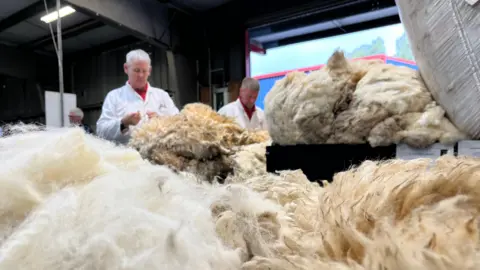
With more than six million sheep being raised on Scottish farms, there has been no shortage of fleeces coming to market in recent years.
Although a traceability scheme was introduced two years ago for manufacturers to be able to identify the origins of their raw materials, it is hoped the new certification will give consumers similar assurances.
Mr Clark added: "Every single fleece that comes from a Scottish farm is hand-graded and logged so the wool can be traced back to exactly where it came from.
"Scottish wool is a quality raw material and there is high demand from manufacturers and consumers here in the UK and overseas."
As well as more traditional knitwear, tartans and tweeds, Scottish wool is becoming popular in not-so-obvious manufacturing circles.
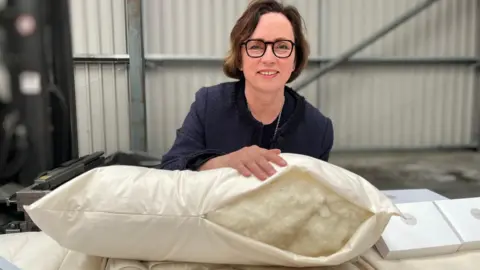
Joan Johnston's Elgin-based company, Ava Innes, uses wool sourced from Cheviot sheep in the Borders in the manufacturing of several of its luxury bedding products.
She said: "We feel Scottish wool has allowed us to devise the perfect pillow.
"Wool is perfect for temperature regulation and is naturally breathable.
"Cheviot wool, in particular, is layered which gives more support and the customer can adjust the pillow to be the perfect height for them."
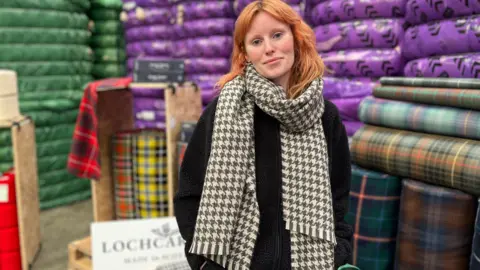
Lochcarron of Scotland is one of the country's leading tartan manufacturers.
Although the Selkirk-based company continues to import some raw materials, such as Merino wool, for its top-end products, it has been increasing its use of locally sourced fleeces significantly in recent years.
Marketing executive Candice Given said: "We work with many of the leading fashion houses and export products around the world, so the quality of raw materials is vitally important for us.
"Having the Scottish wool certificate and logo allows us to promote where the raw materials came from and provide those quality assurances."
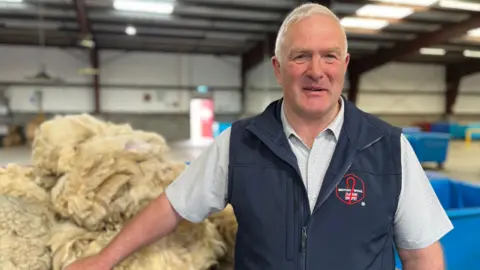
Although it is less than a decade since many sheep farmers were destroying fleeces due to the low prices on offer, a steady growth has seen the byproduct gradually become more lucritive.
British Wool chairman Jim Robertson, who has about 1,000 sheep on his farm outside Langholm, believes the Scottish guarantee will only benefit farmers further.
He said: "There was a time when products made from wool were coarse and wasn't nice to wear next to the skin, but times have changed and modern manufacturing has made wool a really soft and comfortable material.
"The price for fleeces is already at a 10-year high, and with demand increasing it can only continue going up."
