Exotic birds 'enjoy heat' but zoos fight for water

 Paradise Park
A zoo has reported a drop in visitor numbers as wildlife attractions face difficulties during this year's heatwaves.
Dr David Gibson, chief executive at Dartmoor Zoo, said visitor figures dropped by about 12% in June making it "a very, very tight month" as people spent the day at the beach or in the gardens while avoiding attractions during the hot weather.
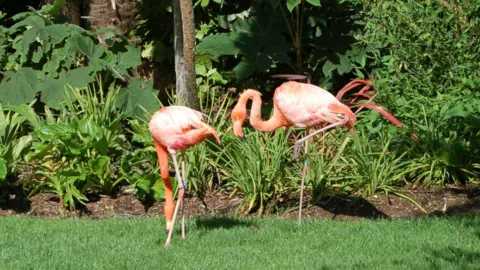
Meanwhile Paradise Park in Cornwall said while its Caribbean flamingos appeared to "quite like" the hot weather, algal blooms in its animal ponds were "a really big problem" and a "huge expense".
The Environment Agency has declared a drought across more than half of England, with more than 20 million people under hosepipe bans.
Lack of grass
Gibson said the drought had resulted in "lots and lots of different impacts" on the zoo, including a water shortage - which the park had since resolved.
He said the zoo had been running at 50% capacity after one of its two boreholes ran dry.
"The level of the water in the ground has basically dropped, so the pump was sitting in air," he said.
He said workers were able to drop the pump further down into the ground to reach water.
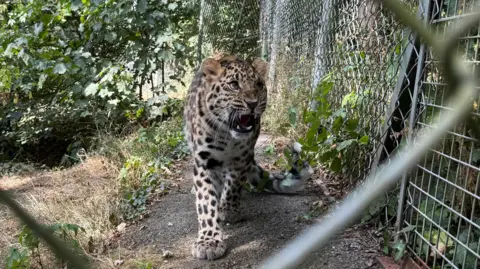
Gibson said other impacts of the heatwave included a lack of grass for the the zoo's grazing animals.
"There is no grass for them to eat, so that means we have to supplement their feeding, quite considerably. We are quite worried about future supplies of hay," he added.
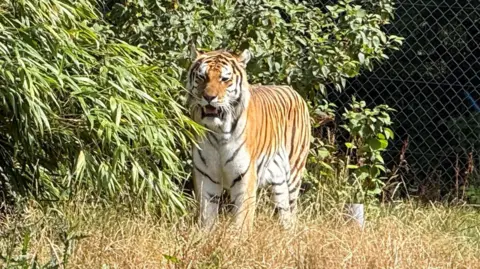
However, Gibson said some animals, such as the meerkats, were enjoying the hot weather and were basking in the sunshine, while its cold-adapted species, like the Amur tiger, were retreating to shaded areas to keep cool.
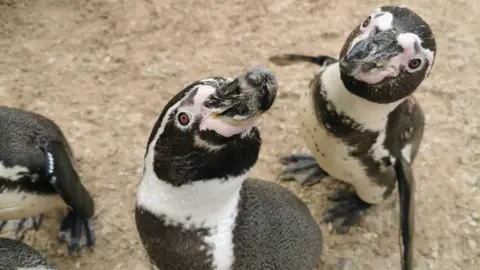
Nick Reynolds, from Paradise Park Wildlife Sanctuary, said staff needed to clean the otter and penguin ponds weekly due to algal blooms caused by the weather conditions.
"We can't use any chlorine in the water because it's not good for the animals, for the otters or for the penguins," Reynolds said.
"So yeah, cleaning them out regularly and then filling them up again, which is a huge expense for us," Reynolds said.
He said most of the park's birds were tropical and "really like the hot weather" but it was "too dry" for the animals.
"They need a bit more humidity because in the rain forest they're going to get rain as well as the heat," he said.
Reynolds said the park used a sprinkler system which sprayed over the aviaries.
"The birds love it and you see them stand there and flap their wings and get really wet and have a lovely bath," he said.
