Robotaxis granted licence to operate in London

 Wayve
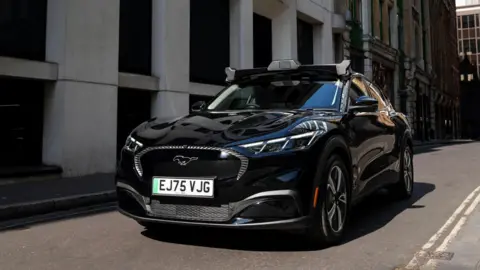
WayveSelf-driving taxis have moved a step closer after Transport for London (TfL) granted private hire licences to a fleet of autonomous vehicles - on the condition that a human driver is present.
Uber said inspectors had confirmed that vehicles using technology by British firm Wayve met all of TfL's policy and safety standards.
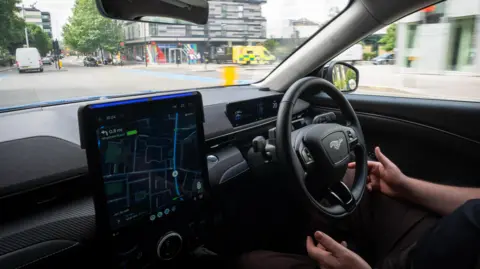
Under the terms of the PHV licence, a qualified driver must be present and remain responsible for the car. Journeys could begin later this year.
A TfL spokesperson said safety was its "top priority" and any new vehicle licensed to carry passengers in London must align with its target of eliminating all deaths and serious injuries on London's roads by 2041.
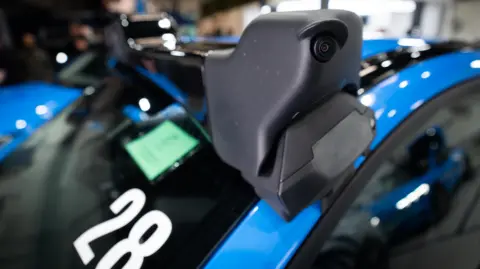
The vehicles being used - electric Ford Mustang Mach-Es - have been modified with camera pods on the roof and mirrors as well as small radar units.
The licensing of the vehicles completes the "triple-lock" requirement for private hire trips, where the operator, driver and vehicle must all hold licences with the same licensing authority.
For the vehicles to be used without a human driver, a separate approval would be needed from the Driver and Vehicle Standards Agency.
Uber said some of the 100,000 people who signed up to express interest in experiencing robotaxis would be offered rides in the vehicles "later this summer", ahead of a full public launch.
 PA Media
You can see how I found getting driven in one of Wayve's AI car - it's an incredibly discombobulating experience.
TfL says the drivers in the robotaxis will still be in charge and have to take full responsibility if they take fare-paying passengers and pass all the usual checks but minicab unions will not like it and fear it is the start of many job losses.
The Licensed Taxi Drivers' Association has been approached for comment.
 PA Media
Wayve vice president for global affairs and assurance, Sarah Gates, said the licence was an "important step".
"The responsible deployment of these vehicles will bring us safer, cleaner and quieter streets, and we're proud to continue working alongside regulators, communities and the public as we take the next steps towards making autonomous rides a reality in the capital," she added.
Uber called it a key milestone.
Global head of autonomous mobility operations Annie Duvnjak said: "Our interest list has seen an incredible response from Londoners who are excited to experience Wayve's British-built autonomous driving technology."
Wayve was founded in 2017 by two University of Cambridge PhD students.
London will be the first city in the world to use its technology for commercial journeys.
Wayve is also working with car manufacturers such as Nissan and Stellantis to deploy its systems in private vehicles.
Listen to the best of BBC Radio London on Sounds and follow BBC London on Facebook, X and Instagram. Send your story ideas to hello.bbclondon@bbc.co.uk
