Beach deaths emergency response praised by witness

 BBC
BBCAn eyewitness has praised the "phenomenally quick" response of emergency services as they dealt with a father and daughter in trouble at sea.
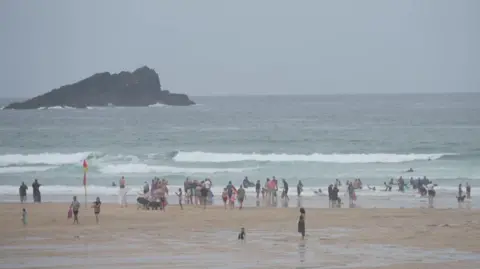
The RNLI, police and coastguard were among the crews called to Fistral Beach in Newquay, Cornwall, at about 21:45 BST on Sunday after reports two people had been pulled from the water.
Devon and Cornwall Police said a woman in her 30s and a man in his 60s, both from Doncaster, South Yorkshire, were pronounced dead at the scene.
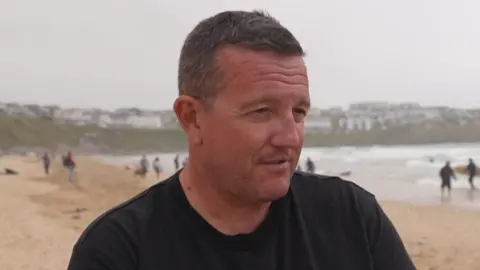
Nick Glazzard, who has been on holiday in the area and staying near the beach, said he was "really impressed" by the response but felt sad the crews could not save the pair.

"The response team was phenomenally quick to whatever was happening" said Glazzard.
He said the coastguard helicopter was searching, but before it arrived there were plenty of police and ambulances present "within minutes".
"We obviously didn't know what was happening at the time, but their reaction was so fast," Glazzard added.
Police said officers were trying to locate a handbag belonging to the woman which it understood was on her person when she entered the water.
It is described as leather-style, orange or peach in colour with a shoulder strap, measuring about 30cm by 30cm (12in by 12in) and thought to contain several personal items with significant sentimental value.
The force said: "At what is an incredibly difficult time for the family, they would take great comfort in being reunited with these belongings if possible."
Ross Macleod, water safety manager at the RNLI, said the two deaths were a "tragic reminder around how dangerous open water can be" and urged people to visit lifeguarded beaches and be aware of the risks.
Adrian Mayhew, director of operations and safety at Surf Life Saving Great Britain, said warmer summers linked to climate change were bringing more people to beaches and waterways, increasing the risk of drowning incidents.
He said many people were unaware sea and river temperatures could remain dangerously cold even during heatwaves, leading to a potentially fatal "cold shock response" when they entered the water.
He explained that cold shock could rapidly affect a person's ability to swim, regardless of their age or fitness, because the body's natural survival response diverted blood towards vital organs.
Mayhew urged anyone who found themselves in difficulty in the water to "float to live" by lying on their back, staying calm and allowing the initial shock to pass before calling for help.
Follow BBC Cornwall on X, Facebook and Instagram. Send your story ideas to spotlight@bbc.co.uk.
