Arctic Corsair move: Everything you need to know

 BBC
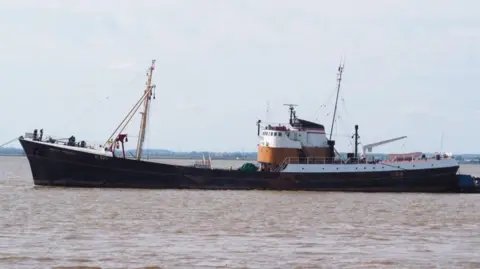
BBCArctic Corsair will move to its final home on Friday.
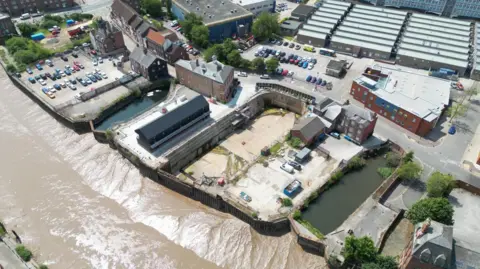
The ship, which is Hull's last remaining sidewinder trawler, will become a visitor attraction at the newly renovated North End Shipyard in the city centre.
It is part of the Hull Maritime project, which also includes improvements to Hull Maritime Museum and Queen's Gardens.
Here is a guide to the timings, the best places to view the ship and other useful information.
What are the timings?
Hull Maritime said the move had been scheduled for Friday following consideration of tidal patterns, weather forecasts, river conditions, bridge operations and navigational safety.
However, final timings would remain under review to ensure the move could be carried out safely and successfully, a spokesperson said.
Arctic Corsair is due to depart Albert Dock at about 05:45 BST before heading along the Humber Estuary and then up the River Hull.
The move would require the co-ordinated opening of multiple bridges as well as precise manoeuvring into the dock during a narrow high-tide window, officials said.
To allow the trawler and accompanying tugs to pass, Millennium Footbridge, Myton Bridge, Scale Lane Footbridge and Drypool Bridge will be opened temporarily.
The Hull Tidal Surge Barrier is also supporting the operation.
Motorists, cyclists and pedestrians are advised to plan their journeys in advance as bridge openings may cause temporary disruption, and the complexity of the operation means timings may change at short notice.
'A significant moment'
Jackie Dad, deputy leader at the city council, said: "The Arctic Corsair is an important part of Hull's maritime story, and this final journey is a significant moment for the city.
"Moving [it] to a permanent dry berth will help secure [its] future, allowing us to preserve and celebrate this iconic vessel for generations to come."
Where can I see it make its final journey?
People are invited to watch Arctic Corsair's final journey and be part of a memorable moment in the city's maritime history.
Suggested vantage points include:
- West of the River Hull
- Humber Quays
- Hull Marina Bullnose
- Humber Estuary barrier from The Minerva pub to the Voyage statue
East of the River Hull
- The Deep
- Tower Street Car Park
Spectators are advised to arrive early and follow instructions from event staff.
Due to the bridge closures, the ability to cross the river to other vantage points will be restricted at times.
For safety reasons, an exclusion zone will be in place around the North End Shipyard site once Arctic Corsair reaches Drypool Bridge.
Cod Wars and a record catch
Arctic Corsair was built in 1960 and was involved in the Cod Wars conflict with Iceland in the 1970s, ramming an Icelandic gunboat during the dispute.
It also broke a record for landing the most cod and haddock caught in the White Sea in 1973, according to Hull Maritime.
It said the ship was also a symbol of the region's trawling past, and of the thousands of men and boys from the city who never made it home during Hull's active fishing industry.
It has undergone extensive restoration and will form the centrepiece of a new visitor attraction alongside an energy-efficient visitor centre and the restored Scotch derrick crane.
The 18-tonne crane is a survivor of the shipbuilding industry along the River Hull that ended in the 1990s.
What is the Hull Maritime project?
 BBC/Gill Sennett
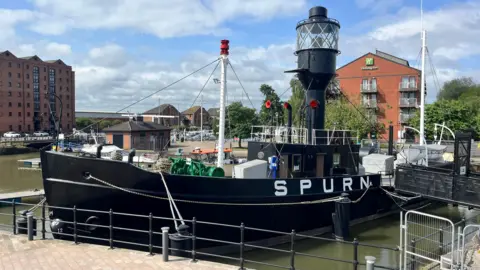
The Hull Maritime project includes the restoration and refurbishment of the Maritime Museum, Spurn Lightship, North End Shipyard, Arctic Corsair trawler and Queen's Gardens.
The Maritime Museum, which reopened on Saturday, features about 1,300 objects, including models, maritime art and a 40ft (12m) whale skeleton.
Spurn Lightship, which was built in 1927 and was in service for almost 50 years, helping guide ships through the Humber Estuary, reopened in March.
Queen's Gardens fully reopened to the public in May.
Listen to highlights fromHull and East Yorkshire on BBC Sounds, and watch the latest episode of Look North.
Download the BBC News app from the App Storefor iPhone and iPad orGoogle Play for Android devices
