Concentrate! How to tame a wandering mind



Procrastinate often? Caroline Williams does, so decided to find out if brain training could tackle her wandering mind. What she discovered could help everyone.
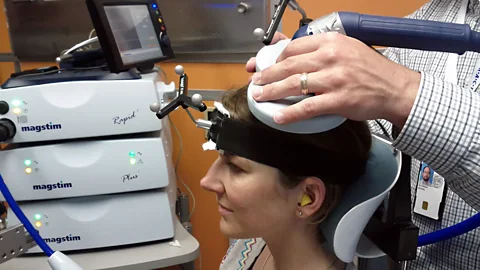
I am about to be zapped in the head with an electromagnet, once a second, for eight minutes. I fidget, trying to get comfortable in a huge black chair with jointed metal arms that stand between me and the door. I feel faintly ridiculous wearing a tight headband with what looks like a coat hook on the top. “All you need to do is relax,” says Mike Esterman, the researcher about to zap me. That’s easy for him to say – he’s holding the magnet.
I’ve come to the Boston Attention and Learning Lab in the US to try and train my brain to focus better. Esterman and fellow cognitive neuroscientist Joe DeGutis have spent nearly seven years working on a training programme to help wandering minds stay “in the zone”.
So far, their methods seem to be particularly promising for enhancing focus in US army veterans with attention problems linked to post-traumatic stress disorder (PTSD) and brain injuries, as well as people with attention deficit hyperactivity disorder (ADHD). But what I want to know is, can the mind-wandering of the average procrastinating person be improved? And if so, can they do it to me? Please?
A month earlier, when I had first contacted DeGutis to ask this question, he wasn’t convinced that they could help. “It is typically quite difficult to improve 'normal' functioning into the above average or superior range, despite what some brain training companies suggest,” he said. “If you don't have poor enough performance, training may not be effective.”
But one look at my results on their online “continuous concentration” test, and he changed his mind. I scored 53 – more than 20 points below average (try it yourself at the end of this article). And, after a few more online tests and questionnaires sent by email, the cold hard truth hit my inbox. “Considering all your results, it's very clear that you have issues with attention and distractibility both in the lab and in daily life.” He won’t be drawn on what this might mean for my brain, but he does say there’s “room for improvement” and invites me to Boston for a course of intensive training and brain stimulation.
I shouldn’t have been that surprised. Among people who know me well I have a reputation for not focusing on anything for very long. Years ago my brother came up with the perfect name for a task that started well but got abandoned halfway, with the accompanying mess left everywhere. “Ah,” he’d say. “That looks like a ‘Caroline job’.” An old friend had a more poetic version, calling me “butterfly brain”, because of the way I constantly flit from one thing to the next. I like this one better.
Hope for change
Fortunately for me – and for anyone who finds their attention being hijacked by Facebook, daydreaming or a sudden urge to put the kettle on – there is good reason to think that improvement is possible. A decade or so of neuroscience has shown beyond doubt that the adult brain remains malleable throughout life. The circuits we use most often become stronger and more efficient, and the brain areas they connect become larger, while the ones we don’t use, shrink and fade away. Study after study has shown that your brain can be changed for the better.
But – and it’s a big but – to change anything in the brain you have to focus your attention on it. So what if your problem is with the very act of focusing? How do you concentrate for long enough to even start to improve your attention span?
I’m not the only one asking this question. Psychologists and neuroscientists are increasingly interested in our ability to knuckle down, precisely because so many of us find it hard. An estimated 80% of students and 25% of adults admit to being chronic procrastinators, and with the internet and smartphones offering an endless number of distractions from what we should be doing, it may be getting worse.

No matter how much we like to think that a little procrastination makes us more creative, the evidence suggests that it actually leads to stress, illness and relationship problems. And having your head in the clouds doesn’t make you feel better anyway. In a 2010 study, psychologists Matthew Killingsworth and Daniel Gilbert of Harvard University interrupted people throughout the day to ask what they were doing and how happy they felt. They found that when people were daydreaming about something pleasant, it only made them about as happy as they were when they were on task. The rest of the time mind-wandering actually made them less happy than when their mind was on the job.
So how can we take control of a wandering mind for a happier and more productive life? Step one is to work out what is causing the wandering in the first place. According to psychologist Tim Pychyl of Carleton University in Canada, and author of the book Solving the Procrastination Puzzle, procrastination is largely an emotional problem – a psychological coping mechanism that kicks in during times of stress. “We have a brain that is selected for preferring immediate reward. Procrastination is the present-self saying I would rather feel good now. So we delay engagement even though it’s going to bite us on the butt,” he says.
The good news, though, is that people can change their ways. “Willpower is like a muscle… over time you can strengthen your attentional resources. I’m a big believer in that,” says Pychyl.
Brain target
And this is exactly what DeGutis and Esterman have been working on. Their training programme targets the brain’s ‘dorsal attention network’, which links regions of the prefrontal cortex – the bit of the brain above the eyes that helps us make decisions – and the parietal cortex, the ‘switchboard’ for our senses, which is above and slightly behind the ears. The dorsal attention network is the part of the brain that springs into action when we are deliberately focusing on a task, and if it is to work for any length of time, activity in what’s known as the default mode network – responsible for mind-wandering, creativity and thinking about nothing in particular – has to be turned down.

Imaging studies have also shown that the right side of the brain’s dorsal attention network does the bulk of the work – people who do badly on the sorts of tests DeGutis and Esterman asked me to perform show more activation across both hemispheres, suggesting they are leaning more heavily on the less efficient left.
So as a less-than-expert focuser and an above average mind-wanderer, it could be that my right hemisphere isn’t working as hard as it should be. Or it could be that I struggle to turn down activity in my default mode network, which allows my mind to wander when it should be knuckling down. Now I have a chance to find out which.
So here I am, waiting to be assessed in a 1950s style hospital room with an X-ray viewer on the wall and a big black chair where the bed should be. On day one, there is no stimulation, just a couple of hours of tests to get a baseline for my powers of concentration in this particular week. In measures of visual attention and propensity to get distracted by something that pops up – like a Facebook or email notification – I do fine. “I’m not worried about your driving,” DeGutis says, which is good, because I was starting to be.
Focus, focus
But what constantly trip me up are tests of sustained attention – how well I can stay alert during a boring and repetitive task. The first test is one that Esterman has affectionately dubbed “Don’t touch Betty”. It sounds easy: a series of male faces flash on the screen and you press a key as soon as each one pops up. But when the only female face (Betty) appears, you don’t press. For me, it’s not so much difficult as physically impossible. Even when I spot Betty there never seems to be enough time to tell my hand not to press the button. I spend the whole 12 minutes berating myself as Betty’s Mona Lisa smile starts to look more and more mocking.
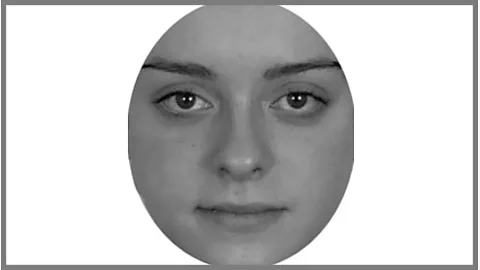
I later find out that my score on this test is off-the-scale bad. My error rate is 51%, compared to an average of 20% in healthy volunteers. The worst score they got in their study was just 40%. I, on the other hand, score closer to people they tested who have PTSD or stroke damage
As well as scoring high on questionnaires measuring my general levels of anxiety and impulsivity I get an above average score in mindlessness – a measure of whether you are the kind of person who wanders around in a daze a lot. No wonder DeGutis and Esterman are looking worried. They have just four days to improve my focus before I fly home to the UK and tell the world all about it. Suddenly, I imagine, inviting a journalist to the lab doesn’t seem like such a great idea.
First step is a magnetic resonance imaging brain scan, so that Esterman can pinpoint the brain region he wants to stimulate. He is aiming for an area of the left prefrontal lobe, called the frontal eye field (FEF), which sits roughly halfway between my left ear and the top of my head, and is part of my underperforming dorsal attention network. The idea, I learn later, is to use a weak electromagnetic magnetic pulse to turn down the activity in the left hemisphere FEF, to force me to develop the more efficient right and boost my powers of concentration – sort of like a variation of strapping down a good arm to force someone to strengthen the bad one.
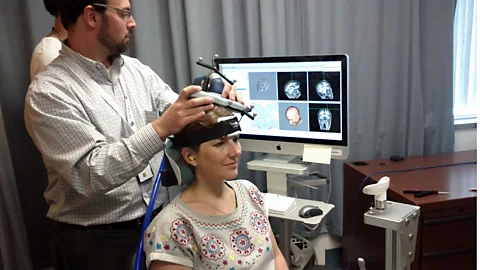
When I get to the stimulation the next day, it’s not as bad as I feared. At least not at first. For the first minute or so it feels a bit like popping candy is going off under my skull. Five minutes in, though, and it’s seriously annoying – like the worst school bully ever repeatedly flicking me on the head.
In all, I have two eight-minute-long sessions of magnetic stimulation, each followed by a 12-minute-long session of computer-based training. I also do three 12-minute blocks of training twice a day, over the internet, wherever my laptop and I happen to be.
The training is along similar lines to “Don’t touch Betty”. There’s a target image – say a white cup on a brown table – that flashes up on the screen every now and again. You don’t press the spacebar for that one, but you do press for any other cup and table colour combination. The idea is to do it as fast as possible so as not to cheat. At first it’s every bit as frustrating as Betty – I see my hand moving towards the spacebar in slow motion but am physically unable to stop it even though I know I should. The hand is faster than the brain, it seems. Aargh!
After my first bout of stimulation I do even worse, and I can tell that Esterman and DeGutis are a little perturbed. Neither of them is saying much but it seems that they expected me to do better after a short, sharp zap. By day three of the training I am doing no better and am so frustrated I feel like yelling every time I hit the spacebar in error. I feel so stupid – I have no trouble spotting the target straight away. It’s just that a gun to my head couldn’t stop from me pressing the space bar.

But then, out of the blue, sometime between morning and evening training on day three, something clicks. My “don’t touch” score jumps from between 11 and 30% correct to between 50 and 70%. I’m actually starting to enjoy it – and have begun to have a strange and sudden awareness of what’s going on in my mind when I accidentally press for a target. I realise, for example, that I missed one because I was thinking about how to write the intro to this piece. And another because I was wondering what my son was up to back home. And should I have wine after training, or beer?
DeGutis seems to think this is an important development. Being aware of what you are thinking is known in psychology as ‘meta-awareness’, and it’s very useful if you are trying to stop mind-wandering before it takes you too far away. “Everyone that the training has helped finds that they get to the stage where they are a little more meta-aware,” he says. “They are doing the task and they see themselves thinking about other things.”

Sara Lazar, a neuroscientist at Harvard Medical School, studies the effects of meditation on the brain and she has found something similar. In studies of long-term meditators she found lower activity in a region of the brain called the posterior cingulate cortex (PCC), part of the default mode network that controls mind-wandering. The upshot of this, says Lazar, is that better control over the PCC can help you catch your mind in the act of wandering and nudge it gently back on task. “So when your inner voice is like ‘oh I’ve got a deadline’ you can say, ‘Ok, quiet, I’m trying to concentrate’,” she says.
It certainly feels like something like this has happened in my brain. But because DeGutis has been adapting my training each session to provide a ‘scaffold’ for my fledgling skills, we won’t know if I’ve really improved until Friday, when I re-sit the Betty test. Until then they’re giving nothing away. All I can get out of them is that they are pretty sure I don’t have ADHD – something all three of us had been wondering since my first test online. Bang goes that excuse then.

A couple of days later, it’s retest day and, after a short break for them to crunch the numbers, the results are in.
First they are keen to point out that this isn’t a proper experiment. I know way too much about their research to be truly naïve about it – and that's a problem because it might introduce placebo-style effects that could bias the results – and anyway, they would normally do a course of stimulation and training over eight weeks, with a control condition where they only pretend to be zapping my brain. They won’t be including me in any of their studies as a result.
But, what is clear is that the intensive training has definitely done something. On the “Don’t touch Betty” task I went from an error rate of 51% before training – worse than the worst healthy person they recorded in their study, and in the region of PTSD sufferers – to 9.6%, which is close to the top score in the same study. What’s more, judging from previous studies my improvement is real and not just an artefact caused by the fact that I was familiar with the “Betty” task on retest day. “That’s remarkable,” says DeGutis. “We were like, ‘What? Did we run the same version of the test?’”.

In fact, I asked them the very same question immediately after the retest because the experience of doing it was totally different. Rather than Betty’s face suddenly flashing before me, then fading away with a smirk, she seemed to gradually and slowly appear, with a friendly smile that said ‘Hi’. I even smiled back at her a few times as I held off from pressing the space bar.
But they checked, and it was indeed the exact same test. And incredibly, even though it felt like everything was happening in slow motion, the average time it took me to hit the space bar was the same in both tests – 815 milliseconds before training and 816 afterwards.
On another test, which measured my attentional blink – basically how soon the brain can refocus after a distraction – I show similar improvements, scoring 46% before training and 87% afterwards. “That’s a huge improvement,” says DeGutis, and the attentional blink test doesn’t show much of a familiarity effect either.
I have to admit that I have definitely been feeling calmer and more focused in general, and not just because I am in sunny Boston, away from the stresses of normal life. But is it really possible that I have changed my brain in just four days?
“Not structurally,” they say in unison. “But functionally, how you engage the brain… something is different,” adds Esterman.

There are some clues to what might have changed in one of the their most recent studies, which tracked fluctuations in brain activity over time during a Betty-style test. They found that when default mode network activity was high – suggesting mind-wandering – an error was more likely, while more activity in the dorsal attention network correlated with success. “So we can simply see if you are better at engaging this when you need it and not getting into this mind-wandering default mode,” says Esterman.
Because I didn’t do the tests in the scanner there’s no way of tracking what was going on in my brain, but in the same study, a more consistent reaction speed also proved to be a sign of being ‘in the zone’. And on this measure I improved after my week of training. “You still had moments when you were better or worse, but in your worst moments you were absolutely not anywhere as bad as last time,” says Esterman.
Mind nudge
What this suggests, they tell me, is that I am using the same attention resources more efficiently. And that’s why it seemed easier – because strange as it sounds, when it comes to attention, less is more. Staying on task isn’t about pouring all your energy into the job – it’s about allowing the brain to wander occasionally and gently nudging it back on course. And stressing out about getting distracted only releases a flood of hormones into the brain, and they don’t help in the slightest.
“When you’re not too anxious and you’re not too engaged and you’re kind of in this sweet spot, norepinephrine [a hormone responsible for vigilant concentration] receptors in the prefrontal cortex called the alpha 2-A receptors are on. If you get too stressed they shut off,” says DeGutis.
So ironically, it seems that what is behind my wandering mind is trying too hard to focus, which backfires, making me less able to concentrate. It’s a vicious circle. Now, though after only a week’s training, it feels like I’ve cracked it.
Then DeGutis gives me the bad news. My new-found calm almost certainly won’t last. “The dose you got will probably fade away in a week or two,” he says. It’s the downside of adult brain training, apparently. Just like physical exercise, you have to keep at it or you’ll end up as flabby as before.

So now what? DeGutis promises to send me more training when I get home, which is great, but I can’t expect him to do that forever, and I can’t keep crossing the Atlantic for a top-up of brain stimulation. At some point I will be on my own, left with a brain and personality that is primed to procrastinate. Making their system work for people long-term is a problem that is very much in the front of their minds too.
How about an app, I suggest? But they’re in no hurry to go down that route. “We consider it a research project so we’re not running to commercialise it because we want to learn about it first,” says DeGutis. And, they point out, the basic problem is that the training sort of needs to be boring to do the job. “It’s boring but it’s good for you – how do you market that?”
In the meantime they suggest maybe finding a mindfulness meditation class, and doing yoga more regularly than my usual once a week. They also tell me that there is evidence that time in nature helps with focus, so getting in the zone may be as simple as taking the dog for a tear around the woods whenever my mind refuses to behave.
Less is not more
Since coming home I have come across some other suggestions. Attention researcher Nilli Lavie of University College London has found that making a task more visually demanding – by adding more colours or shapes to the page, or increasing the number of sounds your brain has to process – takes up more processing power, and leaves the brain nothing left to process distractions. So, counter-intuitive as it sounds, making things busier might make it harder for my mind to wander – it just won’t have the energy.
There is also a new app, called Focus@will, which claims to use the power of music to increase focus by 400%, by calming the part of the brain that releases norepinephrine. As far as I can tell it hasn’t been tested in peer-reviewed studies, and its results are based on very slight changes in brainwaves, so I’m taking it with a huge a pinch of salt. At this stage, though, three weeks post-training and with my focus sliding back to normal, I’m willing to try anything to bring back that focused feeling.
In the end, though, the most important thing for me was that I went to Boston to ask the question: can my butterfly brain be trained? And came back with an emphatic: yes. Now I have two more questions: how can I keep it going? And which brain wrinkle should I iron out next?
Find out your ‘continuous concentration’ score at www.testmybrain.org. I got 53, which is below average. How well do you focus?
Caroline Williams will be speaking about her brain training experience at TEDx Edinburgh Napier University in Scotland on 18 October. She filed this story more or less on time.
If you would like to comment on this, or anything else you have seen on Future, head over to our Facebook or Google+ page, or message us on Twitter.
