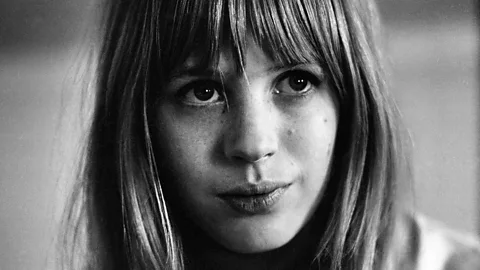
The wide-eyed poster-girl for the swinging 60s

 Alamy
AlamyAt the age of 16, Marianne Faithfull was spotted at a party and went on to record a single co-written by Mick Jagger. Arwa Haider discovers how the teenager became a muse for The Rolling Stones – before forging a career as one of Britain’s most enduring female singer-songwriters.
At the height of swinging London in the 1960s, young singer-songwriter and actress Marianne Faithfull found herself at a short-lived Soho nightclub called Vesuvio, alongside her boyfriend Mick Jagger. This hotspot was owned by an infamous character called Spanish Tony; the night attracted the generation’s cultural superstars, and Faithfull was, characteristically, at the heart of the scene.
“It was pretty much of a dive, but the people there were just stupendous: le tout Londres hip,” recounts Faithfull in her memoir, Memories Dreams & Reflections (2007). “All the Beatles, most of the Stones, a few Whos, spangled guitar slingers, mangled drummers were there – in short, anybody who was anybody, or thought they were. The punch had, of course, been spiked with LSD.”
Faithfull was, in many ways, a wide-eyed poster girl for the Swinging Sixties: that era of high times, bold style and wild possibilities. Born in Hampstead (to a British military spy turned academic father, and a mother who descended from Austro-Hungarian nobility), she had been ‘discovered’ at 16 by The Rolling Stones’ flamboyant manager, Andrew Loog Oldham. Her first major single, the sweetly dreamy As Tears Go By (written by Jagger and Oldham with the Stones’ guitarist Keith Richards), propelled her from playing London’s folk clubs to mainstream chart stardom.
 Alamy
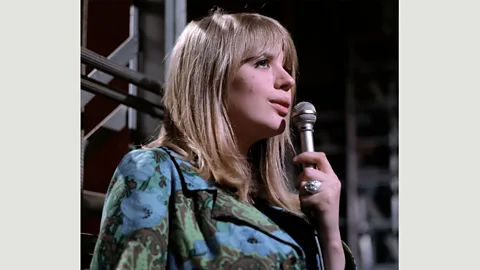
AlamySuccess seemed entwined with excess in that decade. The Swinging Sixties summoned a whirlwind of ‘free love’, rock’n’roll and experimental drugs – and Faithfull initially seemed in her glamorous element: a talented, convent school-educated beauty and hit-maker (who recorded in English, French and German) on escapades with the likes of the Stones and Anita Pallenberg (another It Girl and sometime love rival). At the same time, a judgemental streak and salacious bent lingered in British society; famous women would bear the brunt of this much more sharply than their male counterparts – as proved by the notorious police raid on a party at Richards’s Sussex home, Redlands, in 1967.
Double standards
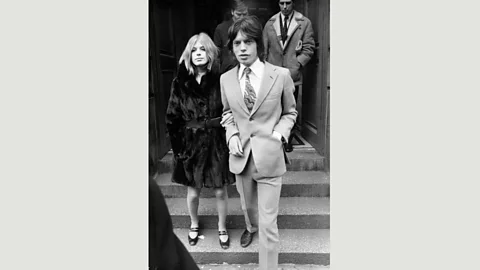
Jagger and Richards were tried and found guilty of drug possession; Faithfull’s public treatment was undeniably more damaging. The press slavered over reports that the 20-year-old had been caught at Redlands wearing only a fur rug (she’s pictured during the court trial, carrying a copy of the London Evening News with the headline ‘Naked girl at Stones party’); the ensuing scandal and sexual myths would haunt her from here. “To be a male drug addict and to act like that is always enhancing and glamorizing,” Faithfull would later tell AN Holmes in Detailsmagazine (1994). “A woman in that situation becomes a slut and a bad mother.”
 Alamy
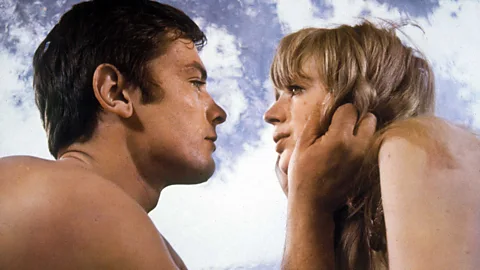
AlamyOf course, Faithfull was never easy to categorise; even her youthful acting work was intensely varied, from the cult erotica of The Girl On A Motorcycle (with Alain Delon, 1968) to Ophelia in Tony Richardson’s 1969 version of Hamlet (her understudy was Anjelica Huston). But this It Girl’s comedown, when it came, was harshly documented.
In 1970, she left Jagger, after suffering a miscarriage, and also losing custody of her infant son to her ex-husband, artist John Dunbar; she had also attempted suicide, taking 150 Tuinals on a flight to Sydney, shortly after the death of Stones’ founder Brian Jones. Faithfull’s rejection of the ‘goldfish bowl’ of superstardom led into murkier waters, as she became a homeless, anorexic junkie in Soho: London’s playground turned purgatory.
Faithfull hit rock bottom, yet somehow, she did not fade away: “People looked after me, the meths drinkers, junkies,” she recalled. “I learned that human beings are really all right. I didn't know that from my posh life in the 60s. It was very bitchy and people were cruel to each other. I was on the street for two years, but it was better than staying at my mother’s and being under her thumb.”
Musical muse
In retrospect, even this nightmarish haze seemed to yield creative sparks; Faithfull was credited with inspiring several iconic Stones tracks, including Wild Horsesand I Got The Blues(from 1971’s Sticky Fingers album, also featuring Sister Morphine, which she co-wrote) – she had also previously introduced Jagger to literary influences, including Mikhail Bulgakov’s The Master And Margarita, which led to his writing Sympathy For The Devil. She duetted with David Bowie (she in a nun’s habit, he as Ziggy Stardust), covering I Got You, Babe on NBC TV in 1973. She also recorded works by Bob Dylan and Sandy Denny for Rich Kid Blues (recorded in 1971 and released in 1985), and explored country influences on 1976’s Dreamin’ My Dreams.
 Alamy
AlamyBy 1979, punk was disrupting pop culture, political turmoil loomed, and Faithfull (then married to Ben Brierley from The Vibrators), released her benchmark album, the Grammy-nominated Broken English. This collection was edgy and artful, with an electro-edged title track partly inspired by Ulrike Meinhof, accompanying videos by Derek Jarman, and uncompromising lyrics. Three decades on, Broken English retains a startling potency; on the credits for its 2013 deluxe edition, Faithfull admits: “I thought I was going to die, that this was my last chance to make a record. I’m going to show you bastards who I am.”
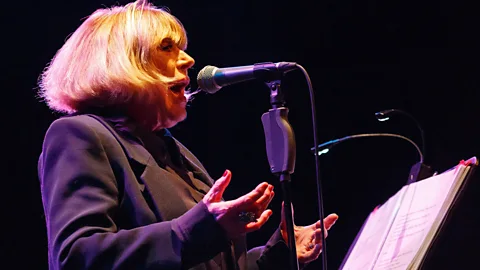
Few artists’ voices have weathered so openly or vividly as Faithfull’s, from her sweetly girlish 60s recordings, to the much smokier, huskier tones of her later works. She has arguably put this transformation to powerful effect, musically. These days, the notion that a singer “makes a song their own” might sound like a throwaway comment on a TV talent show, but Faithfull really does draw intensely intimate connections, whether it’s her raw interpretations of Weimar Republic cabaret (20th Century Blues, 1997), or the title track of her 1999 album, Vagabond Ways. She has continued to blur genres, collaborating with Roger Waters (playing the matriarch in his 1990 revival of The Wall), as well as hard rock acts Oxbow and Metallica.
 Alamy
AlamyIt is hard to think of anyone else who could be equally at home discussing poetry with Allen Ginsberg and William Burroughs, hanging out at Donatella Versace’s apartment with Kate Moss and Cher, or guest-starring as ‘God’ (to Anita Pallenberg’s ‘Devil’) in the TV sitcom Absolutely Fabulous (2001). Faithfull was never a mere adornment in the 60s; in the 21st Century, she remains a creative muse, collaborating with the likes of PJ Harvey, Anna Calvi, Damon Albarn, Beck, and Nick Cave. This self-styled ‘fabulous beast’ has endured health issues, and accomplished victories, including her Icon Of The Year award from British music magazine Q in 2009. In 2013, she told The Guardian: “I recently looked at my Austrian-Hungarian family tree – my great-great-uncle Leopold von Sacher-Masoch, Venus In Furs, and all that. I don’t think I had any choice, really, but to be very decadent.”
Faithfull is due to start recording her next album in January 2018; this will be her 21st solo record, following 2014’s Give My Love To London. Her legacy certainly casts her as an It Girl archetype, yet she is also a shape-shifting figure akin to Virginia Woolf’s Orlando: she belongs to each era, then she transcends it completely. Faithfull is the enfant terrible, the grande dame, the flawed sage, and anything she damn well likes.
And if you liked this story, sign up for the weekly bbc.com features newsletter, called “If You Only Read 6 Things This Week”. A handpicked selection of stories from BBC Future, Earth, Culture, Capital and Travel, delivered to your inbox every Friday.
