'Deadpan do-gooder' to 'ultra-violent vigilante': How 1980s comic The Dark Knight Returns transformed Batman

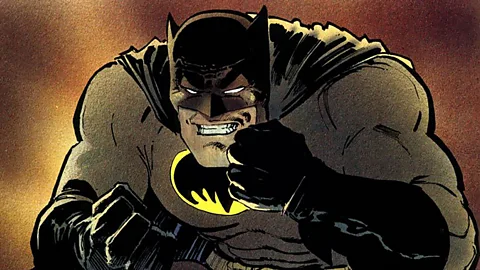 DC Comics
First published 40 years ago in 1986, Frank Miller's graphic novel transformed the Caped Crusader from a camp, comical figure into a brutal new kind of superhero. He tells the BBC how it became a sensation.
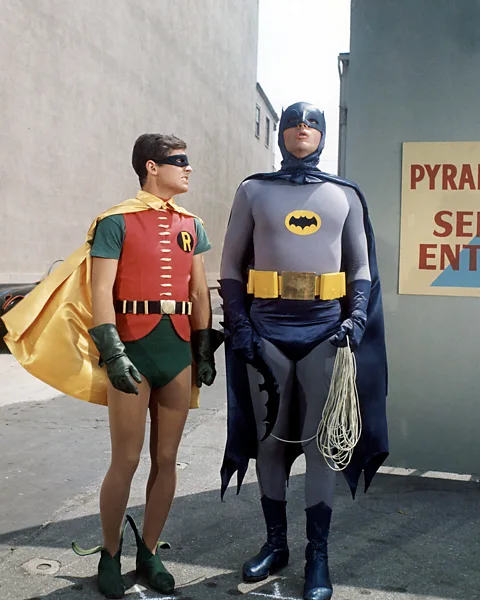
A deadpan do-gooder who wears underpants over his tights, and always carries a can of shark repellent spray.
For a long time, that was Batman – or, at least, Batman as the general public saw him, thanks to the camp 1960s television show and film. In his DC Comics adventures, he was depicted as a more serious and even sinister character, but the average person still saw him as Adam West in a self-mocking comedy with an infuriatingly catchy theme song.
Then came the graphic novel that changed everything – not just Batman, but superhero comics, and the many Hollywood films those comics would inspire.
First published as a four-issue mini-series in 1986, Frank Miller's The Dark Knight Returns was an edgy satirical masterpiece that demonstrated just how sophisticated and intelligent the genre could be. "In superhero fiction, we're dealing with symbolism, with metaphor," Miller tells the BBC.
"We do not have a Superman in the real world, but we do have huge military forces which can be used for good or evil. We do not have Batman out there, but we do have people's own desire to resist the use of force against them, and so on. I wanted to use the machinery and iconography of a children's story to tell a story for an older audience."
Described by Star Wars creator George Lucas as "the Michelangelo of our time", Miller is notable in the world of superhero comics in that he is a writer-artist who both writes and draws to the same breathtaking standard. He made his mark on the industry with an influential run on Marvel's Daredevil comics in the early 1980s. The Daredevil TV series and films, the entire Teenage Mutant Ninja Turtles franchise and the ninja gang in the new Spider-Man film all borrow from or pay homage to those comics.
 Getty Images
Miller has since had phenomenal success with his own independent creations: 300 and Sin City each had two film adaptations. But he is best known for The Dark Knight Returns, which Stephen King rates as "probably the finest piece of comic art ever to be published in a popular edition".
'An out-and-out resurrection'
As he recalls in his newly published memoir, Push the Wall, Miller was still in his twenties when he was commissioned by DC to "breathe new life" into a character who was at the time "emasculated" and "a second-class citizen in comics".
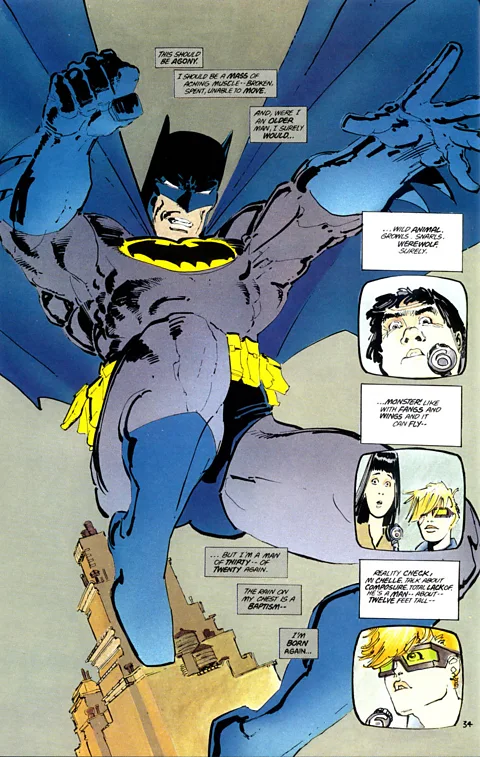
He tells the BBC that "everything else started falling into the place" when he set his story in the near-future and made Bruce Wayne a middle-aged man who had given up being Batman a decade earlier. "It was a matter of wanting to make him look as big and fatherly and square-jawed as he was when he was drawn in the '50s when I was first reading him as a child, and then combining that with a gritty, muscular, Dirty Harry / Death Wish kind of character."
Also, the time shift allowed Miller to bring Batman out of retirement after a long absence. "And nothing brings back a character more powerfully than an out-and-out resurrection."
 DC Comics
The idea was that while Batman was absent, Gotham City had crumbled into an urban hellhole, overrun by murderous gangs. The setting was based in part on Miller's own experiences. He moved to New York in the 1970s after a childhood in idyllic rural Vermont, and while he adored his new metropolitan home, "it was really a city in pretty serious decay".
Luckily for Gotham, the Batman of The Dark Knight Returns is no longer a gentlemanly sleuth, but an intimidating, ultra-violent vigilante who takes a grim satisfaction in breaking criminals' bones. He's so brutal, in fact, that it's almost incredible that DC's editors didn't object.
"There were countless discussions back and forth and tussles, but there always are," Miller shrugs. "It was a healthy collaboration between me and them – as loud as it got from time to time."
Most radical of all, Superman became a government stooge, loyal to a president who happened to resemble Ronald Reagan. And the Joker became a monstrous sadist. When the mini-series was first published, these revisions seemed iconoclastic, but Miller maintains that he was looking back as well as forward.
"If you go back to 1940 when they first introduced the Joker, he wasn't funny, he was a clear-cut psychopath who killed a lot of people," he says. "I was dragging comics back towards pulp fiction, back towards The Shadow and the other pulp heroes, which is where comic books came from to begin with."
Still, comics had never been as intense or as apocalyptic as The Dark Knight Returns – a grenade explodes on the subway, a plane crashes into a building, nuclear Armageddon looms – nor as tightly packed with storylines, jokes, characters and perspectives.
'My life changed overnight'
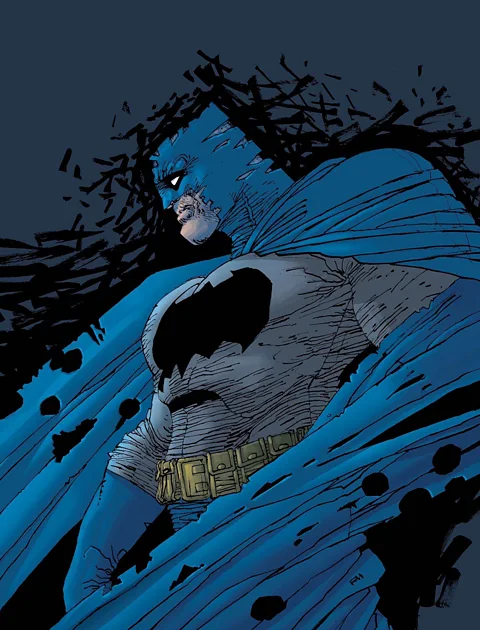
Miller crammed an astonishing amount into The Dark Knight Returns. In 1986, the average superhero comic had 22 pages, and each page had six or seven pictures or panels. Every issue of The Dark Knight Returns had 46 pages, and Miller would divide many of them into 16 tiny panels. "I was out to do the densest thing anyone had ever seen," he smiles. "And also I wanted that chop-chop-chop-chop rhythm. The idea was to make it impossible to take your eyes off it. So your teeth would be as gritted as tightly as Batman's were."
 DC Comics
The Dark Knight Returns was enhanced by Klaus Janson, the inker who added the finishing touches to Miller's drawings, and by Lynn Varley (Miller's then partner), who added the rich and subtle colours. But fundamentally all the words and pictures were his, so it was a colossal undertaking, and each issue was delayed by months.
"Some people at DC Comics came close to hospitalisation worrying about that," says Miller. But the mini-series' sales kept rising with every issue. It was immediately clear that The Dark Knight Returns was a sensation.
Such was its popularity that "my life changed overnight", Miller says. "It was very heady. But it was a wonderful time, there's no denying it."
Numerous articles were written about how superhero comics weren't for children anymore. And the influence his work had on the comics industry was "pretty obvious fairly quickly", he admits – as were the shameless imitations. "But that's the nature of the beast. If something succeeds, there's a natural inclination by not just the publishers but the talent as well to imitate it. It's certainly nothing to resent or deplore."
 Alamy
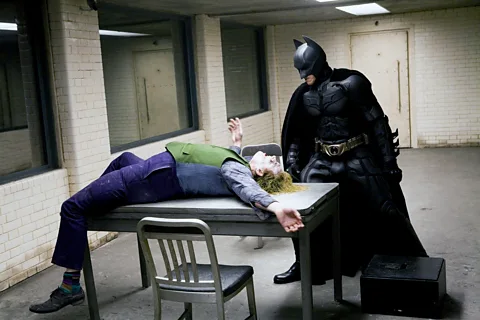
AlamyHis influence on the film industry was clear, too. Every single modern Batman film, from Tim Burton's 1989 blockbuster onwards, has taken some of its toughness and noirish style from The Dark Knight Returns.
Christopher Nolan's second and third Batman films took their name from it. And Zack Snyder's Batman v Superman: Dawn of Justice lifted whole sections directly from its pages. Beyond those, it could be argued that Hollywood's current understanding that superhero stories can appeal to all ages, without being dumbed down, can be traced back to Miller.
But he stresses that he was only one of several writers and artists who were revolutionising the genre in the 1980s. And he isn't losing any sleep over the many films that owe their existence to him. "It's better for sanity's sake and blood pressure's sake to take it all with a good nature," he says with a cackle.
More like this:
Besides, he points out, he didn't invent Batman. Bob Kane and Bill Finger created the character in 1939, and since then, a long line of enthusiasts have added to his lore. "When you contribute to a myth," says Miller, "you can't complain about the next priest."
Push the Wall is published by Simon & Schuster in the US and by Canongate in the UK.
--
If you liked this story, sign up for The Essential List newsletter – a handpicked selection of features, videos and can't-miss news, delivered to your inbox twice a week.
