The 'Holy Maid of Kent' who prophesied the death of King Henry VIII

 Getty Images
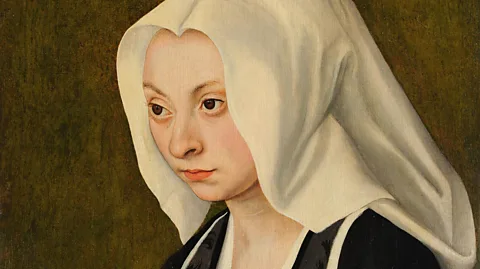
In the 16th Century, household servant Elizabeth Barton became a celebrated visionary – but when she defied the monarch, she paid the ultimate price with a gruesome end. Was she a charlatan or a brave heroine of the Tudor world?
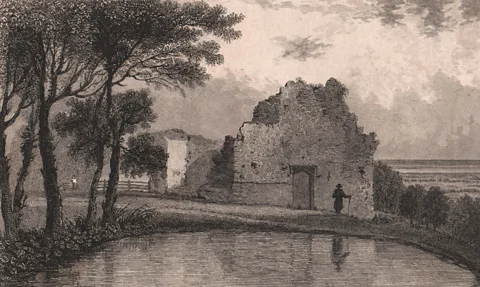
In a small village in Kent, England in 1525, a household servant named Elizabeth Barton fell dangerously ill. In her delirium, she murmured passages from the Bible. Later, she began slipping into seizure-like trances and uttering religious prophecies. Word quickly spread of her revelations, and people flocked to see this enigmatic young woman.
Warning: This article contains details some readers may find upsetting.
After Barton publicly fell into an hours-long trance which then supposedly healed her of illness, she was declared a "genuine visionary". One eyewitness out of the thousands present said: "Her face was wonderfully disfigured, her tongue hanging out, her eyes being in a manner plucked out."
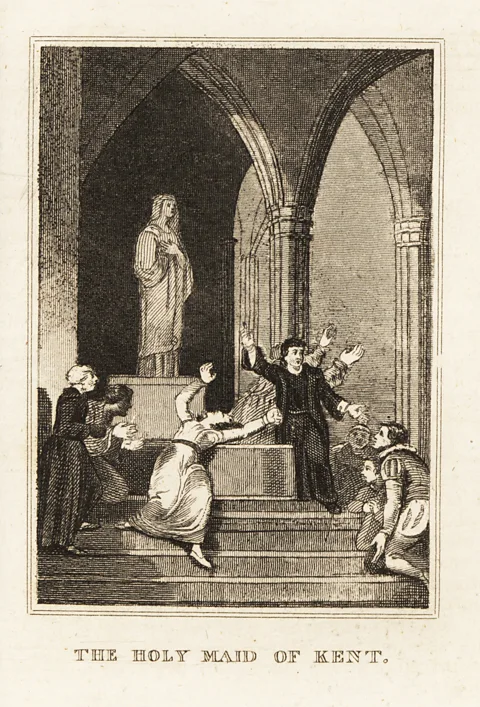
Barton then entered a small Canterbury nunnery and went on to have an enormous influence in Tudor England. Senior religious figures, noblemen and even King Henry VIII all consulted her. But her prophecies became dangerously political, and led to her tragic downfall. Now a book just out in paperback, Heroines of the Tudor World, re-assesses her significance.
Barton's rise in popularity coincided with the Reformation (the split between Catholics and the followers of Protestant reformers), which had arrived in England. By the 1520s, Protestant ideas had spread from mainland Europe. These ideas were critical of the wealth of the Catholic church and challenged the power of the Pope.
 Alamy
AlamyMany Catholics were worried. "They saw it all as a threat to their way of life, and anything that helped them combat that threat was going to be encouraged," says Sharon Bennett Connolly, author of Heroines of the Tudor World. Seeing Barton as a vessel for the word of God, people circulated her revelations widely through both word of mouth and writing.
"Everybody took her seriously. Whether her visions were real or not, people believed them," Connolly tells the BBC.
Besides her following of ordinary people, the "Holy Maid of Kent" or the "Nun of Kent" as Barton had become known had impressed several monks and prominent religious figures including the king's chief minister Cardinal Wolsey and the Archbishop of Canterbury. Word was then passed on to Sir Thomas More, King Henry's influential lord chancellor. More, upon meeting Barton, said he wished to witness her "great virtue" that he had heard about for "so many years".
But the lord chancellor later wrote to her with a warning: never to speak of the king or his personal affairs.
Barton went on to enjoy the personal favour of the king, and met with him many times, bonding over their devout Catholicism (Henry remained a Catholic for most of his life). However, Henry's desire to divorce, remarry and produce a male heir went directly against Catholic doctrine. Much of her prophesising was against the break with Rome, and she fervently supported Catherine of Aragon. So much so that Barton wrote to Pope Clement, warning him that there would be a plague if he turned against Catherine.
 Getty Images
Senior figures in the Catholic Church believed Barton could influence the king, and "prevent him [from] taking a course of action that horrified them", says Diane Watt, professor of medieval English literature at the University of Surrey in the UK and the author of Women Prophets in Late Medieval and Early Modern England.
A resistance leader
This has led some to argue that the so-called Holy Maid of Kent was nothing more than a puppet for the Catholic Church, and that she was manipulated, says Watt.
"I think that perception of her as a charlatan and puppet figure is really the perception that her enemies wanted us to have. I think that she was an incredibly talented and charismatic woman," Watt tells the BBC. Another interpretation is "to see her as leading the resistance to Henry's divorce and remarriage, rather than to see her simply as a puppet of other people".
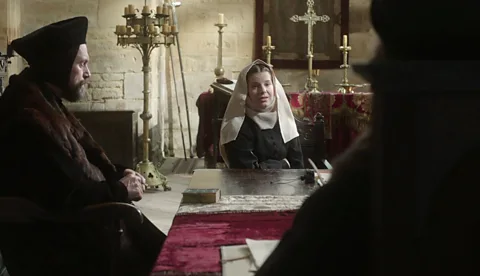
It's worth bearing in mind that there were several powerful mystics and visionaries in medieval Europe who had the ear of kings and even the Pope. In England, Julian of Norwich and Margery Kempe were well-known 15th-Century visionaries, though they didn't reach the same level of popularity as Barton, Watt says.
This might have been because her prophecies became progressively political, not just moral. "Elizabeth gained importance because she was talking about political matters in a way that other visionaries of the time didn't," says Watt.
Also, she was born a servant, and typically mystics were from a higher social class. "Unless you were a queen or a very exceptional member of the upper classes or aristocracy, women didn't really have a political voice," says Watt. "Mysticism and prophecy, if you had the support of the Church, could give women an opportunity to intervene in political matters."
Defying the king
And intervene she did. Firstly, she claimed that she had received a revelation from God that Henry would not live for seven months if he married Anne, and then that he would not be king after a month if he married her. She did not specify how or why. "She was treading a very, very fine line," Connolly says.
It was a courageous move. What was extraordinary, adds Connolly, was "the idea that this young woman… could stand up to a king and tell him that." It was treason to predict the death of a king under the Treason Act of 1351.
The king and Anne were so worried about the prophecy that in October 1532, on their way to Calais, they visited Barton in Canterbury to try to win her favour. Henry offered to make her an abbess if she were silent on the matter of his marriage, and Anne offered her a position in her household. Barton refused both, to the king's rage but it didn't stop him marrying Anne in January 1533.
And as the months passed it was clear that the prophecies were not coming true.
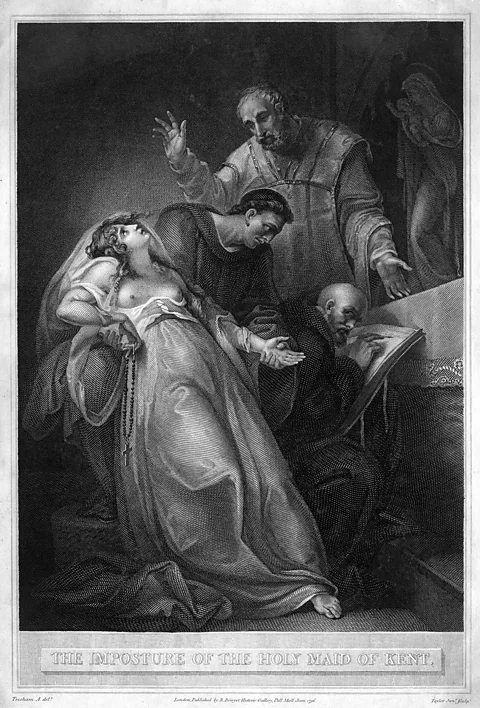 Getty Images
She was sent to the Tower of London for interrogation by the king's new chief minister, Thomas Cromwell, where she confessed that she had never had a revelation from God. "That's why she still fascinates, because we don't know whether or not she had visions," says Connolly. "If she did [lie], she was very clever, and she fooled an awful lot of people."
Whether she was manipulated or forced into confessing, we will never know, just as we will never know if she was a true prophet.
A gruesome end
On 20 April 1534, Barton and six of her loyal supporters, including her confessor Edward Bocking, were executed by hanging and beheading at Tyburn gallows. She was just 28 years old.
Her severed head was then raised on a pike and displayed on the south gate of Old London Bridge. This grisly tradition, practised from around the 1300s to the late 1600s, was a severe and macabre warning to traitors. Sir Thomas More, Thomas Cromwell and Guy Fawkes are other famous examples of traitors who had their severed heads displayed. The Holy Maid of Kent, however, is the only woman this is known to have happened to.
More like this:
Besides this grim distinction, Barton has real significance, Connolly says. "A young woman from Kent, with very little education, managed to attract people to her ideas. She showed what common people were thinking at the time."
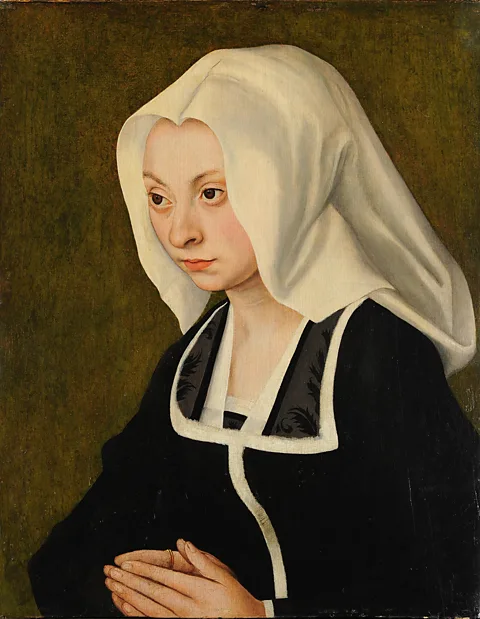 Getty Images
Unfortunately, Barton's side of the story has largely been erased from history. None of her writings, nor her followers' accounts, are known to have survived. Cromwell ensured that 700 copies of a book of her revelations, written by Bocking, were seized after printing and destroyed. A later pamphlet that was due to be circulated was also destroyed.
Academics hope that one day her revelations will be found, and in fact, a new murder-mystery novel imagines a world where a historian makes this groundbreaking discovery.
This is yet to be seen. What we are left with is official state papers by the likes of Cromwell, and the one-sided Protestant view of her, that she was a "charlatan", Watt says.
"That negative view of Barton has really influenced the history books, and that's why she's ended up becoming quite obscure, because very few people wanted to argue her case," she says. "I hope that one day that missing book of revelations by Elizabeth Barton actually does turn up."
--
If you liked this story, sign up for The Essential List newsletter – a handpicked selection of features, videos and can't-miss news, delivered to your inbox twice a week.
