Rooster to Beef: The TV shows making fun of the generation clash

 HBO Max
The feud between the generations was a popular TV theme in the 1970s, and now the interactions and frictions between Gen Z, Gen X, millennials and boomers are all over our screens once again. Why does the generation gap continue to make us laugh – and can the laughter help to heal the rift?
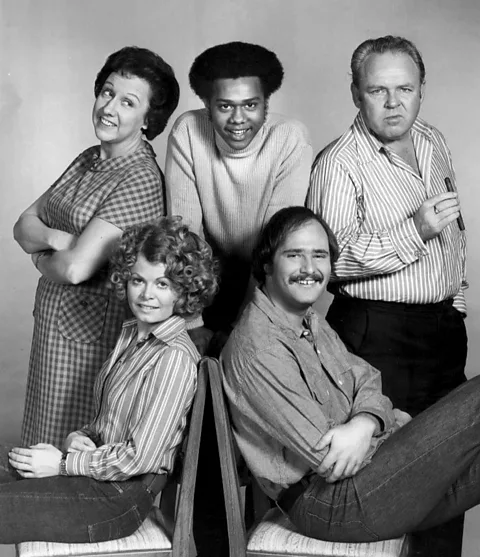
More than 50 years ago, television producer Norman Lear did something radical: he created a sitcom that held up a mirror to the US's yawning generation gap, All in the Family.
This groundbreaking 1971 show tackled bitterly contentious issues of the day – racism, women's rights, and the Vietnam War – in a manner that was both humorous and relatable. For five years, All in the Family was the most-watched programme on television.
Every week, more than 40 million viewers tuned in to watch a bigoted blue-collar Greatest Generation veteran, Archie Bunker (Carroll O'Connor), wrangle over questions of right and wrong with his shaggy-haired son-in-law, Michael "Meathead" Stivic (Rob Reiner), a baby boomer.
Today, when the intergenerational divide is arguably wider and deeper than during the 1970s, TV producers appear eager to emulate Lear, and meet the moment with shows illuminating the clash between the old and the young. And what better setting than a college campus, a place where the generations naturally face off?
 Alamy
AlamyLook no further than Rooster, which debuted on HBO Max in March, for solid proof. The show so rapidly gained viewers during its first weeks on air, it became the broadcaster's most popular comedy debut in more than a decade. Just five episodes in, HBO re-commissioned it for a second 10-episode season.
Why Rooster is a hit
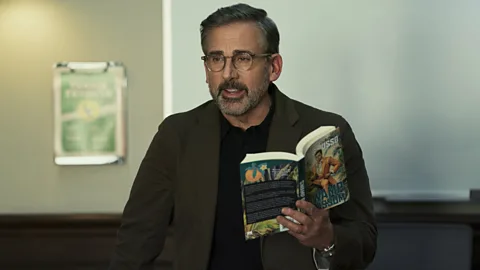
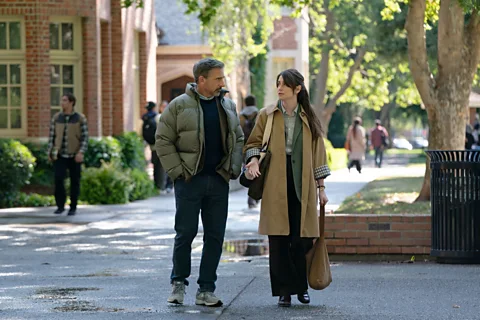
Rooster spans three generations. Steve Carell, plays Gen Xer Greg Russo, a divorced novelist who is persuaded to take a job teaching creative writing at fictional Ludlow College in order to be near his daughter, Katie (Charly Clive). An art history professor at the New England college, Katie and her husband, Archie (Phil Dunster), both Millennials, have recently split after Archie had an affair with a graduate student, and got her pregnant.
This scandal is the talk of Ludlow. The undergraduates, in stereotypical Gen-Z fashion, keep a censorious eye on their elders, all the better to call them out on attitudes and behaviour they term "problematic".
Carell is funny as the well-meaning but clueless Russo, who stumbles around campus trying to adjust to modern mores. He learns to say "unhoused” rather than "homeless". When he does an awkward little dance in the college canteen, the only thing worse than having to explain an outdated pop-culture reference to the Bangles' 1986 hit Walk Like an Egyptian is enduring withering looks for his cultural appropriation.
Katie's bond with her father is the show's central relationship, and a demonstration that disagreement is possible without sacrificing affection and respect. Indeed, beyond Carell's numerous pratfalls, the appeal of Rooster is the warmth and acceptance underlying the humour. The show doesn't force the audience to choose a side in the student-versus-faculty contest, as members of both groups can behave absurdly.
 HBO Max
It's permissible to laugh at – and feel the vulnerabilities of – everyone. Rooster creators Bill Lawrence and Matt Tarses have bet, and won, on their hunch that plenty of viewers of all ages aren't so entrenched in any cultural dogma that they can't enjoy jokes about how generational frictions play out in the world.
The television historian and critic Alan Sepinwall noted recently that "every few years something in the TV zeitgeist will spit out a pair of remarkably similar new series." He cited the near-simultaneous release of ER and Chicago Hope (1994), 30 Rock and Studio 60 on the Sunset Strip (2006), and – this spring – Rooster and Vladimir, an eight-episode series on Netflix set on a fictional campus in upstate New York.
Vladimir's dark humour
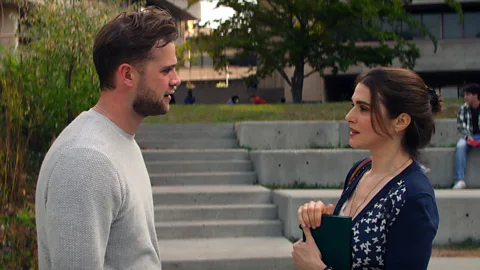
Rachel Weisz stars in Vladimir, playing a middle-aged English professor who, like Russo at Ludlow, finds herself out of step with undergraduates. M, as Weisz's character is known, and her husband – fellow academic John, played by Mad Men's rogue-ish star John Slattery – have an open marriage, and John is currently being censured for sleeping with students in the past.
M's Gen-Z students can't believe she stays with John, and in class often push back on her teaching. Why is she praising Rebecca, the classic novel by Daphne du Maurier? As one student argues, this book is "about a mousey-ass woman married to a toxic man". M pleads in vain that the novel contains universal themes, including "the inescapable pull of your lover's lover".
This last is particularly relevant to M, who finds herself lusting over her hard-bodied younger colleague Vladimir, played by Leo Woodall. She's obsessed with the relationship between Vladimir and his wife, and continually fantasises about having sex with Vladimir herself. Is she still attractive enough to attract this young man?
 Netflix
No spoilers, but M does get some of what she wants. The tone of Vladimir is darkly comic, and the dialogue is sprinkled with deft literary references, yet the potent generational split exposed can't be laughed away. M is like many older women today, the show suggests, seeking agency and the freedom to pursue pleasure without condemnation from anyone – while younger women are more likely to desire safety from predatory men. (This contrast was also highlighted in last year's After the Hunt, a film starring Julia Roberts as a professor at Yale University.)
The two campus TV shows end up being variations on a theme. Rooster asks viewers: can't we forget our differences and all get along? Vladimir posits that some difference of attitude is deeply rooted, but we still owe each other kindness.
Generational Beef
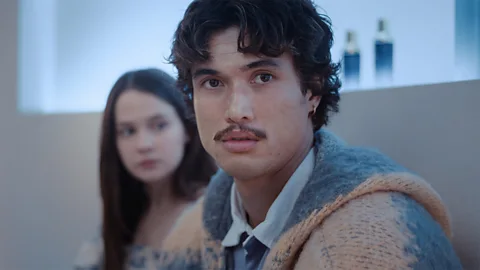
Kindness is in short supply in the sharp social satire Beef, the critically acclaimed anthology series helmed by Lee Sung Jin, in which the Gen Z versus Millennial feud is laid bare. In the second season, which debuted in April, a generational battle plays out at the workplace, specifically the grounds of a California country club where Josh (played by Oscar Isaac) is the general manager and a young Gen-Z couple Ashley and Austin (Cailee Spaeny and Charles Melton) are employees.
More like this:
When the younger pair inadvertently witness a volcanic argument between Josh and his wife Lindsay (Carey Mulligan), they become alarmed, and make a video to keep as evidence. After the older couple seemingly moves on from their fight, it occurs to Ashley and Austin that a means of blackmail now lives on their phone. They decide to pressure Josh for a better deal at work – health insurance and a higher salary – in exchange for not posting the unflattering video. The feud escalates from there.
 Netflix
Beef delves into a legitimate grievance that many in the younger generation have: the dire economic straits Gen Zers find themselves in, especially those carrying college debt. In an interview on social media Lee Sung Jin revealed, however, that the idea for the plot was spawned by a mundane domestic incident. He overheard a loud argument between a couple living in his Los Angeles neighbourhood, and later, recounting what he'd witnessed to colleagues, he was surprised at their sharply contrasting reactions. Those in Gen Z were upset and wondered if he had called the police. "They were gasping, and clutching at their pearls," Lee recalls. Whereas Millennial and Gen Xers simply dismissed it. "Yeah, it's a fight," they told him, with a shrug.
All in The Family's creator Norman Lear could not have anticipated how fertile the subject of the generational divide would still be in the 21st Century, when even small moments can reveal a chasm between old and young.
Rooster is streamed weekly on HBO Max in the US and on Sky Comedy and NOW in the UK, with the season-one finale streaming on 10 May.
--
If you liked this story, sign up for The Essential List newsletter – a handpicked selection of features, videos and can't-miss news, delivered to your inbox twice a week.
