The right and wrong ways to motivate your colleagues

 Getty Images
Inspiring employees requires some simple steps, but many bosses fail to hit the right note
When Kate Sullivan assembled her staff for an all-hands-on-deck meeting called by senior management, things looked grim.
It was 2008 - the start of the financial crisis - and Sullivan’s boss was announcing cuts at the magazine publishing company where she worked. Salaries were being frozen and one in 10 employees faced the sack.
“This is your fault,” Sullivan recalls her boss telling the assembled workers. “But you can save your job by working harder.”
However, far from inspiring motivation, staff morale hit new lows. “I had a hard time getting good employees to do their work,” Sullivan says of the aftermath.
 Getty Images
She knew that threatening workers wasn’t going to get them to do more. So, Sullivan tried to change the mood at a follow-up meeting with only her team. She explained that their division was profitable. “This is our time to shine,” Sullivan told them. “This is our chance to show we’re the A-team.”
Sullivan, who has since moved on to become content director at TKC Publishing in New York City, was fortunate—she didn’t lose any members of her particular team during that difficult period.
A tricky balance
Creating motivation remains a tricky balance for many managers. Often well-intentioned ideas for inspiring staff come off badly. They can even be unethical or threatening. But it’s not always malicious. Often, it’s just misguided. Almost nobody walks into a management position having completely mastered the skills needed to motivate others. So, what can be done?
Often, it’s down to training, says Deborah Searcy, faculty in management at Florida Atlantic University and a specialist in organisational behaviour. As people gain superiority at work, the amount of people they manage usually increases too, and they have to figure out motivational tactics as they go along. Inevitably, this leads to mistakes.
“Just because you can create an idea that’s worth a billion dollars doesn’t mean you’re going to be a good manager,” Searcy says.
General Electric made this misstep with its infamous “rank and yank,” or 20-70-10, system, Searcy adds, which required annual performance evaluation of employees and the firing of the bottom 10%. The idea was criticised for relying too heavily on performance reviews, which can be a flawed barometer, and it was widely disliked by younger workers. The company eventually scrapped the scheme.
 Alamy
Figuring out what inspires workers to put in a bit of extra effort can be a challenge for many companies. Numerous studies of workers from around the world have found little correlation between pay and job satisfaction, meaning money won’t always buy motivation.
But consider the way Walt Disney rewarded employees who figured out how Disneyland could make more money by staying open seven days a week. On Christmas Day, he had Mickey Mouse show up at their doors with cash. When they figured out the park could also make money staying open later at night, Mickey showed up again—this time with keys to a new Ferrari.
Target practice
Quotas and sales targets, meanwhile, can also have counter-productive effects. Senior management at American international bank Wells Fargo learned this lesson the hard way after the company instituted an aggressive quota system that required branch employees to sign up customers for new accounts. The requirements were so unrealistic that employees, feeling pressure to meet such targets, created bogus accounts for customers who never agreed to sign up. The US bank later agreed to pay $110m to wronged customers.
Threats are also unlikely to have the desired effect. When Alina Basina joined a fast-growing Silicon Valley startup, her boss, a vice president in the company, handed her a list of prospective clients. The list belonged to her boss’s former employer, but because of a non-compete clause, Basina says she was told to make initial approaches, as the boss couldn’t do it herself.
Basina, a lawyer by training, knew her boss’s request was unethical, so she said no. Her boss threatened to fire her unless she complied.
“I started to really withdraw. I’m a person that usually has a lot of motivation for my job, and suddenly I had no motivation to do anything,” Basina recalls. “I lost respect for my manager, and I lost my motivation for the job.”
Basina didn’t comply with the request. Instead, she quit and is now the global head of talent and human resources for Jobbatical, based in Estonia, which helps workers find jobs overseas.
“You’re never going to be motivated by fear of someone firing you,” says Basina. “You’re never going to work hard for someone you don’t respect.”
Purpose and respect
So how do you motivate people? First, figure out what exactly your staff find demotivating, says Searcy.
 Getty Images
Next, interpersonal skills are crucial, says David Radin, director of business development at Dale Carnegie’s leadership training institute in the US. Business leadership training often focuses on operations, but Radin says it should concentrate on the human side of leading people and how to connect with staff.
“You don’t become a leader because of your position,” says Radin. “You become a leader because people want to follow you.”
The way you assign tasks can also inspire hard work and a sense of purpose. One study found workers who believed they were completing a task as part of a team solved more problems, had more recall of what they learned, and worked 48% longer.
“As a manager, don’t concentrate on what to avoid, on the wrong ways to motivate,” Radin says. “Instead think about what you should be doing.”
Sometimes that might mean leading by example rather than giving speeches. Lectures that may be intended as inspiring often fall flat or can be seen as disingenuous, he warns.
Isaac Perlmutter, the chief executive of Marvel Comics, was one boss who took this approach. After bankruptcy in 1996, Perlmutter became a champion of cost cutting. He inspired others to follow suit by living it himself, even fishing paperclips out of rubbish bins and recycling old memos to use as notepads. In 2009, Disney purchased the company for $4.2 billion.
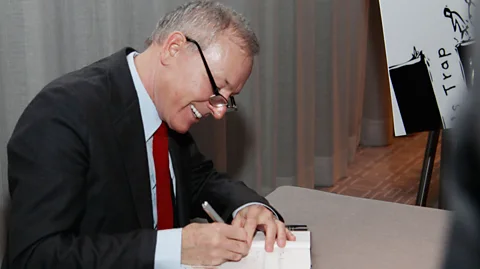 andrewfass.com
Andrew Faas, a Canadian philanthropist, researcher, and management consultant, works on reducing workplace bullying and building psychologically safe workplaces and healthy corporate cultures.
Motivating workers in effective and non-threatening ways is often easier said than done for mid-level executives, especially when they’re not getting any responsible leadership from above. But to become the kind of manager who can inspire others, it’s essential to consider how you would like to be managed yourself, advises Faas.
“Become a role model by understanding how you want to be managed,” he says. “Once you understand how you want to be managed, you can apply it to others.”
If you liked this story, sign up for the weekly bbc.com features newsletter called "If You Only Read 6 Things This Week". A handpicked selection of stories from BBC Future, Culture, Capital and Travel, delivered to your inbox every Friday.
