Are more farm reservoirs the answer to drought-hit harvests?published at 13:05 BST
 Malcolm Prior
Environment correspondent
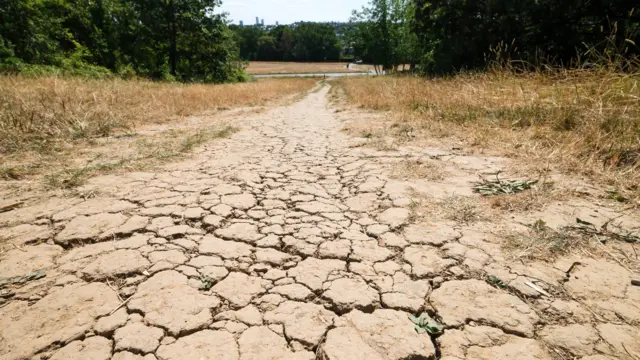
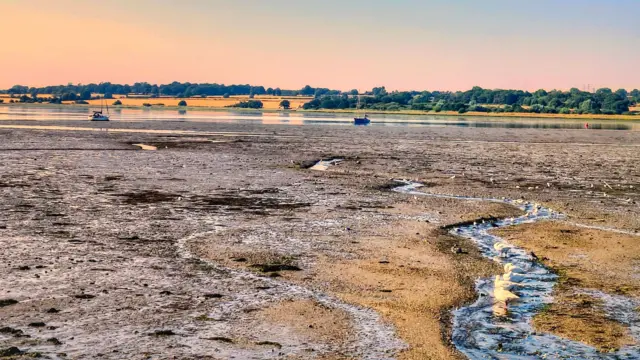
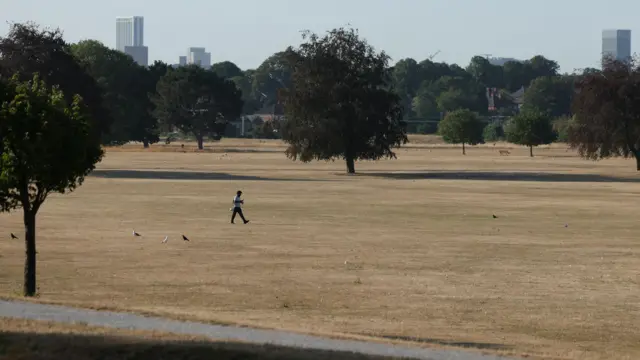
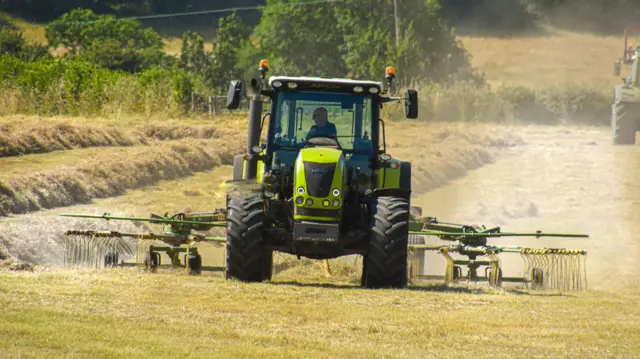 Image source, BBC WEATHER WATCHERS/D_LONG
As the drought continues, the government is being called upon to do more to help farmers store water on their land in their own reservoirs.
Gavin Lane, president of the Country Land and Business Association (CLA), tells the BBC that more farmers who are currently “watching crops die in the ground” should have been able to capture and store rainfall or river water during the wetter winter months.
Just 34 “large raised reservoirs” - the official term for the biggest reservoirs that can hold more than 25,000 cubic metres of water - have been built on farms in England in the last five years, according to government figures.
The CLA, which represents 28,000 landowners, farmers and rural businesses, puts that down to cost and a complicated planning process.
The National Farmers’ Union (NFU) is also calling for the government to streamline the planning system, and to fund grants for water management schemes.
A spokesman for the Department for Environment, Food and Rural Affairs (Defra) says the government knows “how hard this summer has been for our farmers” and is making it easier for farmers to build reservoirs and for groups of land managers to work together to store water.
The spokesperson adds that the government is working on new guidance around the licensing processes for farm reservoir projects.
But Lane says such changes need to happen before “another dry year leaves even more farmers watching their harvests fail".