Summary

  1. Frustration grows at government's response as tens of thousands still believed missingpublished at 22:25 BST 28 June

    Katie Williams
    Live reporter

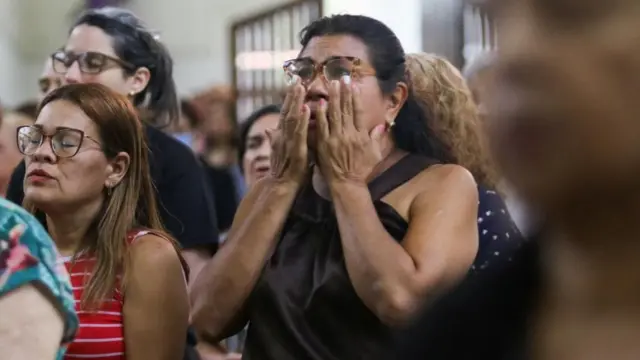
    People attend a mass at the Santuario Nuestra Senora de los Dolores church in Valencia, Venezuela, during a national day of prayer for victims of the earthquakesImage source, Reuters
    Image caption,

    Some turned to prayer earlier at a mass for victims in Valencia, Venezuela

    The death toll in Venezuela has risen to at least 1,450, as top lawmaker Jorge Rodríguez says the country is now in "critical hours" to save lives.

    The number is expected to keep rising, with tens of thousands still believed to be missing.

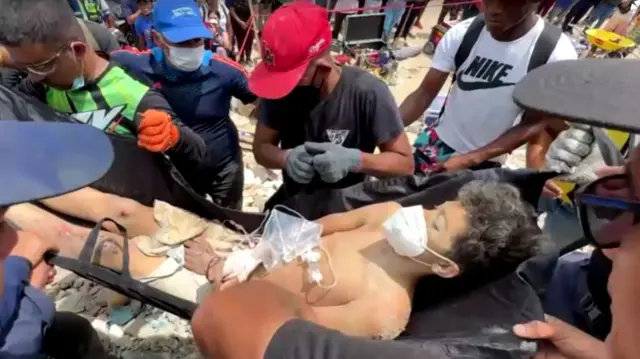
    There have been some glimmers of hope over the weekend, including a father and teenage son pulled from the rubble earlier today.

    But nearly 96 hours have now passed since the quakes hit; a firefighter working in La Guaira tells us there are still dozens of buildings where not a single stone has been moved.

    As the hours race on, frustration is growing at the government's response. One woman calls out: "Bring us heavy machinery so we can look properly ourselves."

    Another woman, when asked about the response of the state, says: "I don't like to make comments that I know might have consequences later."

    We're now bringing our live coverage to a close, but you can read more in our story.

  2. Far from helping, the state hindered, says Venezuelanpublished at 21:59 BST 28 June

    Orla Guerin
    Senior international correspondent

    In Catia La Mar, La Guaira, one of the worst-affected areas, we found relatives of the dead still searching for their loved ones under collapsed multi-storey apartment blocks. There was no sign of state agencies. Some were working with their bare hands.

    Many, like Wilber, looked exhausted. With tears in his eyes, he told me he had lost eight of his relatives - five of them still entombed in their homes. He said that far from being a help, the state was actually a hindrance.

    "The government decided to close the streets," he said, "making it harder to bring help. Yesterday we waited from 6am to 4pm to get a special permission to come here. We wasted hours."

    Sitting in a makeshift camp nearby, we met Yvonne, 79, her right arm and leg in bandages. She has lost her home and her neighbours. When I asked about the response of the state, her reply was careful.

    "I don’t like to make comments that I know might have consequences later," she said - a nod to the fear still felt by many Venezuelans when it comes to their authorities.

    "I survived and I am still here, all by the will of God, but I am surprised that our governor hasn’t shown his face around here."

  3. Man and teenage son rescued from rubble after four dayspublished at 21:45 BST 28 June

    Teenage boy on stretcher having been pulled from rubbleImage source, Reuters

    Rescuers in Venezuela have pulled a man and his teenage son from the rubble four days after twin earthquakes struck.

    The rescue took place in La Guaira - the worst-hit area.

    American and French rescue teams carried the boy and his father down from a mountain of debris on stretchers - both were visibly exhausted.

    A French rescuer says they are "extremely weak" and that teams are doing "everything we can to rehydrate them".

  4. What are aftershocks and how long do they go on for?published at 21:27 BST 28 June

    Mark Poynting
    Climate and science reporter

    Aftershocks are pretty much as the name suggests - smaller earthquakes that follow the main earthquake, or in this case the main two earthquakes.

    They’re typically caused by parts of tectonic plates adjusting to changes in stress after the main quake.

    Shallower earthquakes - as we’ve had in Venezuela - are more likely to be followed by aftershocks, according to the US Geological Survey.

    Aftershocks can be dangerous, particularly if buildings have been partly damaged or weakened by the initial earthquake.

    They can go on for weeks, months or even years, but bigger aftershocks become less likely over time.

  5. Aftershocks drive families from homes into tentspublished at 21:16 BST 28 June

    Vanessa Silva
    Reporting from Caracas, Venezuela

    Maria Sandoval sheltering in tent with her 10-year-old twin sonsImage source, Rhonny Zamora

    More than 72 hours have now passed since two earthquakes struck Venezuela last Wednesday.

    As well as casualties, many people across Caracas have been left displaced or affected.

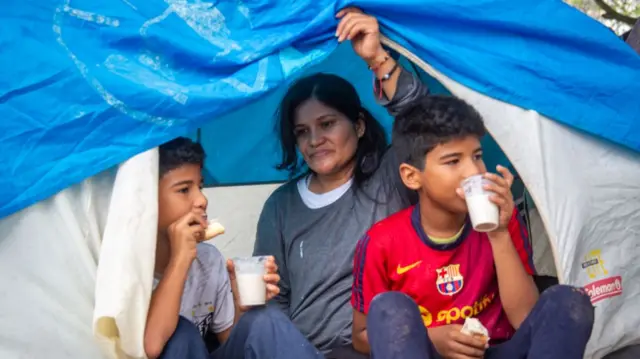
    In public squares and city streets, we see people sheltering in tents. Many say their homes were completely destroyed or cracked and, unsure whether the structural integrity has been compromised, they're waiting for authorities to carry out inspections.

    Maria Sandoval is in the heart of Caracas, right next to the National Pantheon, with her 10-year-old twins.

    She tells us she was arriving home on the day of the earthquake when she felt the ground giving way beneath her feet. They ran to take cover until the shaking stopped.

    She was able to return home but found X-shaped cracks and doesn’t feel safe sleeping there. They only go back for a few hours to gather belongings before heading back out to the square.

    They say the aftershocks make them feel unsafe in their homes.

    Another person told us the public squares attract not only those who have been displaced but also opportunists who come to collect donations, such as tents and food.

  6. Former leader Maduro says Venezuela 'will rise again' in statementpublished at 21:05 BST 28 June

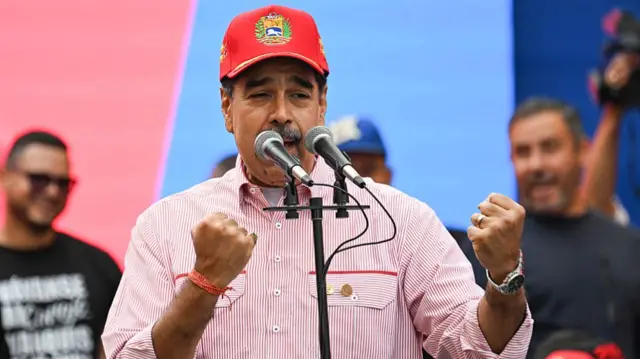
    Nicolas Maduro speaking into two microphones at a rallyImage source, Getty Images
    Image caption,

    Maduro pictured in December 2025 - a month before he was seized

    Venezuela’s former leader Nicolás Maduro says the country is facing the twin earthquakes with "faith, love and hope".

    Maduro is being held in the US awaiting trial on "narco-terrorism" charges after being seized by American forces in early January.

    A statement shared on his X account says Venezuela has seen "moments of destruction and moments of rebirth" in its history and the quakes may be among "the most painful ever experienced in our land".

    But he says the country "will rise again" and pays tribute to the victims and rescue workers.

    Maduro and his wife Cilia Flores were seized in Caracas on 3 January in a raid authorised by US President Donald Trump.

    They were taken to New York to face a range of drugs and weapons charges, which they have denied.

    Delcy Rodríguez - who was his vice-president - was sworn in by Venezuela’s National Assembly as interim president in his absence.

  7. Nothing can substitute effective local rescue teams, says expertpublished at 20:50 BST 28 June

    Katie Williams
    Live reporter

    After events like a serious earthquake, it takes international teams a couple of days to arrive and get set up, UK rescuer John Monaghan tells me.

    "In terms of the 72-hour window, you are then more than halfway through it," he says, and when they arrive, "most of the action is already over".

    That’s why, in terms of saving lives, "there is nothing that substitutes local teams being able to respond immediately," he adds.

    Drawing on his experience in Nepal with the charity Fire Aid, Monaghan says spending money on local teams' ability to respond before disasters happen - for example with training and equipment - can achieve better results.

  8. 'Bring us heavy machinery so we can look properly ourselves'published at 20:31 BST 28 June

    Alice Cuddy
    Reporting from La Guaira, Venezuela

    Helicopters roar above us in La Guaira, and rescue workers rush past as the search for people buried beneath the rubble here continues.

    I’ve just met a man who's been searching through the rubble of a building for his two cousins. He said he wouldn’t give up until he found their bodies.

    "Bring us heavy machinery so we can look properly ourselves," a woman standing nearby called out.

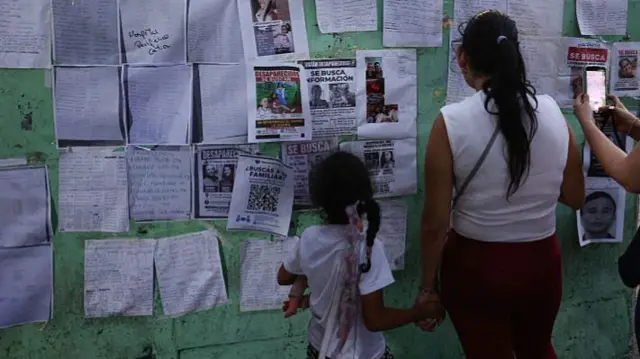
    Standing next to posters of the missing, I met 30-year-old Kelvin Sivira.

    He told me he’s been walking around the local neighbourhoods since the earthquakes, checking whether he recognises the names or faces in the photos outside the destroyed buildings.

    Asked if he’d recognised any, he said sadly: “Sure. A lot.”

  9. UK team has arrived and is carrying out searchespublished at 20:22 BST 28 June

    Narinder Kalsi

    UK Isar team in VenezuelaImage source, UK Isar

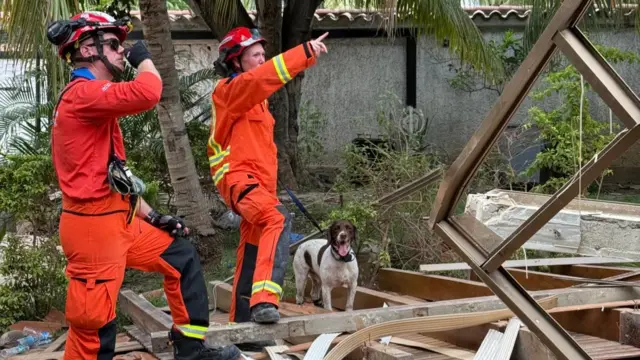
    The UK's International Search and Rescue team (UK Isar) has arrived in Caraballeda, a town in La Guaira state on Venezuela's central coast, facing the Caribbean Sea.

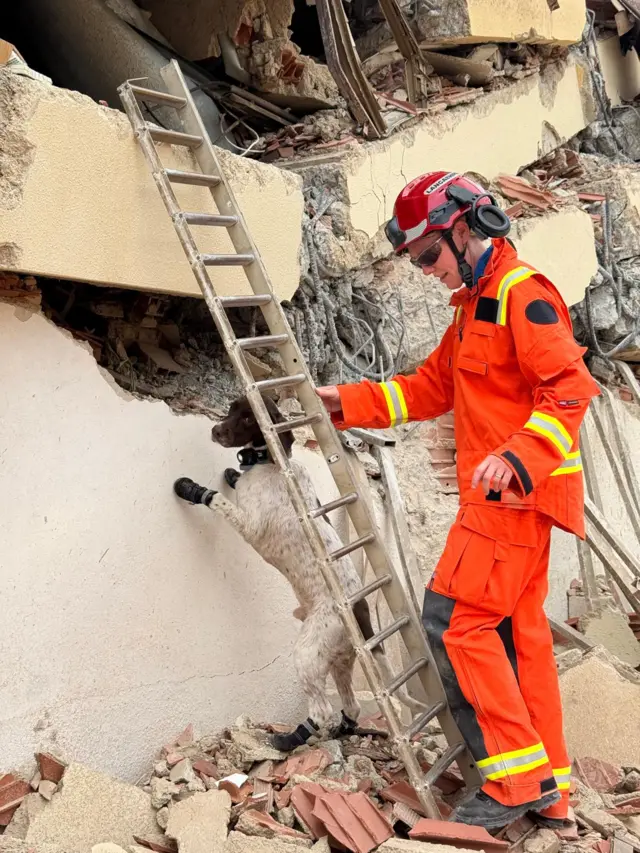
    The team has split into four groups and is searching collapsed buildings with specially trained dogs. The dogs can pick up the scent of survivors beneath mounds of debris and indicate with a bark to their handlers where teams should start digging.

    Russ Gauden, UK Isar leader, tells me: "The UK team is all out to find those missing."

    "The team is pushing through the heat and collapsed structures to locate and rescue [people]," he adds.

    They’re prepared for long hours ahead.

    A UK Isar member searching through rubbleImage source, UK Isar
  10. Special flights from Bogotá open more routes for rescuerspublished at 20:04 BST 28 June

    Yogita Limaye
    Reporting from Valencia, Venezuela

    Rescue teams at airport

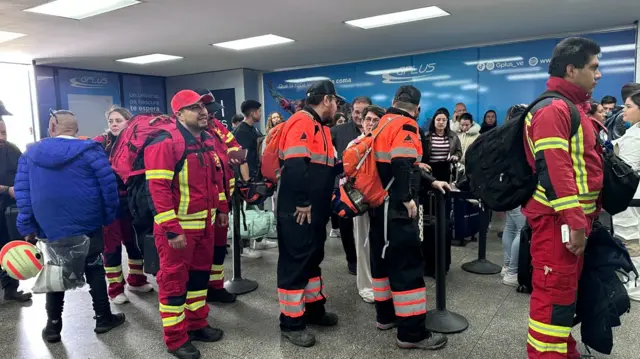
    Special flights have started from Bogotá to the Venezuelan city of Valencia. They’re opening up more routes to the earthquake-struck country, as the main airport serving Caracas isn’t fully operational because of runway damage.

    On one of the first flights to take off from Bogotá were dozens of members of Mexican and Chilean search and rescue teams. Once we were up in the air, the pilot announced the plane was carrying volunteers going to Venezuela to help with operations there.

    Cheering and clapping erupted.

    The plane also had Venezuelans returning home, desperate for news of loved ones.

    Next to me was a woman who was overseas on holiday when the earthquake happened, and is now heading back to Caracas.

    Her home and family are all right, she said. But her eyes welled up with tears as she told me she has friends who’ve died, and others who are still missing.

    Once the plane landed, people frantically looked at their phones for the latest information.

    At the immigration queue, the rescue workers once again got loud applause, with some yelling: "Thank you."

  11. Still possible to find people alive but 'time running short', says UN workerpublished at 19:43 BST 28 June

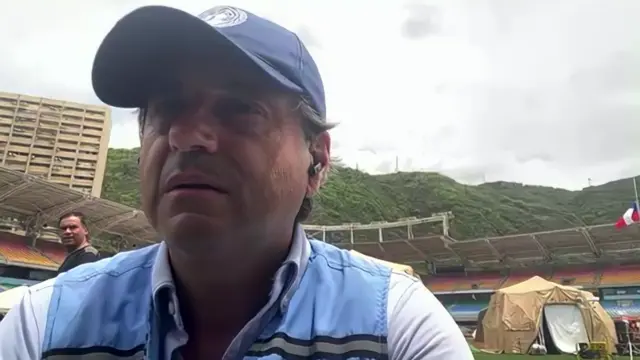
    UN resident coordinator Gianluca Rampolla speaks to BBC from La Guaira

    Speaking from La Guaira, UN Resident Co-ordinator Gianluca Rampolla tells BBC News that experts think it is still possible to find people alive, given the way some buildings have collapsed.

    But "time is running short," he says, adding that "temperatures are very high".

  12. In pictures: Rescuers race to pull people trapped under rubblepublished at 19:28 BST 28 June

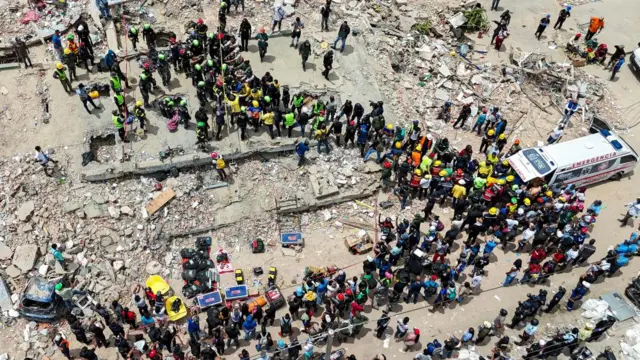
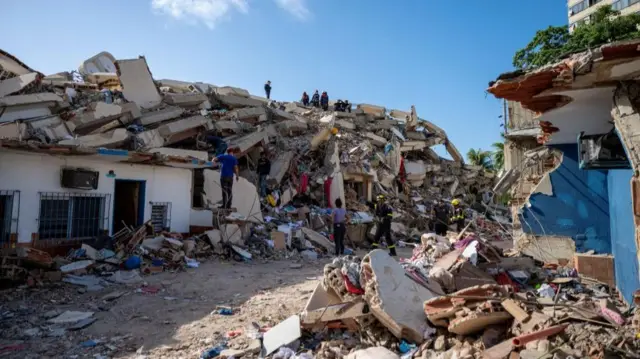
    From the latest pictures we've received from La Guaira state, rescue efforts are under way.

    A large group of rescuers could be seen amid the rubble, loading a person into an ambulance.

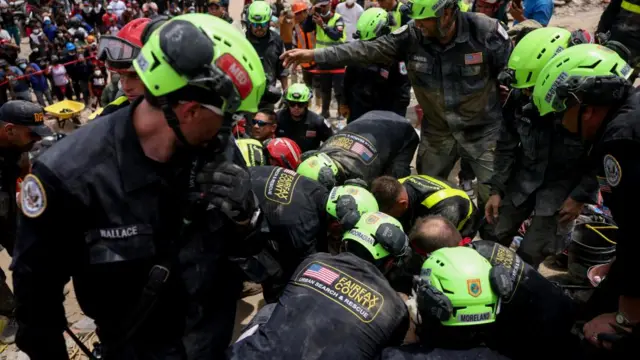
    Members of a US rescue team were also seen working to free someone.

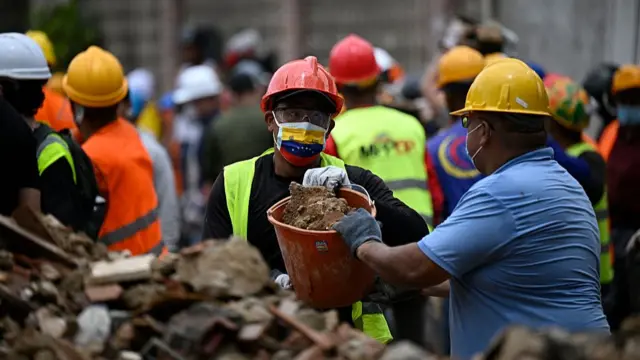
    Separately, in Caracas, men were pictured loading debris into a bucket at a collapsed building.

    An aerial view of rescuers in Caraballeda, La Guaira stateImage source, Reuters
    Members of a US rescue team work to assist a person trapped under the rubble of a building in La GuairaImage source, Reuters
    Workers remove debris from a collapsed building in the San Bernardino neighborhood of CaracasImage source, Getty Images
  13. More than 3,000 injured in 'most brutal natural catastrophe' - Rodríguezpublished at 19:06 BST 28 June

    Jorge RodríguezImage source, VTV

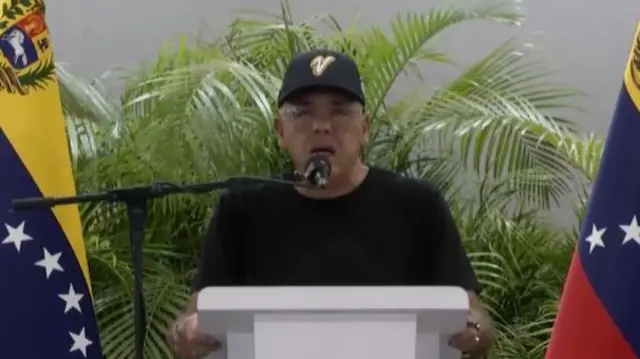
    We can now bring you more from top lawmaker Jorge Rodríguez.

    As well as reporting 1,450 dead, he says 3,150 have been injured.

    He says the country is now in "critical hours" to save lives.

    Overall, 12,721 people are affected, he says.

    In similar comments to yesterday, he calls the twin earthquakes "the most brutal natural catastrophe that our country has suffered in its history".

    He also says the number of buildings affected or collapsed has risen to 774.

  14. Death toll rises to 1,450 - top lawmakerpublished at 18:53 BST 28 June
    Breaking

    The death toll in Venezuela has risen to 1,450, according to top lawmaker Jorge Rodríguez.

    Yesterday it was reported as 1,430 - an increase of 20.

    We’ll bring you more from his speech soon.

  15. Caraballeda, once a symbol of wealth, now a disaster epicentrepublished at 18:35 BST 28 June

    Norberto Paredes
    Reporting from Caraballeda, La Guaira

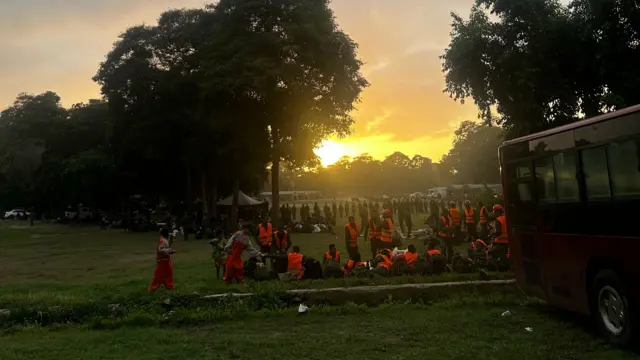
    A large group of emergency workers in high-visibility jackets stand on some grass at sunset

    The golf course in Caraballeda, in La Guaira state - once a symbol of the area’s wealth before the devastating Vargas tragedy of 1999, when torrential rains triggered landslides and flash floods that killed thousands - has now become the epicentre of this emergency.

    What was once perfectly manicured grass is now home to a makeshift hospital, where those pulled from the rubble are being treated for serious injuries.

    Across the grounds, piles of donated clothing and boxes of humanitarian aid are stacked high.

    A helicopter landing area has even been set up, with supplies arriving from other parts of Venezuela and from abroad - but it still doesn’t seem to be enough.

    Around the Caraballeda Golf & Yacht Club, the streets - cracked and strewn with debris - are blanketed in dust and an overwhelming silence, broken only by the sound of heavy machinery and the voices of those searching through the ruins.

    The humid Caribbean heat, which hovers around 30C, becomes increasingly suffocating as the hours pass, adding to the exhaustion of those who’ve been working non-stop since Wednesday.

    Caraballeda - once a lively tourist destination lined with palm trees, luxury hotels, restaurants, apartment complexes with swimming pools and a marina filled with yachts - now looks more like a war zone.

    Media caption,

    Venezuela earthquake: Inside the country club now a makeshift hospital

  16. Unicef estimates 680,000 children in Venezuela need aidpublished at 18:20 BST 28 June

    People look at a wall with photos and lists of names of missing people at Parque Ali Primera after a magnitude 7.2 earthquake struck Venezuela and other regions in the Caribbean on June 27, 2026 in Caracas, VenezuelaImage source, Getty Images

    Unicef says 680,000 children in Venezuela need humanitarian assistance after Wednesday’s earthquakes.

    The United Nations agency responsible for protecting and supporting children also estimates a total of 1.8 million people need some form of help.

    Manuel Rodriguez Pumarol, Unicef’s Venezuela representative, says that hospitals are beyond capacity, and thousands of children can’t access safe water.

    Unicef says 432 schools have been damaged in Venezuela’s capital district alone - more than a third of all schools in the district - and even more are expected to be damaged in other states.

  17. Thirty-three people found alive on Saturday - acting presidentpublished at 18:02 BST 28 June

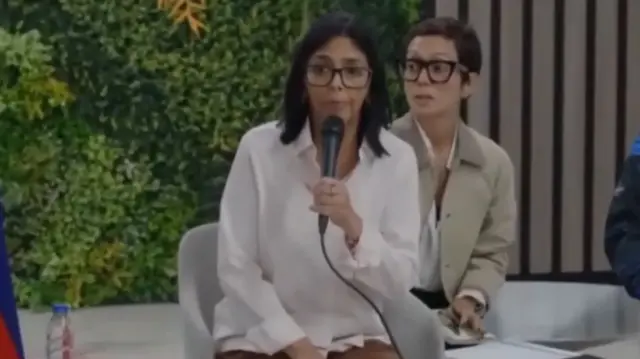
    Delcy RodríguezImage source, VTV

    Venezuela's acting president Delcy Rodríguez said 33 people were found alive on Saturday.

    She made the comments to international rescuers in a clip on state TV. The exact time she made them is unclear.

    Earlier, we reported that two 11-year-old boys were among those pulled from the rubble on Saturday.

  18. 'There aren't enough hands': Rescuer says much rubble remains untouchedpublished at 17:46 BST 28 June

    Norberto Paredes
    Reporting from Caraballeda, La Guaira

    Piles of rubble on top of one white structure still standingImage source, Reuters

    The scale of destruction in La Guaira state is hard to comprehend.

    The atmosphere shifts abruptly as you enter the parish of Caraballeda. The further you go, the more overwhelming the devastation becomes.

    A persistent smell - described by some residents as "the smell of blood" - hangs in the air, mixed with dust and concrete, forcing people to wear masks.

    The streets are filled with Venezuelans looking dazed, and there's a sadness that's palpable.

    A firefighter working in the area, who asked not to be identified, tells me there are dozens of buildings where not a single stone has been moved.

    "There aren’t enough hands," he said. "And it is very, very likely that there are still people trapped."

    In the face of this desperate situation, the response from civil society has been crucial. Neighbours and volunteers have mobilised to help those affected. Some are distributing food and water. Others are organising supplies or joining search efforts with whatever resources they have - in some cases, even using their bare hands.

    Amid the emergency, this improvised network of support has become a lifeline for those still waiting to find their missing relatives.

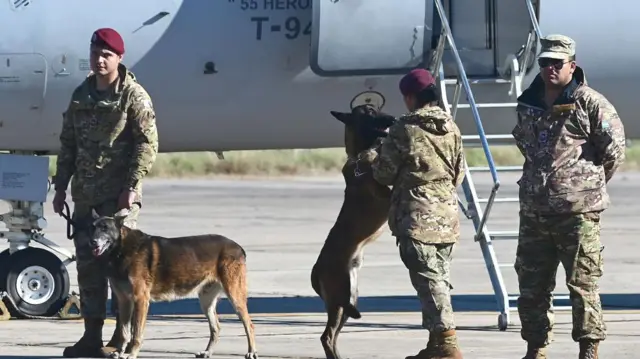
  19. How sniffer dogs are crucial to search and rescue operationspublished at 17:33 BST 28 June

    Three people in military uniforms stand next to a plane with two dogs, one of them is jumping up.Image source, EPA
    Image caption,

    This Argentinian team have been dispatched to Venezuela, along with sniffer dogs

    Specialised sniffer dogs are critically important in search and rescue operations.

    With a sense of smell between 10,000 and 100,000 times stronger than humans, depending on the breed, trained dogs can quickly locate people trapped under dense rubble.

    They can also traverse rugged terrain and access hard-to-reach crevices, making them much faster and more efficient at rescuing survivors than humans.

    Countries around the world - including the UK, the US, the Netherlands, Switzerland and Colombia - have been sending these specially trained canines to Venezuela along with their emergency teams.

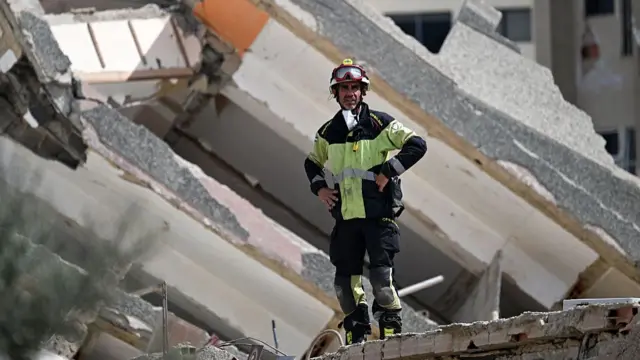
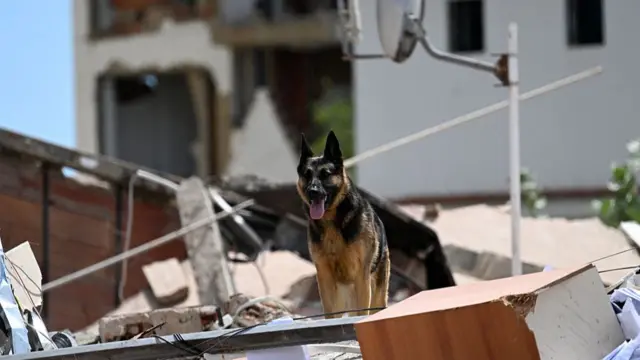
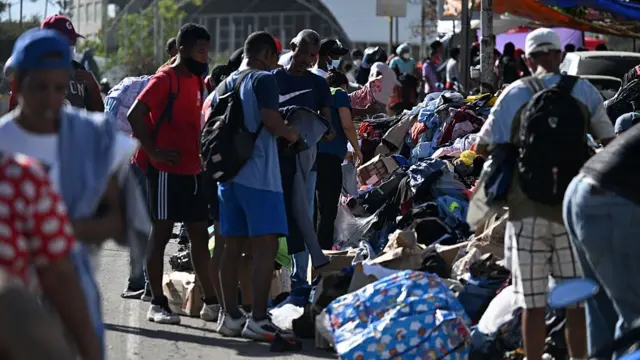
  20. In pictures: Rescuers and sniffer dogs continue to search rubblepublished at 17:19 BST 28 June

    New photos from Catia La Mar show the rescue operation.

    The city is in La Guaira state - the area worst impacted by the earthquakes.

    Huge shards of building rubble surround a Spanish rescuer. A sniffer dog is also pictured at work.

    Elsewhere in the city, residents sort through piles of donated clothing.

    A Spanish rescuer stands on the rubble of a collapsed building in Catia La Mar, La Guaira stateImage source, Getty Images
    Image caption,

    A Spanish rescuer stands on the rubble of a collapsed building

    A Spanish rescue dog searches for possible victims in the rubble of a collapsed building in Catia La Mar, La Guaira stateImage source, Getty Images
    Image caption,

    A Spanish rescue dog searches for possible victims

    Residents sort through piles of donated clothing in Catia La Mar, La Guaira stateImage source, Getty Images
    Image caption,

    Residents sort through piles of donated clothing in Catia La Mar