"Sad to be a slave"
Donald Macleod explores how Haydn grew frustrated at his life in Esterhaza and discovers how he came to leave the service of the Esterhazy family.
Donald Macleod explores how Haydn grew frustrated at his life in Esterhaza and discovers how he came to leave the service of the Esterhazy family.
“Haydn! The admirable and matchless Haydn!” That is how the composer and writer on music Charles Burney described the composer. Over the course of this week, Donald Macleod explores how, before Burney came up with this effusive accolade, Haydn grew to become the most famous composer in the world, despite being holed up on a remote Hungarian estate, far from the musical in-crowds.
We will explore Haydn’s operatic successes, his attempts to infiltrate the Viennese musical world, and his relationship with the other great composer of his day – Mozart. Donald also discovers the contractual arrangement which allowed Haydn's music to spread throughout Europe and the circumstances which led to him leaving the employ of the Esterhazy family, just as his fame was hitting its height and Haydn himself was beginning to despair at being stuck in the Hungarian countryside.
In Friday’s programme, Donald explores how Haydn grew frustrated at his life in Esterhaza, jealous of the delights available in Vienna and lonely without the friends he had made there. He also discovers the change in circumstances which allowed him to leave the service of the Esterhazy family and the reasons that led him to take his next steps, leaving the Austrian capital to instead travel to London.
Three Pieces for Musical clock – no 2: Tempo di minuetto
William McVicker, organ
London Trio No. 3 in G Major, Hob. IV:3 – I. Spirituoso
Jean-Pierre Rampal (flute)
Wolfgang-Andreas Schultz (flute)
Gilbert Audin (bassoon)
Arianna a Naxos – Cantata
Cecilia Bartoli, mezzo-soprano
Andras Schiff, piano
Symphony 92 ‘Oxford’ – IV. Finale
Berlin Philharmonic
Simon Rattle, conductor
Libera Me
Chorale Philippe Caillard
Jean Bridier, director
Symphony no 45 in F sharp minor “Farewell” – IV. Finale
Amsterdam Baroque Orchestra
Ton Koopman, conductor
Producer: Sam Phillips
Last on

More episodes
Next
You are at the last episode
Music Played
![]()
Joseph Haydn
Pieces for a Musical Clock (No 2)
Performer: William McVicker.- SONY : 99697707362.
- SONY.
- 11.
![]()
Joseph Haydn
London Trio No 3 in G Major, H.4.3 (1st mvt)
Performer: Jean‐Pierre Rampal. Performer: Wolfgang-Andreas Schultz. Performer: Gilbert Audin.- SONY CLASSICS : G010001395777G.
- SONY CLASSICS.
- 5.
![]()
Joseph Haydn
Arianna a Naxos, H.26b.2
Performer: Sir András Schiff. Singer: Cecilia Bartoli.- DECCA : E4402972.
- DECCA.
- 18.
![]()
Joseph Haydn
Symphony No 92 in G major, H.1.92 "Oxford" (4th mvt)
Orchestra: Berlin Philharmonic. Conductor: Sir Simon Rattle.- EMI CLASSICS : 0946-39423729.
- EMI CLASSICS.
- 8.
![]()
Joseph Haydn
Libera Me
Choir: Philippe Caillard Choir. Director: Jean Bridier.- DIVINE ART.
![]()
Joseph Haydn
Symphony No 45 in F sharp minor, H.1.45 "Farewell" (4th mvt)
Orchestra: Amsterdam Baroque Orchestra. Director: Ton Koopman.- WARNER CLASSICS : 809274899767.
- WARNER CLASSICS.
- 8.

Broadcast
- Yesterday16:00BBC Radio 3
Beethoven Unleashed – the box set

The complete set of Radio 3 Beethoven Unleashed podcasts, with Donald Macleod.
What was really wrong with Beethoven?

Georgia Mann and neurosurgeon Henry Marsh examine the composer's numerous health problems
Composers A to Z

Visit the extensive audio archive of Radio 3 programmes about Composers and their works.
Who knew? Five eye-opening stories from Composer of the Week

The production team reflects on 5 of Donald Macleod’s best stories from the last 20 years
Five reasons why we love Parry's Jerusalem
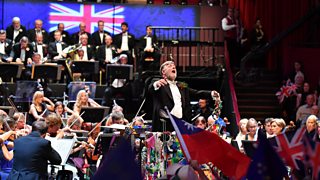
What is the strange power of Jerusalem which makes strong men weep?
A man out of time – why Parry's music and ideas were at odds with his image...
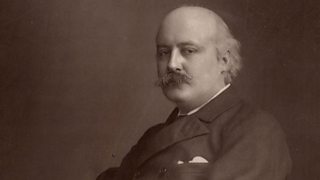
The composer of Jerusalem was very far from the conservative figure his image suggests.
Composer Help Page

Find resources and contacts for composers from within the classical music industry.
