Energy price cap rise pushes up inflation to 2.9% - but food price rises slowpublished at 09:57 BST
 Adam Goldsmith
Live reporter
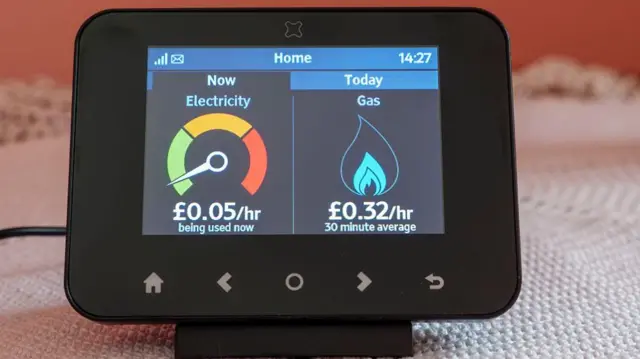 Image source, Universal Images Group via Getty Images
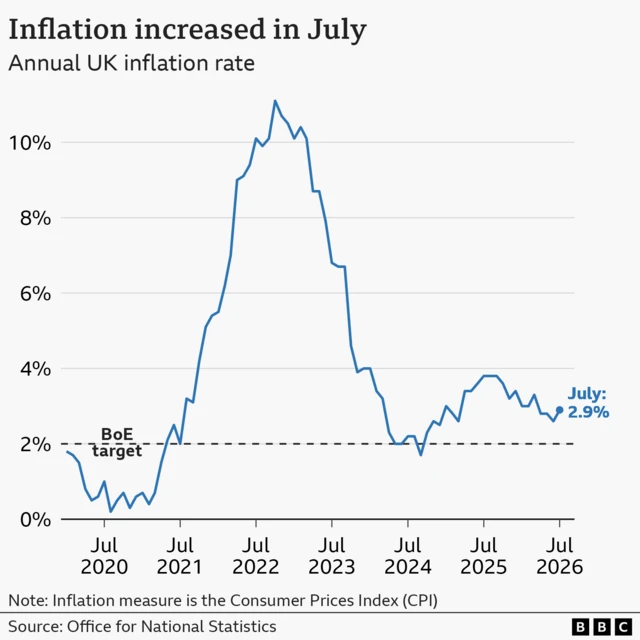
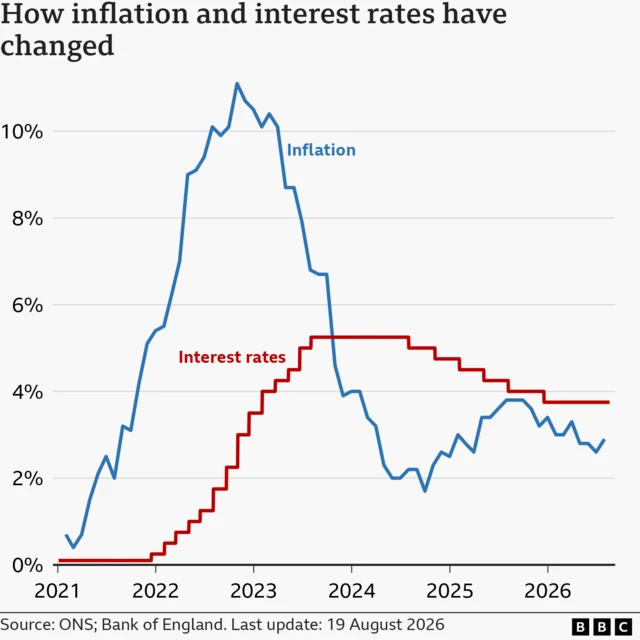
Today's inflation figures saw the UK's rate rise to 2.9% in the year up to July, up from 2.6% the month before.
It's been largely put down to a rise in energy bills, after energy regulator Ofgem's 13% increase in the price cap on household gas and electricity bills took effect on 1 July - which will add £221 to the typical household's annual bill.
Despite the change, each person will likely feel the impact on their own pocket differently, our cost of living correspondent writes.
That's because the ONS calculates the UK's monthly inflation rate by measuring the cost of 760 goods in an attempt to create a representative sample - how it impacts you will depend on the purchases you make.
And although the ONS says the UK has seen "the largest rise in gas prices for almost four years", the inflation rate for the price of food - 1.3% - is at its lowest for close to five years.
UK Chancellor John Healey insists the UK's economy is "resilient" in the face of continued pressure from the war in Iran, but shadow chancellor Mel Stride says prices are "accelerating once again" and criticises "Labour's mismanagement".
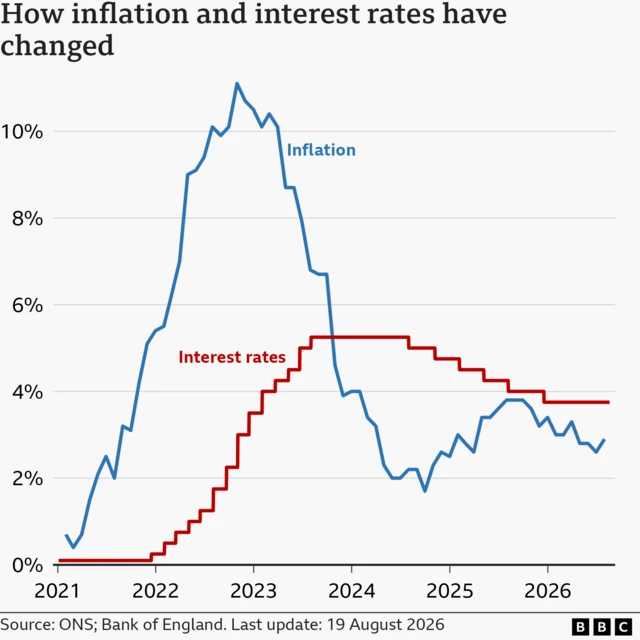
Our deputy economics editor writes that the inflation rate rise is more modest than some analysts had feared earlier in the year - she's looked at how today's figures could impact interest rates here.
We're closing our live coverage there, but we've more on today's inflation rate figures in our news story.