Summary

  • The second day of an appeal hearing by so-called mushroom murderer Erin Patterson is under way in an Australian court

  • The 51-year-old was jailed for life last year over a lunch laced with poisonous mushrooms, which killed three of her relatives and left another severely unwell

  • Patterson has always maintained the deaths were an accident and her lawyers argue she didn't receive a fair trial

  • They say a blunder that saw the jury accidentally stay in the same hotel as some prosecutors and a key witness was "catastrophic" for the integrity of the trial, and that several pieces of evidence were misused

  • Prosecutors argue that the jury mishap was a symptom of the frenzy surrounding the town during the trial, and that there is no evidence the jurors were influenced improperly

  • As the matter continues on Thursday, the court will also hear an appeal from prosecutors who argue Patterson's sentence is "manifestly inadequate" as it allows for the possibility of parole

  1. Watch: CCTV shown to court in mushroom trialpublished at 04:45 BST

    After that deadly mushroom lunch, the court heard that Erin Patterson discharged herself from the hospital. Here's CCTV footage that jurors were shown in court:

    Media caption,

    Australia: CCTV and phone recording shown to court in mushroom trial

  2. The mushroom killer was obsessed with true crime - now fans are obsessed with herpublished at 04:26 BST

    Katy Watson
    Australia correspondent

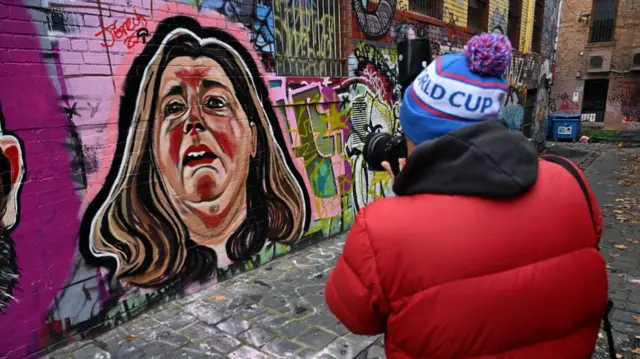
    A person takes a photo of a mural of Erin PattersonImage source, EPA-EFE/Shutterstock

    For years, from behind a computer screen, Erin Patterson built up a reputation in an online true crime community as a "super sleuth".

    Then she herself became a true crime obsession.

    Journalists descended from around the world to cover her lengthy murder trial, spectators queued daily to nab a spot in the courtroom, and thousands of people picked apart details of the case online.

    Tammy Egglestone commuted for more than an hour to reach Morwell most days of the trial. "I'm a bit of a true crime fanatic," she explained.

    Despite a jury finding her guilty on all charges last year, the frenzy of speculation and depth of fascination has only intensified.

    "It has those typical cliché things that make true crime sell," Ms Egglestone said, explaining why she and flocks of others have become obsessed with the case.

    "Poison's the weapon, the fact that she did take out family members... [she's] white, female, financially stable, you know. And they're all church people."

    Read more in this story.

  3. Defence zooms in on prosecution's 'selective' use of evidencepublished at 04:08 BST

    Patterson's defence team is now arguing that the prosecution has tendered evidence selectively.

    Patterson's barrister Richard Edney earlier accused prosecutors' "selective questioning of medical experts" who attended to Patterson and her relatives after the beef wellington lunch.

    Given their claim that Patterson feigned illness to ward off suspicion, the prosecution should have put specific questions to experts who attended to her after the meal - but they did not, Edney said.

    Veronika Drago, another defence lawyer, also argues the prosecutors selectively provided cell phone data for analysis. The prosecution had said it was "too expensive" to extract all records, but this created a "vacuum" of evidence, Drago says.

    With that, the court has adjourned for a lunch break. It will resume at 14:15 local and we'll bring you the latest updates as we have them.

  4. Patterson's cross-examination 'oppressive' and 'unfair' says defencepublished at 03:57 BST

    Patterson's legal team are responding to the prosecution's rebuttal of their appeal with barrister Richard Edney first up to speak.

    First, he addresses ground one - that the jury staying at the same hotel as a police witness, prosecutors and media was a major issue. The defence have argued there's no evidence that jurors communicated with anyone they shouldn't have.

    But Edney says it is "of concern" that the prosecution "did not disclose the arrangement" with the defence at the time and that no other formal information about the hotel accommodation has been submitted.

    "We have nothing," from the prosecution, Edney says, except for an "email which perhaps raises more questions". The email he refers to is one that the prosecution sent, saying they had no contact with jurors.

    On ground five, Edney maintained that Patterson's cross-examination was "oppressive" and "unfair".

  5. 'No creeping, surreptitious change' in prosecution's case - McWilliamspublished at 03:45 BST

    The prosecution has also rejected grounds four and seven of Patterson's appeal, which argue that Facebook posts where Patterson complains about her relatives were prejudicial and should not have been used.

    Crown prosecutor McWilliams maintained the prosecution at trial had not used those posts to hint at a motive for the murders. The use of those posts was "clearly orthodox" and meant as "relationship evidence", he said.

    "There was no room for mischief" in citing those posts and "no creeping, surreptitious change" in the prosecution's case, he said.

    The defence is now responding.

  6. Problems with closing address is 'Frankenstein of a ground', court hearspublished at 03:24 BST

    The court is now hearing about ground six of Patterson's appeal - that the prosecution's closing argument in the trial had 35 problems, namely cherry-picking of evidence.

    In response, the crown prosecutor says that of the 35 issues, many have been counted twice and the overall claim is "devoid of any persuasive merit".

    By combing through the closing address after the trial to find issues, the defence is using it as a "cudgel... with which to attack the crown case," Jeremy McWilliams says.

    Some of the issues were dealt with at the trial while others were simply not raised as problems as the defence did not object, McWilliams argues.

    The claims of 35 issues in the closing address "bundles them up... in order to make good this Frankenstein of a ground".

    One of the three judges on the panel asks if including some of the issues is about the "cumulative effect" of the closing statements.

    “A group of zeros is still zero," McWilliams replies.

  7. Why did the judge set a non-parole period for Patterson?published at 03:06 BST

    Simon Atkinson
    Australia producer

    At sentencing last September, Erin Patterson was given a “non-parole period” of 33 years - in other words she could not be considered for release for that time.

    The judge, Justice Christoher Beale said the reason for offering any hope of release was the conditions Patterson faced in prison - telling her “at the very least, there is a substantial chance that, for your protection, you will continue to be held in solitary confinement for years to come”.

    But the prosecutors say this was “overstated” and amounts to sentencing “on the basis of a speculative prediction”.

    There were several reasons why Patterson may see her conditions ease, they wrote, including regular reviews of where she was locked up and that improved staffing levels.

    They also argue Patterson’s need for protection in prison was “due solely to the notoriety of her crimes", which will "dissipate with time and a reduction in media interest".

    The response from Patterson’s legal team is complex - but in a nutshell say that this is not a grounds for appeal.

    This is all going to get talked though in court this afternoon when the appeal turns to Patterson’s sentence.

  8. Cross-examination of Patterson was 'fair' and 'strongly justified', court hearspublished at 02:44 BST

    Crown prosecutor Jeremy McWilliams now deals with ground five of the defence's appeal - that the prosecution's cross-examination of Patterson was "unfair and oppressive".

    He says the claim is "thoroughly without substance" as the way Patterson was questioned in court was "careful, thorough, fair and professional".

    Patterson's lawyers have said the questions put to her during the trial were repetitive and cherry picked evidence of other witnesses, but McWilliams says these lines of inquiry were not just “permissible”, but “required” and “strongly justified".

    He adds that where there's "conflict" between what Patterson claims and the evidence of a witness, it is "incumbent on the prosecution to put that conflict to her so that she can respond to it".

    During the trial, Patterson's own lawyers described her as a “pedantic witness", McWilliams says, so it was justified that the prosecutor had to repeatedly re-phrase questions to “receive a responsive answer”.

  9. The infamous fake cat Facebook post comes backpublished at 02:35 BST

    Simon Atkinson
    Australia producer

    Appeal hearings are dense and technical and we're hearing a lot of stuff which is quite tangential.

    But it's not all dull!

    One of the most interesting bits of evidence which was barred from last year’s trial - what became known in court as “the cat post” - has just been mentioned again.

    In 2020 Erin Patterson posted a photo of mushrooms in a poisons help Facebook group, the caption saying something like "Help! My cat has eaten one of these mushrooms and has become very sick. Are they poisonous?"

    Problem was, Patterson didn't own a cat.

    Ultimately trial judge Justice Christopher Beale ruled the post was too old and not directly relevant – barring the prosecutors from using it to argue that Patterson had been investigating different types of poisons.

    McWilliams is bringing it up in court today as part of the discussion about whether other photos Patterson had taken of wild mushrooms should have been part of the brief of evidence.

  10. Rare show of emotion from Patterson as prosecution continuespublished at 02:28 BST

    We can't see Erin Patterson - who is watching the proceedings from prison - on the live stream, but those in court can.

    Our broadcast partners, the Australian Broadcasting Corporation, say she was seen shaking her head and saying "no" as the prosecution discussed her foraging history in court.

    They described it as a "rare sign of emotion" from Patterson, who throughout her trial largely sat still and quiet, blinking often but reacting rarely.

    Patterson's legal team is arguing, among other things, that the trial judge erred in disallowing photos they say would have supported her claim that she'd long loved foraging for wild mushrooms. Instead, Patterson had to take to the witness box to discuss this evidence, which undermined her right to silence - though the prosecution has said there's absolutely no evidence of this "innocent interest".

  11. New faces in the appeal courtpublished at 02:14 BST

    Katy Watson
    Australia correspondent

    If you followed the trial closely last year and now you’re watching the appeal, you’ll notice that Erin Patterson has different barristers representing her.

    But actually, she still retains the same solicitors Bill Doogue and Ophelia Holloway – they’re the lawyers who have been working on her case from the beginning. It’s just the people in court who have changed.

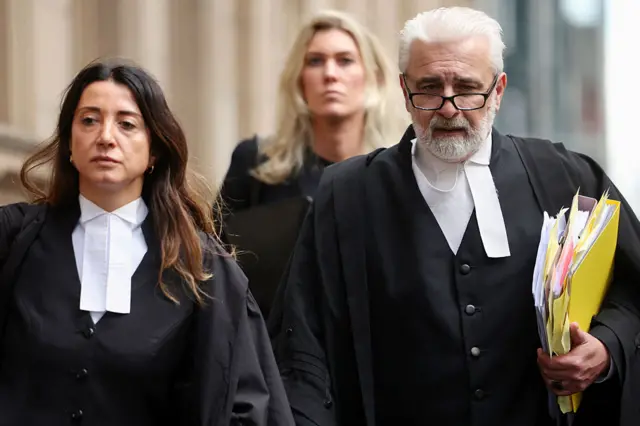
    So instead of Colin Mandy, an experienced criminal barrister, and Sophie Stafford who were familiar faces in Morwell, it’s now Richard Edney and Veronika Drago.

    There are lots of reasons legal representation changes. It could be a timing issue, or a desire for a team specialised in appeal matters, which are more technical, less narrative-led and take a completely different shape to trials.

    Edney has extensive experience in the appeal court and according to the Victorian Bar, a group that represents barristers in the state, Veronika Drago works with "matters involving complex expert evidence” - something we saw a lot of in the trial last year.

    Veronika Drago and Richard Edney are speaking for Patterson in courtImage source, Getty Images
    Image caption,

    Veronika Drago and Richard Edney are speaking for Patterson in court

  12. Prosecutor argues Patterson never had 'innocent interest' in wild mushroomspublished at 01:55 BST

    Kelly Ng
    Live reporter

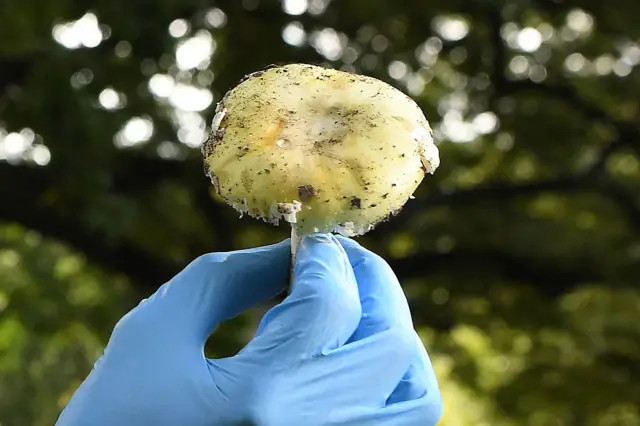
    A blue gloved hand holding a mushroomImage source, Getty Images

    The defence has argued photos of wild mushrooms taken in Patterson's kitchen back in 2020 should have been allowed into the brief of evidence as they could have used it to demonstrate the longstanding "innocent interest" in picking and eating wild mushrooms they say their client had.

    Instead, they say she had to take to the witness stand to explain this, undermining her right to silence.

    Crown prosecutor Jeremy McWilliams says the judge was right to leave the photos aside as there's no evidence that Patterson ever had an "innocent interest" in picking wild mushrooms let alone eating them.

    "Nothing in the images suggested that the mushrooms were being prepared for eating or that they were later eaten."

    "One can’t accidentally include poisonous mushrooms in a dish if one doesn’t have a tendency to cook with wild mushrooms - that’s the point," he adds, referring to Patterson's claim she had accidentally included death cap mushrooms in her beef Wellingtons.

    He also rattles through the testimonies of Erin Patterson's estranged husband Simon, and the couple's children, who said they'd never gone foraging with their mother as she claimed.

  13. Who were the victims?published at 01:47 BST

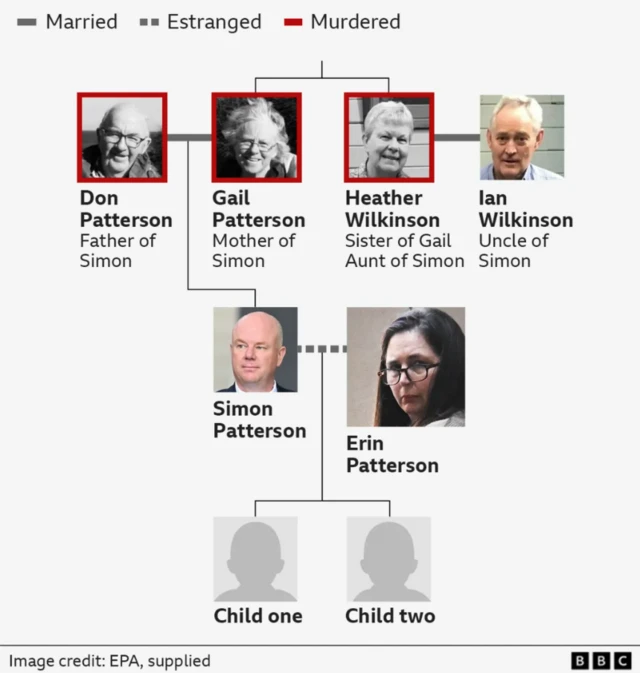
    The three people who died in hospital in the days after Patterson’s lunch were Patterson's in-laws, Don and Gail Patterson, both 70, and Gail's sister Heather Wilkinson, 66.

    Heather's husband, local pastor Ian Wilkinson, recovered after weeks in an induced coma and still has ongoing health issues related to the poisoning.

    Simon Patterson, Erin's estranged husband with whom she has two children, had been invited to the lunch too, but pulled out the day before.

    Graphic of attendees of fatal mushroom lunch in Australia
  14. If you need a refresher on the trialpublished at 01:41 BST

    Tiffanie Turnbull
    BBC News, Sydney

    You can find a recap of all the twists and turns of last year's trial here.

    Over nine weeks, the jury heard evidence suggesting Erin Patterson had foraged death cap mushrooms sighted in nearby towns and lured her victims to the fatal meal under the false pretence that she had cancer - before trying to conceal her crimes by lying to police and disposing of evidence.

    Some key bits of evidence included:

    • The orange plate: Survivor Ian Wilkinson recounted watching food go onto four grey plates - and an orange one for Erin. "I've puzzled about it since lunch," his wife had said, according to a witness. "Is Erin short of crockery?"
    • An orange cake: Detailing the lunch publicly for the first time from the witness stand, Erin offered an explanation: a secret struggle with bulimia. She said she had been regularly binge-eating and purging since her teens - something her defence team suggested accounted for her lack of symptoms
    • Red flags: As her victims suffered in hospital, Erin was covering her tracks, prosecutors alleged. The day after she was discharged from hospital, CCTV captured Erin travelling to a local dump and disposing of a food dehydrator later found to contain traces of poisonous mushrooms. She was also using three phones around the time of the lunch, two of which disappeared shortly afterwards. The one she did hand over to police had been repeatedly wiped.
  15. ‘She was always going to be found guilty’published at 01:37 BST

    Simon Atkinson
    Australia producer

    Prosecutors are up in court this morning explaining their case, but we also have their written submissions to the judges.

    They used 70 pages to rebut Erin Patterson’s lawyers arguments for why her conviction should be overturned.

    But perhaps the punchiest paragraph is saved for the very end.

    In it, they argue that it was “inevitable” Patterson would be found guilty - the subtext being that whatever holes her lawyers try to pick and legal arguments they try to make, the evidence which put her behind bars was “extraordinarily strong”.

    “Once it was conceded that the applicant had prepared and served a poisonous meal to the lunch guests, the only live issue before the jury was whether the prosecution had excluded the reasonable possibility of culinary misadventure,” they wrote.

    “The circumstances surrounding the lunch invitation, the serving of the applicant's meal on a different plate, the entirely different medical outcomes for the applicant as compared to the lunch guests, combined with the extensive array of incriminating conduct, pointed overwhelmingly to a deliberate act of poisoning. In all the circumstances, guilty verdicts were inescapable.”

  16. Erin Patterson not in courtpublished at 01:31 BST

    Katy Watson
    Australia correspondent

    Day two of the appeal and it’s being live-streamed again with two shots: one focused on the three appeal judges and the other facing the court - which doesn’t look as busy as it did yesterday.

    Erin Patterson’s tuning in to the hearing via video link so she’s not in court herself, but the lead investigator Stephen Eppingstall is once again sitting on the wooden benches behind both legal teams.

    We can’t see Ian Wilkinson, the sole survivor of the lunch who was in court yesterday and attended much of last year’s trial. But there are other members of the victims’ families who are now familiar faces.

  17. And we're underwaypublished at 01:18 BST

    The crown prosecutors are up first, continuing to rebut the claims made by Patterson’s lawyers yesterday.

    Stay with us as we bring you the latest updates.

  18. What are Patterson’s appeal arguments - in a nutshellpublished at 01:17 BST

    Patterson’s legal team say she did not receive a fair trial.

    There were bits of evidence the jurors should never have seen, her lawyers argue, and others from their own case which they were barred from including in the way they wanted.

    The defence also say the prosecution was inconsistent on their evidence about a motive, and that the five days of cross-examination of their client was “unfair and oppressive”.

    And finally, they say a “fundamental irregularity” occurred while the jury were deliberating which “fatally undermined” the integrity of the verdicts.

    The jurors were supposed to be isolated, but accommodation shortages meant they shared a hotel with members of the prosecution, a key police witness, and journalists - though there’s no evidence they interacted with them.

  19. The panel of three judges will decide this casepublished at 01:15 BST

    Justice Stephen McLeish, Justice Lesley Taylor and Justice Peter Kidd are the judges hearing the case in Melbourne.

    As appeal court judges, they had no involvement with the trial in Morwell last year.

    It'll be up to them to decide whether or not the appeals by both Erin Patterson and the public prosecutor are successful.

    If they do not all agree on the decision, the case will be decided by a majority vote (two to one). And so the opinion of the two agreeing judges becomes the final order of the court.

  20. Watch: Recap of day one in 72 secondspublished at 01:10 BST

    BBC's Australia correspondent Katy Watson runs through what happened during yesterday's appeal hearing - and what will happen today.

    Media caption,

    Watch: 'Catastrophic' hotel mix-up at the heart of Australia's mushroom murderer appeal