Summary

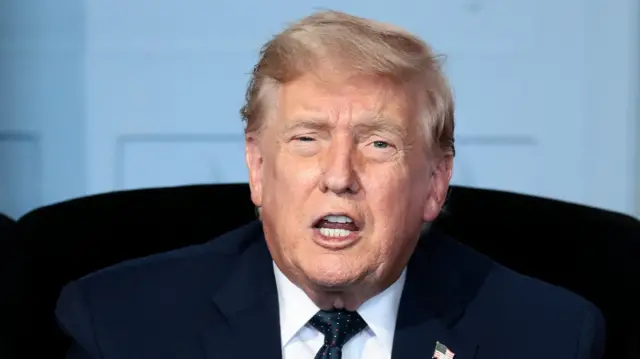
  • The US and Iran have agreed a deal to end the war, which mediator Pakistan says will be signed on Friday in Switzerland

  • Donald Trump says as part of the agreement, the Strait of Hormuz will be reopened. "Let the oil flow!" he writes in a post on Truth Social - prices have fallen since the announcement

  • In Iran, the deputy foreign minister says on state TV that a deal has been reached while the country's top military command hails it as a victory for Tehran

  • The full text is yet to be published, but our correspondent says: The deal's priority is to extend the 8 April ceasefire in time and scope - another 60 days pledging no hostilities while both sides commit to talks

  • Pakistan, which announced late on Sunday that the agreement had been made, says "military operations on all fronts, including in Lebanon" will end - Israel is yet to comment

  • The war began with US and Israeli strikes across Iran on 28 February, prompting Iran to attack Israel and US-allied states in the Gulf

  1. Nuclear programme-related matters will be discussed in next 60 days - Iran's deputy foreign ministerpublished at 10:18 BST

    Ghoncheh Habibiazad
    Senior reporter, BBC Persian

    Iran's Deputy Foreign Minister Kazeem Gharibabadi standing up and walking around some desks and chairs holding a fileImage source, AFP via Getty Images

    Yesterday, Iran's Deputy Foreign Minister Kazem Gharibabadi spoke to Iranian state TV to confirm that the deal with the US had been finalised and the official signing will happen in Switzerland on Friday.

    He reiterated Iran’s distrust of the US and said that the country will “monitor” the implementation of US commitments.

    He claimed that threats last night by Iran against Israel and the US following Israel’s attack on Beirut “helped the process of finalising the text and resolving some of the issues”.

    Gharibabadi said that Iran hopes the negotiations will conclude within a 60-day timeframe. He said ending all sanctions against Iran and resolutions against the country related to its nuclear programme will be among matters to be negotiated within the period.

    He added that the issue of economic reconstruction following the war will also be negotiated during these 60 days.

  2. BBC correspondents on what this agreement does - and doesn't - tell uspublished at 10:00 BST

    Since news of a framework agreement between the US and Israel was announced, our correspondents have been providing their analysis.

    While details are scarce and President Trump's "larger goals remain unrealised for now", the deal "should help alleviate, if not entirely remove" some of the economic strain the conflict has been causing, writes North America correspondent Anthony Zurcher.

    Our State Department correspondent Tom Bateman says this deal was needed for both the US and Iran for economic reasons, but that sticking points remain, including how to "meaningfully agree" on key issues such as nuclear and sanctions relief.

    BBC Persian reporter Ghoncheh Habibiazad has been looking into the reaction within Iran, and says this agreement is being framed as a victory for the country and defeat for the US and Israel.

    There will be "a sense of relief" for Iran's Arab Gulf neighbours, writes our Global Affairs correspondent Sebastian Usher, with the UAE, Qatar and Saudi Arabia having been hit by Iranian missiles during the war - but questions remain over what happens with Lebanon.

    There, some families have started heading back to their communities but people remain sceptical about the framework and what impact it will have on Israel's war against Hezbollah, writes Middle East correspondent Hugo Bachega.

    Any measure of a "peace deal" will be seen in the long-term, according to Security correspondent Frank Gardner and whether the danger of Iran developing a nuclear weapon has really been reduced - as President Trump claims - or if hardliners within the country will try to race for a bomb.

    And this initial agreement is "just a beginning", explains Chief North America correspondent Gary O'Donoghue with questions on issues including the Strait of Hormuz still lingering until the final text is made public.

  3. IDF intends to stay in Lebanon without time limit - Israel's defence ministerpublished at 09:37 BST

    Katz standing outside in suit and tie, wearing a pin of a yellow ribbon.Image source, Reuters

    The Israel Defense Forces intends to maintain its presence in Lebanon without any time restraints, says Israel's Defence Minister Israel Katz.

    • It follows the announcement of a framework deal between the US and Israel, brokered by Pakistani mediators who say the agreement stipulates that "military operations on all fronts, including in Lebanon" will end

    In a statement written originally in Hebrew, Katz says Israel opposes IDF withdrawal from Lebanon despite "existing and expected pressures".

    The defence minister says that, in agreement with Israeli Prime Minister Benjamin Netanyahu, the IDF will remain in "security zones" in Lebanon - as well as Syria and Gaza - "without time limit".

    He says that "all terrorist infrastructures" will be destroyed in order to "protect Israel's borders", and that Israel has briefed its US counterparts on its position.

    "If Iran attacks Israel due to the events in Lebanon — we will strike it with full force and clearly demonstrate the gap in power," Katz adds.

    A map of southern Lebanon showing towns, rivers and borders near Israel and the Golan Heights. A shaded areas shows where ISW analysis puts Israeli ground operations along the south of Lebanon. Major towns are marked with black dots, including Beirut on the coast in the north and Tyre on the coast in the south and Nabatieh inland. The Zahrani and Litani Rivers are labelled in blue, flowing west to the Mediterranean Sea. The southern border with Israel is shown, and the Golan Heights lies to the southeast, and Syria to the east.
  4. Iran's foreign minister says 'complete halt' to Israeli attacks in Lebanon neededpublished at 09:23 BST

    Iran's foreign minister Seyed Abbas Araghchi this morning has had phone calls with his counterparts in Turkey, Iraq and Egypt, according to a post on his Telegram.

    In it, Araghchi says he discussed the need for a "complete halt" to Israeli attacks in Lebanon and referred to the US' responsibility for implementing the agreement.

    Turkish Foreign Minister Hakan Fidan (R) and Iranian Foreign Minister Abbas Araghchi (L) speak at a press conference from podiumsImage source, EPA/ Shutterstock
    Image caption,

    Iranian Foreign Minister Abbas Araghchi (L) said he spoke to colleagues including Turkish Foreign Minister Hakan Fidan (R) today

  5. Here in Lebanon, people are sceptical of the US-Iran framework dealpublished at 09:13 BST

    Hugo Bachega
    Middle East correspondent, reporting from Lebanon

    A girl flashes the V-sign from a vehicle as displaced residents cross the Bourj Rahal bridge on their way to their village in southern Lebanon .Image source, Getty Images
    Image caption,

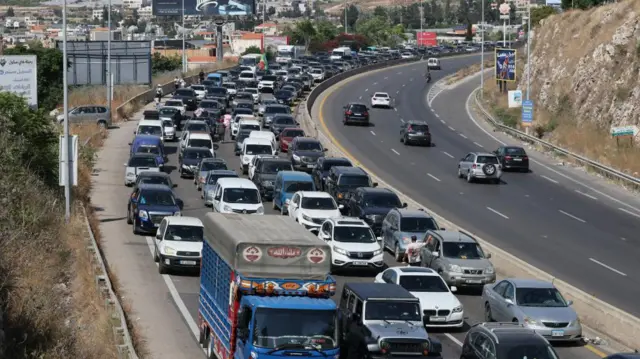
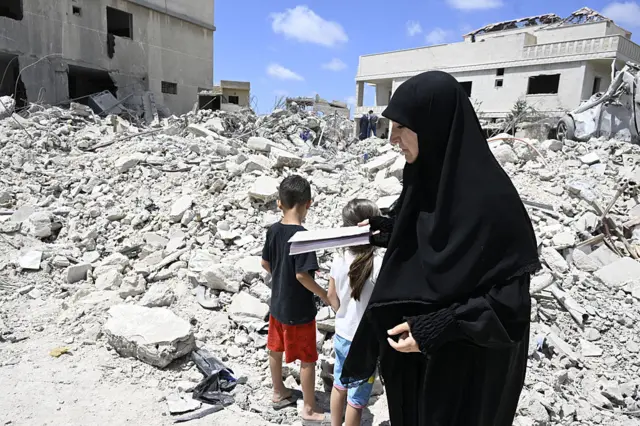
    Displaced families have been seen driving towards villages in southern Lebanon today, as some return to their homes

    Lebanon is, again, hoping that a deal between the US and Iran would mean an end to the war between Israel and the Iranian-backed armed group Hezbollah here.

    The morning appears to be calm in the south of the country, where Israel has carried out frequent air strikes, but people seem to be reacting to the announcement of a truce with caution.

    Still, some families are starting to return to their communities, despite warnings from the authorities that it is not safe. In a video that is being circulated online, a group of displaced residents arrived in their village and found an Israeli tank blocking a street.

    Iran had insisted that any deal should also include Lebanon. This was crucial in strengthening Iran’s image among Hezbollah’s supporters, who have been deeply affected by the conflict, and in reinforcing Tehran’s influence in Lebanon.

    This came despite attempts by the Lebanese government to separate the two arenas, to curb that influence and, as a result, isolate Hezbollah even more, with the goal of disarming it, still elusive.

    For Lebanon, the war has been catastrophic.

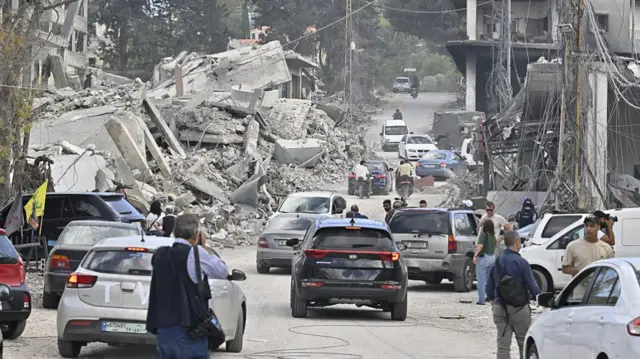
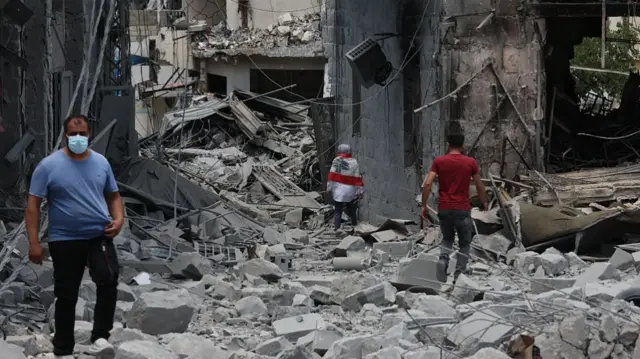
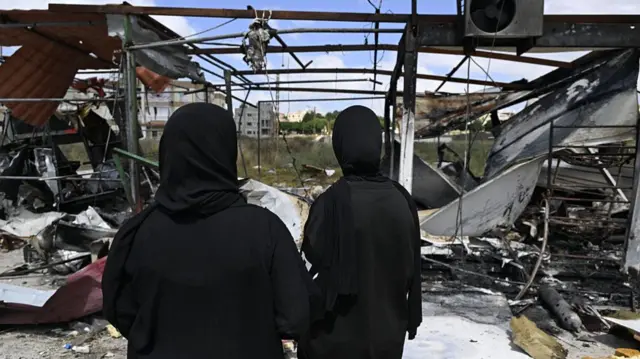
    More than 3,700 people have been killed; around 5% of its territory is under Israeli occupation and there is no timeline for any withdrawal; dozens of villages in the south have been destroyed and no-one knows who will pay for reconstruction, and one million people remain displaced, most of them Shia Muslims, which are the bulk of Hezbollah’s support base.

    The Lebanese have reason to be sceptical. The ceasefire that ended the last war in 2024 did not bring peace. Israel continued to attack what it described as Hezbollah targets almost every day and many fear that, once the world’s attention moves away from the region, this could be their reality again.

  6. European stock markets rise as they react to US-Iran dealpublished at 09:01 BST

    Nick Edser
    Business reporter

    Stocks in Europe have opened higher as investors react to the framework deal between the US and Iran, with both Germany's Dax and France's Cac 40 share indexes up by about 1.7%.

    In London, the FTSE 100 index rose 0.6%. The increase was smaller than elsewhere as shares in energy giants BP and Shell – two of the biggest companies in the FTSE 100 – were down about 4% on news of the lower oil price.

    Earlier, Asian shares had surged, with Japan’s Nikkei 225 closing up 5%. Asian markets have seen more dramatic moves as many countries in the region are heavily reliant on the Middle East for oil and gas supplies.

    Matt Britzman, senior equity analyst at Hargreaves Lansdown, says global equity markets were “starting the week firmly on the front foot”.

    He adds that the framework deal has “given investors a clear reason to dial back some of the geopolitical risk premium that has hung over markets”.

  7. Strait of Hormuz mine clearance could take 'weeks to months', says retired US admiralpublished at 08:54 BST

    Fisherman off Strait of Hormuz with three large ships in the backgroundImage source, AFP via Getty Images
    Image caption,

    The Strait of Hormuz has been effectively shut by Iran since the start of the war

    President Donald Trump announced on Truth Social that the Strait of Hormuz would open once the "deal" is signed on Friday, "for purposes of mine removal".

    As we mentioned in the previous post, Tehran effectively shut the strait - the world's busiest oil shipping channel - after Israel-US strikes in Iran on 28 February.

    It could be "weeks to months" for mines to be cleared in the Strait of Hormuz, a retired US Navy rear admiral has told the BBC Radio 4's Today programme.

    Admiral Mark Montgomery, who is also a senior fellow at the Foundation for the Defence of Democracies, says this will involve identifying and clearing all the mines, "so that you can have unrestricted transit without US military, or allied military vessels around, looking out for mines and doing constant cue route clearances".

    It could also take up to two months for the world to feel "full relief" from the restriction on oil exports once traffic resumes, he adds, though he said there could be some "obvious relief" within a week.

  8. What is going on in the Strait of Hormuz?published at 08:39 BST

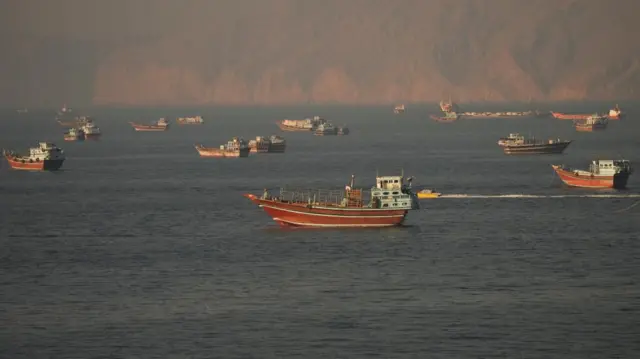
    A hazy view of commercial vessels waiting in the Gulf of Oman after applying for transit permits to pass through the Strait of HormuzImage source, Getty
    Image caption,

    Vessels waiting in the Gulf of Oman after applying for permits from Iran to pass through the Strait of Hormuz

    In the last hour, Keir Starmer said he hopes the framework agreed by the US and Iran will "restore freedom of navigation in the Strait of Hormuz".

    Traffic in the strait has ground to a halt since late February and thousands of sailors have become trapped in the Gulf. About 20% of the world's oil and gas supplies are usually transported through the vital waterway.

    The US military has been blockading Iranian ports since April and last week the US military struck three vessels in the strait, killing three Indian sailors.

    As of yesterday, US Central Command (Centcom) said it had disabled nine vessels and redirected 142 more since the blockade began on April 13.

    As our Chief North America Correspondent Gary O'Donoghue writes, the exact status of the strait upon a framework deal being agreed is something over which divergent views are apparent.

    President Donald Trump said on Truth Social that a deal is "complete" and that the strait would reopen "upon the signing of the Deal on Friday".

    Iranian semi-official state agency Mehr News has reported what it says are the draft details of a 14-point memorandum of understanding between the US and Iran, including the reopening of the strait within 30 days, "under Iranian arrangements".

    This Flourish post cannot be displayed in your browser. Please enable Javascript or try a different browser.

  9. Starmer hails US-Iran framework deal as 'hugely significant'published at 08:28 BST

    Starmer speaks at a lectern next to a Union Jack flagImage source, Getty Images

    Let us turn to Downing Street, where UK Prime Minister Keir Starmer is speaking to journalists.

    Ahead of announcing a new policy on social media access for the under-16s, Starmer says: "Before I start on social media, I want first to welcome the breakthrough reached last night between the US and Iran.

    "I congratulate President Trump, the mediators from Pakistan and Qatar, and all those involved."

    The PM continues: "This is a hugely significant moment. We have long called for de-escalation and it is vital that all parties see this opportunity to secure stability in the region, and restore freedom of navigation in the Strait of Hormuz."

    Starmer says this will "ease the economic pressures" on Britons and those around the world.

    He says the UK will now work "closely with our partners to support this agreement and to ensure that it turns into a durable, lasting peace".

  10. Egypt welcomes agreement as 'major turning point'published at 08:20 BST

    We've had more regional reaction, with Egypt welcoming the agreement between the US and Iran.

    The Ministry of Foreign Affairs describes it as a "highly significant development" that will restore "security and stability" in the region and around the world.

    Its statement says the deal follows months of efforts by regional and international partners and opens "a new chapter".

    It adds that it hopes this will be "a major turning point" in creating "a supportive environment for peace" and addressing other issues in the Middle East.

  11. 'We are not partners to this agreement, it does not bind us', far right Israeli minister sayspublished at 08:05 BST

    A man wearing glasses, a dark suit and red tie.Image source, EPA/Shutterstock
    Image caption,

    Itamar Ben-Gvir says Israel is an independent state and not subject to the US

    Israel is yet to officially comment on the framework agreement between the US and Iran, which was announced last night by Pakistan.

    This morning, we've heard from far-right Israeli National Security Minister Itamar Ben-Gvir.

    Criticising the deal between the US and Iran, he says: "We are not partners to this agreement that does not ensure our security, and it does not bind us in any way."

    He adds Israel should not settle for anything less than "the dismantling of Hezbollah", urging a continuation of action against the armed Lebanese political group.

    "Every launch of a drone, UAV, or missile toward Israel from Lebanon will lead to an Israeli strike in Dahiya," he adds.

    Ben-Gvir has often criticised his own government and has had sanctions imposed on him by the UK and other countries for "repeated incitements of violence against Palestinian communities".

  12. 'Priority now is its swift and full implementation' - Ursula von der Leyenpublished at 07:41 BST

    A woman, wearing a brown blazer, speaking into a microphone, with the blue flag and gold stars of a flag behind her.Image source, EPA/Shutterstock
    Image caption,

    Ursula Von der Leyen says "freedom of navigation" in the Strait of Hormuz must be "toll-free"

    Ursula von der Leyen, President of the European Union Commission, has welcomed the agreement but says "the priority now is its swift and full implementation by all parties".

    Von der Leyen says there should be an "immediate reopening of the Strait of Hormuz", describing freedom of navigation as "essential for regional stability and the global economy".

    She adds the framework deal opens the door to broader negotiations on peace and security in the Middle East.

    "And of course there can be no peace in the Middle East while Lebanon is in flames. Once again Europe calls on all parties to respect Lebanon's sovereignty and territorial integrity and implement a genuine ceasefire," von der Leyen says.

    Von der Leyen goes on to say that European leaders who will be at the G7 this week in France will discuss the issue.

  13. Asian shares jump as investors welcome dealpublished at 07:27 BST

    Peter Hoskins
    Business reporter, Singapore

    Asian shares are sharply higher as investors welcome the framework deal.

    Japan's benchmark Nikkei 225 share index is up by around 5%, while the Kospi in South Korea is 4.8% higher.

    Stock markets in the region have been on a wild ride in recent months, with shares often rising or falling sharply in response to developments in the US-Israel war with Iran.

    Asian economies have been hit particularly hard by the effective closure of the Strait of Hormuz as they are heavily reliant on the Middle East for their oil and gas supplies.

  14. 'This marks a potential breakthrough' - European reaction to dealpublished at 07:23 BST

    A woman, wearing a pink blazer, speaking into two microphones.Image source, EPA Shutterstock
    Image caption,

    Kaja Kallas says EU Foreign Ministers will discuss how the EU can be closely involved in the next phase

    This morning, we've had more European reaction to news of the framework agreement between the US and Iran.

    António Costa, President of the European Council, says he looks "forward to an end to this costly war".

    Writing on X, he adds the "weapons must now fall silent and outstanding differences must be resolved by peaceful means".

    The EU's foreign policy chief Kaja Kallas describes the framework deal as "a potential breakthrough".

    She says the agreement can "give much needed space for deeper negotiations".

  15. A framework deal announced - who has said what?published at 06:55 BST

    Pakistan PM Shehbaz SharifImage source, Getty Images
    Image caption,

    Pakistan's PM first announced the deal in a post on X last night

    Last night, Pakistan's Prime Minister Shehbaz Sharif said the US and Iran "declared the immediate and permanent termination of military operations on all fronts, including in Lebanon".

    He added an official signing ceremony would take place in Switzerland on 19 June - the statement in full.

    US President Donald Trump said "The Deal with the Islamic Republic of Iran is now complete".

    He also said in a post on Truth Social that he authorised "the toll free opening of the Strait of Hormuz", and the removal of the US blockade of Iran’s ports.

    In a second post, he said the deal would "bring Peace and Security to the whole Region”, and that the opening of the strait would mean “oil will flow on both ends again for the Region, and the World".

    Iran’s Deputy Foreign Minister Kazem Gharibabadi confirmed in a phone call on state TV that a deal with the US had been finalised and that the official signing would happen in Switzerland on Friday.

    "An immediate and permanent end to the war and military operations on different fronts including Lebanon will be announced tonight," he said.

    Iranian state media has been reporting what it says are the draft details of a 14-point memorandum of understanding between the US and Iran, although the specific points have not been officially confirmed by either country - read the full list here.

  16. Analysis

    The framework deal is crucial but also just a beginningpublished at 05:56 BST

    Gary O’Donoghue
    Chief North America Correspondent

    This agreement is quite a moment for Donald Trump – celebrating not just his 80th birthday on Sunday but also a major diplomatic breakthrough.

    After so many false dawns, it seems that Washington and Tehran now agree on one thing – that a memorandum of understanding has been finalised, even if the elements stressed in each capital focus on those parts each finds it easiest to stomach.

    Another key apparent element of agreement is that Lebanon does feature in both sides' description of the deal – though with Israel and Hezbollah not signatories, there will be significant doubt over their willingness to go along with it.

    In truth, the deal – while crucial – is just a beginning.

    It will kick off a period of 60 days during which the US and Iran will have to agree on how to destroy and remove Iran's nuclear material. That in itself could easily falter.

    The exact status of the Strait of Hormuz is also something over which divergent views are still apparent, and the details around the timing of sanctions relief and the unfreezing of Iranian assets is still not consistent between both parties.

    Many of these questions will linger until the full final text is made public.

    One thing is clear, though: Trump's assurance to the Iranian people that "help was on its way" and that, when the US was finished, the government would be theirs to take does not look likely to happen any time soon.

  17. A roundup of events leading to the announcement of the dealpublished at 05:45 BST

    A framework deal to end the Iran war has been reached.

    Here's what you need to know about the latest developments:

  18. Leaders head to France for G7published at 05:30 BST

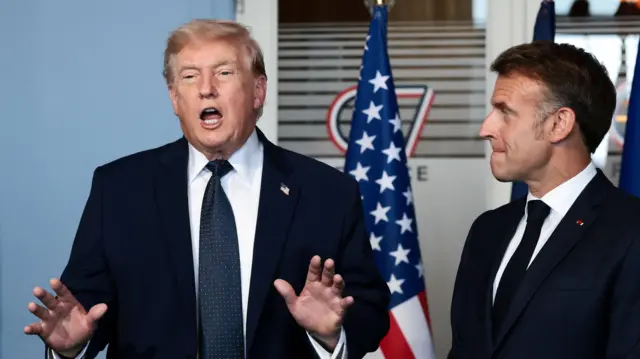
    France will host the G7 in the lakeside resort of Evian-les-Bains from Monday, with the seven member states expected to discuss the framework deal between the US and Iran alongside other key matters.

    Although the agreement is not due to be signed until Friday, G7 leaders will likely ask US President Donald Trump for further details of the accord, with a particular emphasis on the reopening of the Strait of Hormuz.

    As we reported earlier, French President Emmanuel Macron has said leaders will also discuss the support for Lebanon under the new accord.

    The informal grouping includes the US, the UK, Canada, France, Germany, Italy and Japan. The European Union (EU) will also be in attendance this week, but does not count as one of the core "7" as it is a bloc, rather than a single nation.

    Other items on the agenda for this year's summit include support for Ukraine amid its war with Russia, and the rise of artificial intelligence.

  19. Deal could 'fundamentally transform the Middle East for the next 50 years' - Vancepublished at 05:11 BST

    JD Vance speaks with the media as he arrives at Joint Base Andrews on 28 May, 2026.Image source, Reuters

    Earlier on Sunday, US Vice-President JD Vance told Fox News that the agreement with Iran had the potential to "fundamentally transform the Middle East for the next 50 years".

    "This region of the world has been a basket case for my entire life and longer than that," he told the outlet.

    Vance said Donald Trump had managed to "eliminate the threat of Iran".

    He added that it will now be possible "to build to a new era of Middle East prosperity and success".

    "Where frankly we can generate a lot of prosperity for the American people out of that region."

  20. Iran's football team lands in US after deal announcedpublished at 04:46 BST

    Shaimaa Khalil
    Los Angeles

    Iran's football team has arrived in the US for the World Cup, landing in Los Angeles just as a deal was announced to halt hostilities between Iran and the US.

    The deal to end the fighting between the US and Iran came just a day before the Iranian team’s opening World Cup match against New Zealand in Los Angeles, easing fears of further escalation but doing little to remove the controversy surrounding the team.

    Iran's striker Mehdi Taremi told the BBC the ongoing tension has overshadowed the tournament from the moment the squad arrived.

    Preparations have also been disrupted.

    The team faced visa problems and was forced to move its World Cup base camp to Mexico.

    When Iran takes to the pitch in LA, many in the city's large Iranian community won't be there to watch.

    Some are planning protests against Fifa's ban on the pre-revolutionary Lion and Sun flag, while others see the team as representing a regime they want gone.

    The players insist they're here to unite Iranians and focus on football.

    But for this squad, politics has been impossible to escape.