Summary

  • A man whose pregnant partner died after being hit by a speeding driver says it's "not right" that her killer could be released early under a government scheme

  • It comes after ministers announced last night that prisoners guilty of rape, serious child sex offences and grooming will be excluded from the new policy

  • Calvin Buckley fears his partner's killer could be released after serving half his sentence and says the policy should not be "at the expense of victims"

  • The justice secretary says there would be a "prison capacity crisis" if the government restricted further those eligible for the scheme in England and Wales

  • Under the policy, due to begin in October, thousands of prisoners will be eligible to be released part way through their sentences - here's a quick guide

  • A review into the policy was ordered after it emerged PC Harper's killers, convicted of manslaughter when he was killed on duty in 2019, could be released early

  • Changing the act at a "very late stage" puts further pressure on prison staff, the Prison Governors' Association warns - read a timeline of the changes

  1. Families critical of plan to speed up prison releases as jails near capacitypublished at 13:19 BST 4 August

    Madeleine Lake
    Live reporter

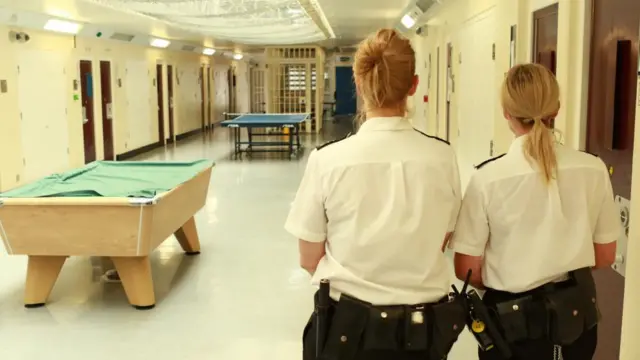
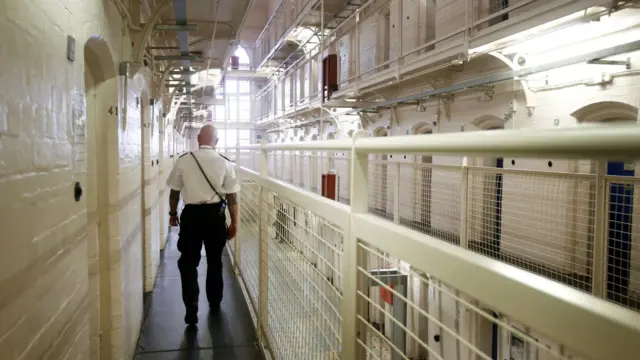
    Two women working in a prison, walking down the corridor, with white tops

    Bereaved families are criticising a government plan to speed up the release of prisoners in England and Wales.

    Prisons in the two nations are nearing capacity, with about 86,500 people in jails and just2,400 spare places. There are concerns about what could happen if prisons become full.

    Thousands of prisoners will have their release dates brought forward under the release scheme, with some short-term inmates to be freed after serving 33% of their sentences. You can see a guide to the plans here.

    Ministers have said that prisoners convicted of rape, serious child sex offences and grooming will be excluded from the early release programme.

    The mother of PC Andrew Harper, who was killed while on duty in 2019, says she feels "devastated" that his killers could be eligible for early release, while another family says they feel like justice is being "taken away" from them.

    Tory leader Kemi Badenoch says victims "deserve so much better". Elsewhere, the Green Party argues that a "whole system change" is needed to tackle overcrowding in prisons.

    The Lib Dems say they would "bring forward emergency legislation" to ensure two of the men who killed PC Andrew Harper "are exempt from early release", while Reform UK say the policy changes will "still result in dangerous and violent offenders being let loose on our streets".

    Justice Minister Alex Norris says that the government is directly engaging with families of victims following the changes so "they can live their life fully".

    We're pausing our live coverage for today, but you can read more about this story in our news article.

  2. BBC Verify

    How many prison places have been built?published at 13:02 BST 4 August

    By Lucy Gilder

    The Labour government - under former prime minister Keir Starmer - pledged to build 14,000 prison places by 2031.

    The Ministry of Justice (MoJ) told BBC Verify that it had delivered about 3,200 places as of July.

    However, the MoJ has not told us how many prison cells have been taken out of use so we cannot say whether there has been a net gain or loss of spaces places.

    The MoJ has estimated, external the last Conservative government built 13,009 prisons places between 2010 and 2024 while 12,514 were closed, meaning fewer than 500 net places were added.

    The previous Labour government delivered 27,830 net prison places over its 13 years in office, , externalaccording to multiple statements by former Labour justice minister Nicholas Dakin in Parliament.

    We have asked the MoJ to confirm this.

  3. Why are prisons so full?published at 12:52 BST 4 August

    A prison officer unlock a large gateImage source, PA Media

    The reasons why prisons in England and Wales are close to capacity have been explored in an independent review, which identified the following:

    • England and Wales imprison more people per capita than nearly all other western European countries - just behind Poland
    • An increased use of custodial sentences, with the likelihood of re-offending after serving a custodial sentence higher than after a non-custodial sentence
    • A decline in non-custodial sentences - community order sentences imposed each year dropped 61% between 2010 and 2024
    • An increase in the length of custodial sentences -the average custodial sentence for indictable offences has increased from 16 months in 1993 to 22.5 months by June 2024
    • A rise in the minimum term of life sentences from an average of 13 years in 2000 to 21 years in 2021
    • A large rise in the number of offenders being recalled to prisons in England and Wales
    • The political landscape has been dominated by a "tough on crime" narrative, encouraging longer incarceration without looking at the broader implications and impact, the review found
  4. BBC Verify

    About 2,400 prison cells available for use, data showspublished at 12:42 BST 4 August

    By Lucy Gilder

    The current Labour government and its predecessors have often cited overcrowding as a justification for the early release of some offenders.

    So what do the figures currently show about capacity in prisons across England and Wales?

    At the start of this week there were 86,495 people in custody, external and 2,395 usable cells free.

    This compares with the 1,470 usable cells available in the same week two years ago, shortly after Labour returned to power.

    But the problem of crowded prisons has persisted in recent years.

    About a quarter of all prisoners were living in crowded conditions, external - defined as when the number of prisoners sharing a cell is larger than the capacity it was designed to hold - in the year ending March 2025.

    The approximate yearly share of prisoners in crowded conditions has rarely fallen below 20% since the end of the 1990s.

    The average annual prison population rose sharply through that decade, including in 2024 which saw the largest population since records began in 1900.

  5. How easy is it to use this page?

    Please rate this from 1 to 5, where 1 means difficult, 3 means neutral, and 5 means easy
    Your feedback helps us improve how live pages work
  6. Why the early release scheme is giving prison governors a headachepublished at 12:32 BST 4 August

    Dominic Casciani
    Home and legal correspondent

    A barbed wire fence outside a prisonImage source, Getty Images

    The practicalities of how this new release scheme will work are far from clear.

    For a start, as the law is currently written, ministers can only delay releases, not fundamentally alter who gets out when.

    The plan to exclude rapists and others will ultimately need MPs and peers to vote in Parliament after their return next month. That takes time.

    Will the Tories (who argued to exclude rapists in the first place) and other parliamentarians attempt to amend the plan to exclude other groups of offenders?

    While that is going on, prison officers and governors have a genuine headache: They can't tell offenders their release dates.

    Criminals serving a sentence in jail are legally entitled to know their sentence - long gone are the medieval days of locking people up for arbitrary periods, just to rot.

    If someone knows their date in good time, it helps them and dedicated resettlement specialists inside criminal justice to better prepare them through resettlement and rehabilitation plans. It increases the chances they'll get somewhere safe to live, free from bad influences, for those first critical months.

    A home in the community in turn means a better chance of getting a job. A job means less chance of reoffending.

    So it's critical that governors can do this work quickly so their partners in the Probation Service and associated resettlement organisations can do their bit.

  7. 'I understand there's a crisis but my grief is not being reduced'published at 12:22 BST 4 August

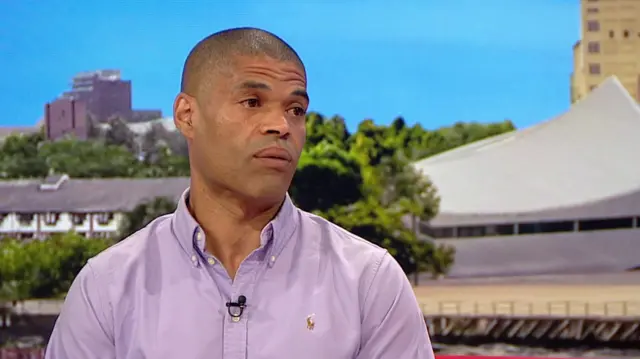
    Calvin Buckley, a man with close cropped hair, wears a shirt sitting on the BBC Breakfast set

    Calvin Buckley, whose partner Frankie Jules-Hough and unborn child died when she was hit by a motorist in May 2023, says he is "shocked and disappointed" that the killer could be released early under the scheme.

    He tells BBC Breakfast that he hoped people convicted of death by dangerous driving would be exempted alongside murders and other serious offences, but that is not the case.

    "To kill somebody and have your sentence reduced, is not right," he says.

    For context: Prisoners who committed rape, grooming, and serious child sex offences will now be excluded from the early release scheme.

    Buckley appealed against the initial sentence given to driver Adil Iqbal as unduly lenient, which was then increased from 12 to 15 years, with a commitment that the perpetrator would serve two thirds of that.

    But now he fears the offender will be released after serving half the sentence and actually spend less time behind bars than before the sentence was increased.

    "Our justice is being taken away, I understand there's a crisis, I agree that it needs to be addressed, but not at the expense of victims. My grief is not being reduced."

    This Flourish post cannot be displayed in your browser. Please enable Javascript or try a different browser.

  8. 'Killer drivers will be back on road', says daughter of couple killed by dangerous driverpublished at 12:03 BST 4 August

    Rachel Flynn
    Live reporter

    Claire Corkery, whose parents Sue and Tom were killed by a speeding driver in January 2024, says those bereaved on the road "feel like our pain is less important".

    "I don't want to see rapists released early, but it's almost like a tiered system, treating what has happened to us as less serious," Claire says.

    The man who killed Claire's parents, Scott Gunn, was found guilty of death by dangerous driving and jailed for 16 years in November 2025. Claire says Gunn showed "no remorse" throughout the court process.

    "The judge was very clear he would have to serve two thirds of his sentence in custody," Claire says. The new early release scheme means her parents' killer will be eligible for release after eight years.

    Claire and her parents on her wedding day, smiling in a parkImage source, Claire Corkery
    Image caption,

    "There’s no early release from the life sentence that I’m serving," Claire tells the BBC

    "The worrying thing for us is killer drivers will be back on the road," Claire tells me.

    She says it's "frustrating" to know that politicians can make exemptions to those who are eligible for the early release scheme, knowing it does not include those guilty of death by dangerous driving.

    "There's a saying," Claire continues. "If you're going to kill someone, kill someone in a car, because you get treated better than killing by any other means."

    "Today is a great day to kill someone in your car, frankly. That's the message that the government has sent today."

  9. Early release scheme will not solve prison overcrowding, Greens saypublished at 11:53 BST 4 August

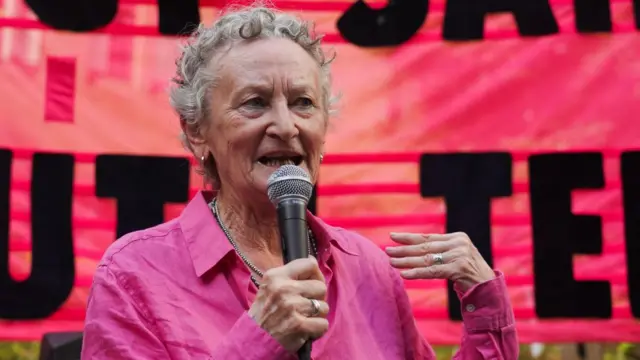
    A woman with short grey hair speaks into a microphone in front of a pink banner. She is wearing a pink shirtImage source, Getty Images
    Image caption,

    Green Baroness Jenny Jones has called for more investment in rehabilitation for offenders

    A "whole system change" is needed to tackle prison crowding and "early release cannot solve" the issue, the Green Party says.

    Investing in crime prevention, including youth services, mental health support and anti-poverty measures are part of proposals put forward by the party in a statement.

    Green Baroness Jenny Jones also calls for alternatives to incarceration such as community-based penalties for "women, young people and offenders whose crimes are linked to poverty".

    “We also need more investment in rehabilitation, education, housing and employment support to help people back into the community when they leave prison and to cut re-offending,” she says.

  10. In numbers: The current state of England and Wales' prisonspublished at 11:43 BST 4 August

    The justice secretary has said the government wants to "go further" with reforms to the early release scheme, but that additional revisions would result in a "prison capacity crisis".

    Here's a look at the figures behind the issue facing the government:

    • 87,495 - The number of people in England and Wales' prisons as of 3 August
    • 88,890 - The useable operational capacity of prisons across England and Wales, meaning the prison estate is currently more than 97% full
    • 5,000 - This is how many prisoners will be released earlier than planned as part of the revised early release scheme, according to the justice secretary
    • 14,000 - The target set by the government in December 2024 on the additional number of prison places set to open by 2031
    • 482 - The net number of prison places added during the last Conservative governments between 2010 and 2024 according to Ministry of Justice figures, external
  11. Safety of domestic abuse victims an 'afterthought', commissioner sayspublished at 11:26 BST 4 August

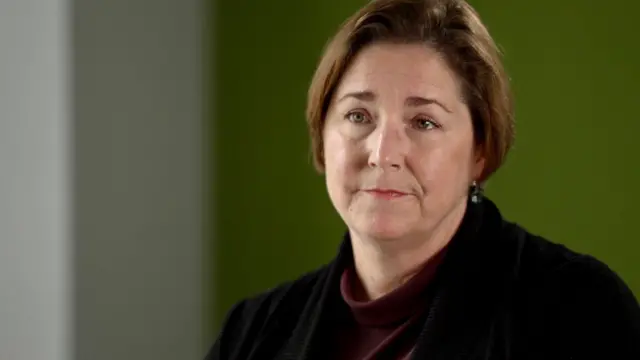
    Nicola Jacobs, who has short brown hair, in a close-up shot. She is wearing a dark jacket over a red top, with a green wall in the background

    Criminals convicted of rape, grooming and serious child sex offences will not be eligible for early release under the new scheme following a review.

    However, perpetrators of domestic abuse could still be. Dame Nicole Jacobs, domestic abuse commissioner for England and Wales, says that decision "puts victims' lives at risk".

    In statement on social media, she warns that "the danger" perpetrators of domestic abuse pose to their victim "should not be underestimated".

    "These are individuals who are fixated on their victim and will stop at nothing to control and cause harm," the commissioner says.

    She argues that safety measures for domestic abuse victims appear to be "an afterthought", adding: "It is critical that no abuser is released in October unless I am confident that victims' safety is not being compromised."

  12. You can't put price on keeping this country's citizens safe - Badenochpublished at 11:07 BST 4 August

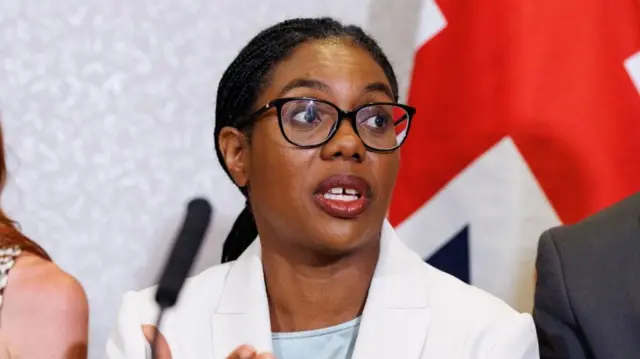
    Kemi BadenochImage source, EPA/Shuttershock

    Conservative leader Kemi Badenoch says that overcrowding in prisons must be solved but, "we do not want to see the early release of killers".

    Speaking to broadcasters, she said the idea that some of PC Harper's killers will be out on release is "horrific".

    Asked about renting prison spaces from other countries and the cost of this, she says you cannot put a price on "keeping the citizens of this country feeling safe and secure".

    "This is not about money right now. This is about safety. This should be a problem for the government, not a problem for all of the people who have to see their perpetrators walking up and down the street."

    In an earlier post on X, she said the Conservatives have a "better plan" to tackle overcrowding in prisons, including to "rent prison spaces abroad".

  13. Analysis

    Prisons are running out of spacespublished at 10:51 BST 4 August

    Dominic Casciani
    Home and legal correspondent

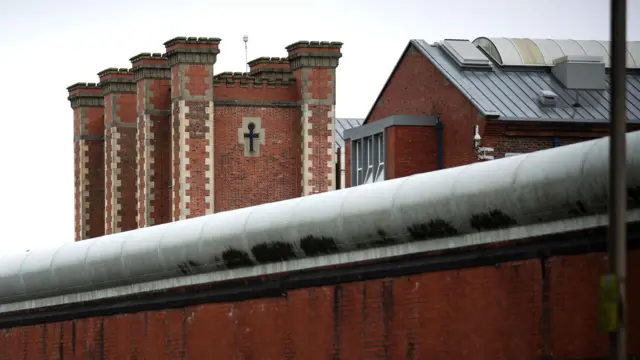
    Exterior view of HM Prison Liverpool in Liverpool, Britain, 10 September 2024Image source, EPA-EFE/REX/Shutterstock

    Putting aside the question of how offenders will be managed when they are released early, the background question is what would happen if they were not?

    The prisons would be full and criminal justice would collapse.

    The system is like a factory production line: when the police catch a dangerous offender, they’re locked up ahead of trial - and then if convicted, they’re sentenced. That’s one space used up.

    When they leave at the end of a sentence, that place becomes available again.

    If prisons run out of spaces - as they nearly did in 2024 - the police and courts would have faced the appalling prospect of having to stop sending newly-caught criminals to cells.

    The police and the courts would then be failing in their basic duty to society.

    If the release scheme - which the government has been transparent about in Parliament - does not go ahead, then we will run out of cells again - perhaps within three years.

    There are about 86,500 people in jails - with about 2,400 spare places.

    That headroom is reducing monthly. By 2030 officials think there will be 100,000 in cells.

    The government is trying to build and open up 14,000 extra cells - and if the new release-and-management scheme does not go ahead, we would hit yet another crisis very quickly indeed.

  14. A timeline of how we got herepublished at 10:30 BST 4 August

    A photo inside HMP BarlinnieImage source, PA Media

    There have been various twists and turns regarding the government's new prisoner release scheme for England and Wales, which Keir Starmer's government voted through in January 2026.

    The Sentencing Act 2026 changed the rules around the sentencing and management of prisoners to ease overcrowding in jails, and implemented recommendations by a review conducted by former justice secretary David Gauke - published in May 2025.

    Some 6,000 criminals were due to be released at varying stages, and the scheme was due to come into force from 2 September. A revised version of the scheme will now begin from October.

    But on 22 July, PC Harper's mother, Debbie Adlam, called the scheme - which could reduce the sentences of two of her son's killers - an "insult".

    She told the Telegraph she had received a letter from the Ministry of Justice confirming the sentences might be reduced for Jessie Cole and Albert Bowers, who were sentenced to 13 years in custody for manslaughter in 2020.

    A day later on 23 July, newly elected Prime Minister Andy Burnham announced he was pausing the scheme for review.

    On 3 August, the government announced a revision to the scheme - that prisoners who committed rape, grooming, and serious child sex offences will be excluded.

    Harper's mother Debbie Adlam told BBC Newsnight she was "devastated" that the change to the scheme still left two of her sons' killers eligible for early release.

    This morning, Justice Secretary Alex Norris said the government is trying to avoid running out of prison spaces as soon as October. "We would like to have gone further than that, but we cannot I'm afraid," he said.

  15. BBC Verify

    Large rise in offenders sent back to prison, figures showpublished at 10:02 BST 4 August

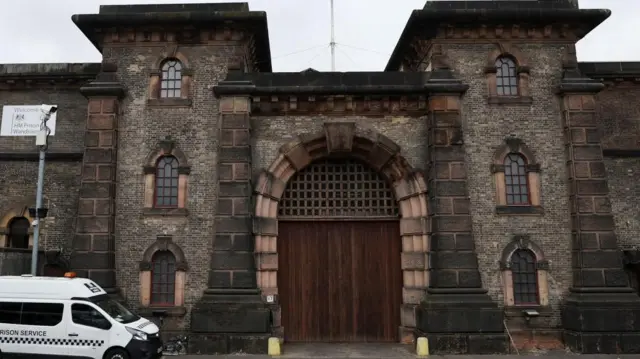
    Wandsworth Prison in south-west LondonImage source, EPA

    By Tom Edgington and Harriet Agerholm

    Figures released last week show there has been a large rise in the number of offenders being recalled to prisons in England and Wales having been released on licence.

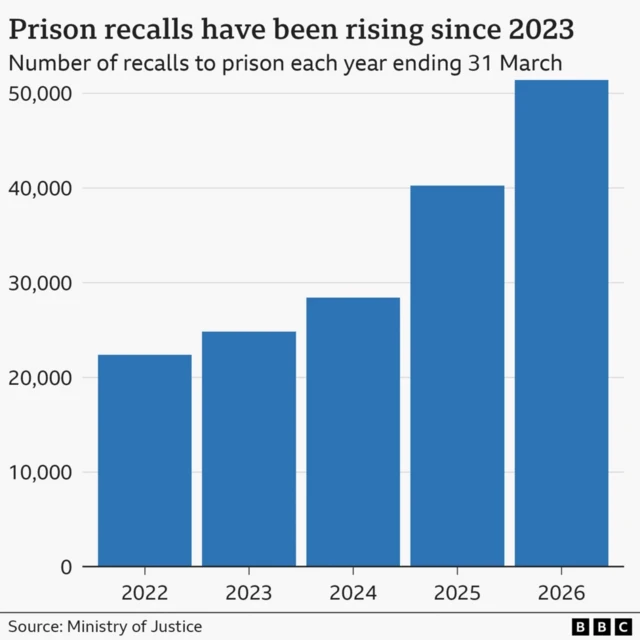
    There were 51,419 licence recalls in the year ending March 2026, up from 40,259 in the previous year - a 28% increase.

    Although recalls in January to March 2026 were slightly lower than the previous three-month period, they remain well above historical levels.

    The increase in prisoner recalls comes after the government introduced an early release scheme in England and Wales to help ease overcrowding pressure in September 2024.

    The scheme meant eligible prisoners could be released after serving 40% of certain sentences rather than half.

    As of March 2026, 70,066 people had been released, external under the scheme.

    The Ministry of Justice (MoJ) said offenders released on licence face strict conditions "and can be hauled back to prison if they break these rules".

  16. Early release scheme 'feels like an injustice' for victims, says commissionerpublished at 09:34 BST 4 August

    Woman with blonde hair, in a black blouse, sat in front of a TV gallery

    Victims and their families have been sent into a state of shock by the early release scheme, the victims' commissioner for England and Wales tells BBC Breakfast.

    Claire Waxman says she welcomes the changes to the plans, which excludes prisoners who committed rape, grooming, and serious child sex offences, but those exemptions don't go far enough.

    Waxman says she has spoken to victims since the announcement of the scheme and says the news "re-traumatised them".

    "For many it feels like an injustice," she adds.

    Waxman calls for more support for victims who will see the perpetrator in their case released early and for the prime minister to show "proper leadership across the criminal justice system" to place reform high up the political agenda.

    She says that successive governments have failed victims over the years by mismanaging and under funding the criminal justice system and it's "victims that pay the price".

  17. 'No happy solutions' to prison overcrowding, says former prison governorpublished at 09:15 BST 4 August

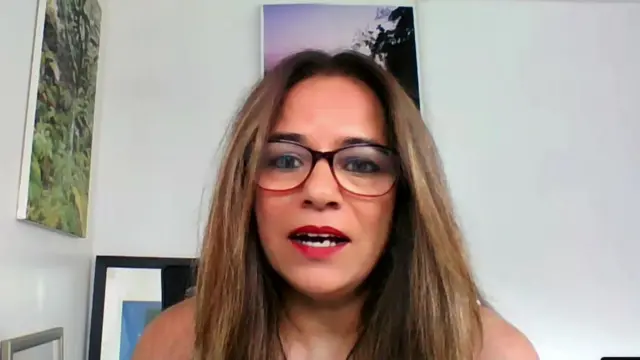
    Pia Sinha sits in a room with white walls while wearing glasses. There are two paintings hung on the wall behind her, one green and another purple.

    The chief executive of the Prison Reform Trust charity has said there are "no happy solutions" to the issue of overcrowding in prisons, adding that previous legislation was created to avoid the problem.

    Pia Sinha tells Radio 4’s Today programme: "If we keep adding exceptions and exemptions to that, we will diminish the number of people that can be released and we will be back within months to another capacity crisis."

    The former prison governor also says that while the custodial part of prisoners' sentences may end, they will continue to serve community sentences under "very strict conditions".

    When asked about Prime Minister Andy Burnham considering releasing more women from jail and using those places for male prisoners, Sinha says closing a women's prison "isn't really a simple option" to tackle the issue.

  18. We would have prison capacity crisis if scheme revised further - justice ministerpublished at 08:48 BST 4 August

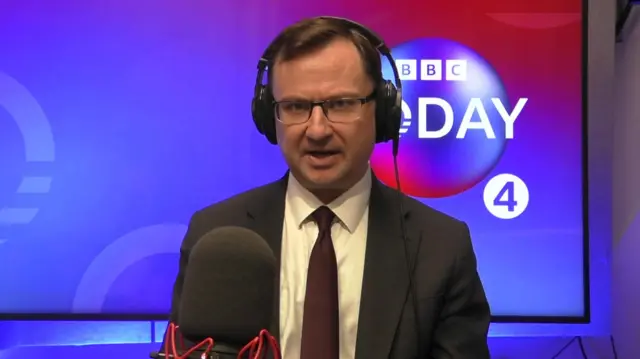
    Alex Norris sits in a dark suit and dark red tie while wearing headphones and sitting behind a microphone. The backdrop for Radio 4's Today programme is behind him.

    Justice Secretary Alex Norris has also been speaking to Radio 4's Today programme this morning.

    He says the government is directly engaging with families of victims following the change to the early release scheme so "they can live their life fully".

    The justice secretary says approximately 1,000 prisoners will now not be released early following the revision to the scheme, adding there is "no doubt" he and others wanted to "go further".

    "If we drew it any wider we would have a prison capacity crisis," Norris says.

    Norris adds that this is the "first time" there has been a long term grip on the prison system to prevent ministers taking emergency action in the future, and mentions the government's scheme to build more prison places and changes to sentencing.

  19. Changes to sentencing act 'putting huge pressure on prison and probation staff', says unionpublished at 08:31 BST 4 August

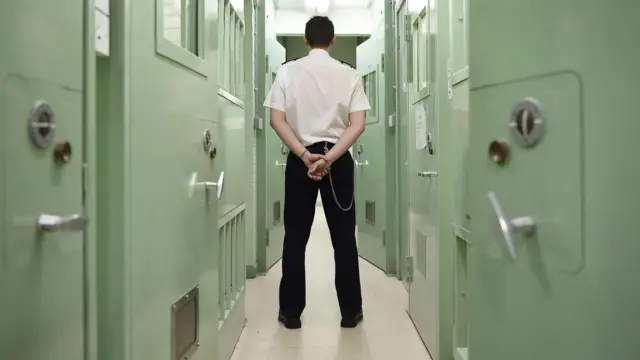
    A prison guard stands in a narrow prison corridor with green doorsImage source, PA Media

    Following the new exclusions to the sentencing act, the Prison Governors' Association (PGA) union warns that it is now "unclear" how many people will have their sentences changed.

    "We don’t know if it is tens, hundreds or thousands that will be excluded from the so called 'progression model'", the group says in a statement.

    Speaking to Radio 4's Today programme, Justice Secretary Alex Norris says approximately 1,000 prisoners will now not be released early following the revision to the scheme.

    Changing the sentencing act "at a very late stage" is "putting huge pressure on prison and probation staff" to identify prisoners who will be excluded and recalculate their sentences, the PGA adds.

    "This pressure, when the work has already been done once and many staff will be away on holiday, makes mistakes more likely."

    PGA president Tom Wheatley adds that the government needs to focus on a "long term, sustainable approach" to extending prison capacity, including by building more prisons and investing in existing infrastructure.

    They needs to "decide on a direction and stick to it", he adds.

  20. Family of murdered toddler says 'letting serious offenders onto streets is not the answer'published at 08:16 BST 4 August

    Two year old Maya Chappell, who died in 2022 after being violently shaken by her mother's boyfriend, Michael Daymond.
    Image caption,

    Maya Chappell died in 2022 after being violently shaken by her mother's boyfriend

    Gemma Chappell is the great-aunt of two-year-old Maya Chappell, who died in 2022 after being violently shaken by her mother's boyfriend, Michael Daymond.

    Michael Daymond was sentenced to life imprisonment with a minimum of 20 years for the two-year-old's murder. He was never eligible for release under the sentencing act, which excludes some of the most serious and dangerous offenders, such as murderers serving life sentences.

    Gemma tells Radio 4's Today programme that Maya's mother Dana Carr, who was sentenced to nine years in jail after being found guilty of child cruelty by neglect, "turned a blind eye" to Daymond abusing the two-year-old.

    The former prison officer says she welcomes the decision to exclude prisoners who committed rape and serious child sex offences from the early release scheme, describing it as the "right decision", but feels the changes have not gone far enough.

    She says she is aware something needs to be done about overcrowding in prisons, but that it is "ridiculous" offenders such as Carr could be released early under the scheme: "Letting serious offenders out onto our streets is not that answer."

  21. Released prisoners won't wander around scot-free, says ministerpublished at 07:58 BST 4 August

    On BBC Breakfast, Justice Secretary Alex Norris is pressed on how effective probation services are, given the number of offenders recalled to prison has increased by 28% on the previous year.

    Norris says he wants to stress that people leaving prison early are not doing so under "bog standard licensing conditions".

    "That middle phase of their sentence is not going to be wandering round scot-free," he says, adding that they will have "very significant controls on their lives".

    He says the government will be talking to victims and families about what controls they want to see put in place.

    Norris says that without the sentencing act changes, there would be no prison places available by this October due to overcrowding.

    Prisoners recalled to prison chart - details to follow