Summary

  1. Burnham juggles domestic issues alongside major international developmentspublished at 19:38 BST

    Chris Mason
    Political editor

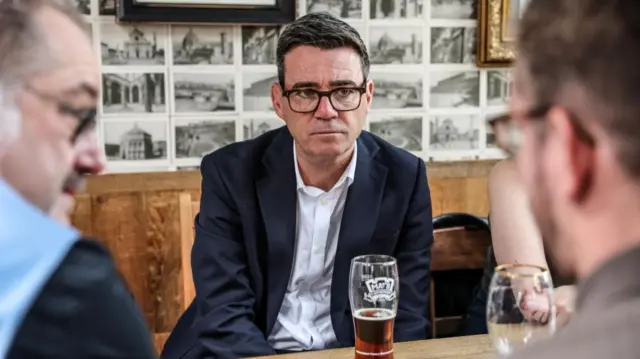
    Andy Burnham during a visit to the Hare pub in Harlow, EssexImage source, PA Media

    Life comes at you fast as prime minister.

    This was day three of the Burnham administration delivering an early morning nugget of news: business rates in England today, bus fares in England yesterday, a VAT cut on electricity bills the day before.

    The clear intention: To reprioritise, as Andy Burnham puts it. Give people "breathing space", to quote perhaps his most repeated phrase of his opening week in power.

    Alongside the announcements, a blitz of calls to fellow leaders and – as ever – responding to events.

    First, domestic - Burnham’s intervention this afternoon on the early release of prisoners in England and Wales demanding a pause, a case study in the dilemmas of governing: Crowded prisons and difficult choices between least worst options – which criminals to free first.

    Second, the prime minister must brace himself for major developments on the international front.

    After he renewed the sanctioning of British bases for what is called “defensive purposes” - as was originally agreed by Sir Keir Starmer - Iran is claiming they have become legitimate targets... while the oil price is spiking.

    Life for Burnham is unlikely to slow down.

  2. 'A relief' or a 'bonkers decision'? Burnham pauses plan to release some prisoners earlypublished at 19:34 BST

    Jacob Phillips
    Live reporter

    Andy Burnham announced plans to release some prisoners early would be paused as an "urgent review" takes places to minimise public risk.

    Hundreds of prisoners would have been released as early as September as part of efforts to tackle overcrowding in prisons. Overall, around 6,000 criminals were set to be freed under the scheme.

    “Keeping the public safe will always be my top priority," Burnham said.

    The paused policy would have freed some prisoners after serving a third of their prison sentence, while some offenders who have been jailed for serious sexual assault and violent offences would serve half their sentence. Here's our simple guide to the scheme.

    Justice Secretary Alex Norris said the government would now look into "who might leave and when they would leave" prisons. While welcoming the pause, Tory leader Kemi Badenoch called for killers and rapists to be "permanently" exempt from the scheme.

    One sexual abuse survivor who was told her attacker might be released under the scheme told the BBC it was such a "relief that we have been heard" while the mother of PC Andrew Harper, who was killed in 2019, said the pause was "a good start".

    But one prison officer has told our correspondent the move is a "bonkers decision" and prisons are at a critical point of overcrowding.

    Before we end our live coverage, we'll leave you with some final analysis from our political editor Chris Mason.

    You can also read more about the early release scheme and its review in our story.

    This Flourish post cannot be displayed in your browser. Please enable Javascript or try a different browser.

  3. Badenoch calls for killers and rapists to be 'permanently' exempt from schemepublished at 19:22 BST

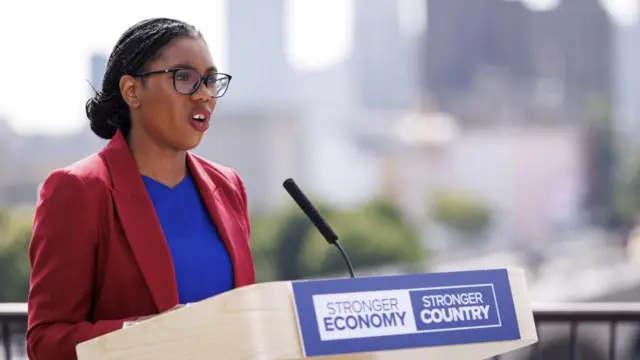
    Kemi Badenoch wears a red blazer and a blue top as she delivers a speech behind a podiumImage source, EPA/Shutterstock
    Image caption,

    Kemi Badenoch delivers a speech in London on Thursday

    Conservative leader Kemi Badenoch has welcomed the pause to the early release scheme but says that Labour has only suspended one part of the policy.

    In a post on X, she says that the Tories have been "campaigning against this dangerous scheme from day one".

    "Your 40% scheme is still letting offenders out early, today, every day," she adds.

    She also shared a screenshot of a BBC News article about Liam Matthews, who killed 26-year-old Lewis Bell hours after being released from prison as part of a scheme to ease pressure on crowded prisons.

    "Exempt killers, rapists and child abusers from this scheme. Permanently," writes Badenoch.

  4. Campaigner says victims should not 'bear the brunt' of declining prisonspublished at 19:14 BST

    Dan Woodland
    Live reporter

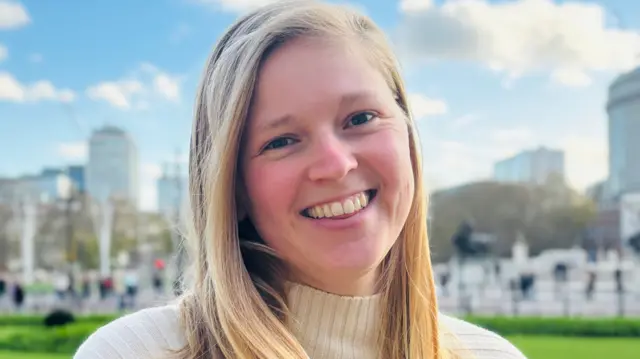
    Charlotte Meijer stands in the middle of a built up city with blue skies overheadImage source, Charlotte Meijer

    Charlotte Meijer is the founder of Open Justice for All, a campaign group advocating for a fairer justice system.

    She welcomes the pause of the early release scheme and hopes the review will lead to it being changed.

    Charlotte has spoken to several people who were told their perpetrators might be released early, which has caused them "so much anxiety and stress".

    "It's just unbelievable that some women have fought for longer to get justice than these perpetrators have served in jail," she tells me.

    Charlotte says the group recognises the state many prisons are in, but argues "it shouldn't be up to victims to have to bear the brunt of that".

    She hopes, following the review, the early release scheme is changed to not include perpetrators of domestic and sexual abuse, while more long term solutions to increase prison capacity should also be looked at.

  5. BBC Verify

    How crowded are prisons in England and Wales?published at 19:01 BST

    By Lucy Gilder

    Successive governments have cited overcrowding as a key reason for releasing some prisoners early, so we have taken a look at what the prison population data shows.

    At the start of this week there were 88,098 people in custody, external and 2,938 useable cells free in England and Wales.

    This is nearly double the 1,505 useable cells available in the same week two years ago, shortly after Labour returned to power.

    But the problem of crowded prisons has persisted in recent years.

    About a quarter of all prisoners were living in crowded conditions , external- defined as when the number of prisoners sharing a cell is larger than the capacity it was designed to hold - in the year ending March 2025.

    The approximate yearly share of prisoners in crowded conditions has rarely fallen below 20% since the end of the 1990s.

    The average annual prison population rose sharply through that decade, but also saw peaks following the 2011 and 2024 riots in England, which saw the largest population since records began in 1900.

  6. Fears of prison overcrowding clash with public safety as PM pauses early release schemepublished at 18:52 BST

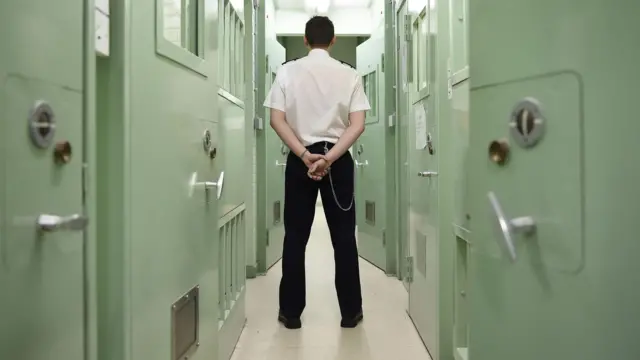
    A prison guard stands in a narrow prison corridor with green doorsImage source, PA Media

    Prime Minister Andy Burnham's decision to pause the early release of some prisoners who have served one third of their sentence in September follows campaigning by survivors.

    Here's how those inside and outside the prison system have reacted as the government seeks to balance public safety with dangerous overcrowding:

    • A sexual abuse survivor says victims "should never come second" to tackling prison overcrowding, and says it's a "relief we've been heard" after campaigning to review the early release scheme
    • Meanwhile, the domestic abuse commissioner also welcomes the decision, warning it would have led to "dangerous abusers" being released into the community without proper protections in place for survivors
    • The mother of PC Andrew Harper, Debbie Adlam, says that pausing is "a good start" but the scheme will need "to be looked at thoroughly"
    • Victims' Commissioner for England and Wales Claire Waxman says she is seeking "urgent clarity" on what comes next, but says pressing ahead without proper safeguards would have been "the wrong course of action"
    • The head of prison officers' union POA sas the pause is "correct" in order to allow Burnham and his justice secretary to examine the risk of the early release prisoners to the general public
    • One prison officer labels the decision "bonkers" and warns the system could reach a critical point by November if there are no early releases as planned in September
    • But another tells the BBC: "Public safety must come first", though warns "we don't have enough prison officers" to deal with overcrowded jails
  7. Pausing of early release scheme is 'a good start', says PC Harper's motherpublished at 18:38 BST

    The mother of PC Andrew Harper says that pausing the early release scheme is "a good start" but "it is not enough".

    PC Harper, 28, was killed in 2019 when he was dragged by a car down a country road as three teenagers fled the scene of a quad bike theft in Berkshire.

    Speaking to ITV News, Harper's mother, Debbie Adlam, says that the pause "is a good basis to begin working on some sensible alternatives and looking at options for going forward, because there’s so many people this affects, it’s not just us".

    Adlam says: "I think it really needs a good looking at, not just a quick meeting and ‘that’s it, we’ll move on’.

    “It needs to be looked at thoroughly and that’s what I’m hoping for. We want to see some results from it.”

    Adlam previously told the BBC the possible release of Jessie Cole and Albert Bowers - two of the passengers in the getaway car which killed Harper - was "sprung" on her family and that it made her feel like her son had not been given "proper justice".

    Media caption,

    'Another letdown for Andrew' - PC Harper's mother

  8. Victims' commissioner seeking 'urgent clarity' about what decision meanspublished at 18:32 BST

    The Victims' Commissioner for England and Wales, Claire Waxman, says "pressing ahead without proper safeguards for victims would have been the wrong course of action" as she welcomes the government's decision to pause and review the early release scheme.

    "Thousands of victims have already been told the offenders who harmed them could be released early, leaving many living with renewed fear and uncertainty," she says.

    Waxman says she is seeking "urgent clarity" from ministers about what the decision means for victims, the timetable for what will happen next and how victims will be protected and kept up to date.

    The commissioner has consistently warned that addressing pressures on prison capacity must not come at the expense of victim safety or public confidence in the justice system.

  9. Prison officers will have to tell 'frustrated' prisoners they will not be released - former officerpublished at 18:22 BST

    Jacob Phillips
    Live reporter

    A former prison officer has warned some prisoners may have been told they would be let out early and will be "frustrated" to find out this will not be the case.

    "They do not react well to short notice change," explains Phil Hannant, who now sits on the Prison Officers Association's National Executive Committee, and warns that prison officers will be the ones telling offenders.

    Hannant tells me prison officers had fears the early release scheme had been a "knee jerk reaction" and was too broad - adding that the shift means "the capacity crisis in prisons is going to ramp up again".

    "The only thing that is going to solve the crisis in prisons is the huge investment in staff and the infrastructure of prisons," he says.

    Hannant also highlights that it does not matter when prisoners are released if there is no support once they are let out - investment in the probation service to make sure prisoners are supported and guided so they do not reoffend is needed, he says.

  10. What was the Independent Sentencing Review?published at 18:07 BST

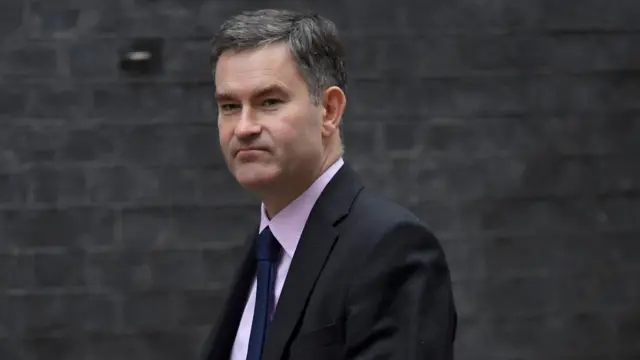
    David GaukeImage source, Reuters
    Image caption,

    Former Lord Chancellor David Gauke's review recommended that prisoners be eligible for early release

    The early release scheme paused today by Prime Minister Andy Burnham followed a landmark review into the justice system, which concluded in May 2025.

    Chaired by former Lord Chancellor David Gauke, the Independent Sentencing Review said major reforms were needed to end the "dangerous cycle of emergency releases". Here's some of its takeaways:

    • The report warned the UK can't "build our way" out of the overcrowding crisis - despite government plans to allocate £4.7bn for prison building between 2026 and 2031
    • Offenders should be given short custodial sentences of less than 12 months only in exceptional circumstances
    • Suspended sentences should be allowed for up to three years and used for low-risk offenders with high needs, for instance people with substance abuse issues
    • Gauke recommended an "earned progression model", where prisoners could more quickly move to a "post-custody" stage after serving one-third of their sentence if they behaved

    After the review was released, Home Secretary Shabana Mahmood told the House of Commons she intended to accept most of its proposals. The Sentencing Act, given royal assent in January, was based in part on Gauke's review.

    But, while agreeing that some prisoners would be eligible for release after serving a third of their sentence, Mahmood stopped short of allowing the most serious offenders to be released early.

  11. Justice secretary won't be 'drawn on hypotheticals' over future of sentencing lawpublished at 17:50 BST

    Alex Norris has said the government wants to give "certainty" to victims as soon as possible, adding that it appreciates "the speed at which we need to get on with this".

    The justice secretary does not confirm whether the Sentencing Act would be amended, saying he would not want to "run ahead" of the findings of the government's review of the policy and wanted to take "a little bit of time" to get the implementation right.

    When asked whether there was a possibility that the legislation would proceed as originally intended, Norris says he does not want to be "drawn on hypotheticals".

    He also says he is aware of how difficult the prison environment can be and how important the jobs that prison officers do are, adding: "We would never want to make their lives harder."

  12. Norris asks for time to 'do our best' by victims and survivors of crimepublished at 17:43 BST

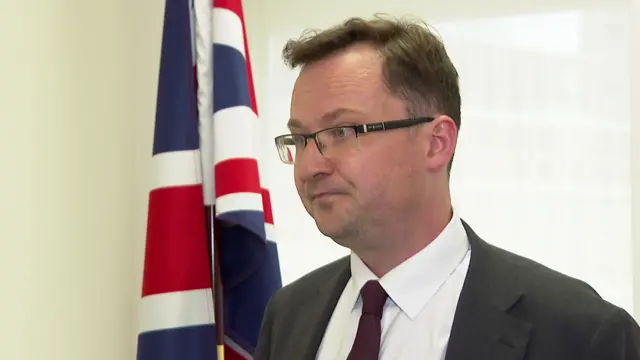
    Justice Secretary Alex Norris in a dark grey suit, white shirt and burgundy tie listens to questions from a reporter (off camera) while standing next to a Union flagImage source, UK Pool

    More from the justice secretary, who says the government will now be looking into "who might leave and when they would leave" prisons.

    Norris says ministers and the PM will be looking at what measures would give victims reassurance if prisoners are let out, adding that they will be given information at the "right moment" to ensure they have the "maximum kind of understanding of what is going on".

    Addressing victims and survivors of crime he says: "Give us a little bit of time".

    "We've put an important pause on this policy. It gives us a little bit of time to look at this, to make sure we do our best by you," he says. Norris also asks prison officers to give the government "time to get it right".

  13. Some 700 prisoners would have been released in September, says justice secretarypublished at 17:36 BST

    Justice Secretary Alex Norris says "hundreds" of prisoners would have been released under the early release scheme in the autumn.

    When asked about the number of prisoners that would have benefitted from the scheme in September, Norris says 700 was "the right order of magnitude".

    Under the new Sentencing Act, some 6,000 criminals overall were set to be freed under the early prison release scheme.

    He also acknowledges that he had not previously raised the concerns from victims and survivors about perpetrators being released early, but says that it's "right for victims and survivors to challenge" the government on the early release of prisoners

    "We're having another look at it because we want to get it right for victims," he adds.

    Media caption,

    We're pausing to make sure we get it right, says justice minister

  14. Domestic abuse commissioner welcomes Burnham's 'swift' actionpublished at 17:11 BST

    The domestic abuse commissioner for England and Wales has welcomed Prime Minister Andy Burnham's "swift action to fully pause the early release scheme".

    Dame Nicole Jacobs says the measure would have led to "dangerous abusers" being released into the community, without protections in place for survivors.

    "Ministers should never have underestimated the risk domestic abuse perpetrators pose to their victims," Jacobs highlights, adding that these individuals know where their victims live, where they work and where their children go to school.

    Jacobs acknowledges the government needs to address overcrowding in prisons, but it "should not come at the expense of victims' safety". She urges the new government to exclude domestic abusers from the scheme.

  15. BBC Verify

    Minister wrong to say Labour building prison places 40 times faster than Toriespublished at 17:00 BST

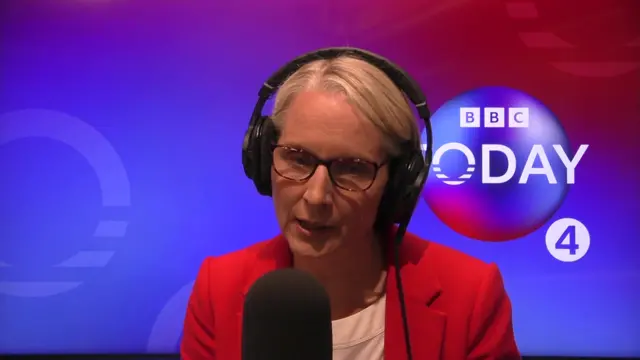
    Emma Reynolds in a red blazer and white shirt speaking into a black mic. She has short blond hair held back by large radio headphones

    By Lucy Gilder

    In an interview with BBC Radio 4’s Today programme this morning, chief secretary to the Treasury Emma Reynolds said Labour is “now building prison places at 40 times the rate of the last Conservative administration”.

    She added that the Tories “only built 500 places in the entire 14 years that they were in power”.

    But this is not a like-for-like comparison, as Reynolds appears to be comparing total prison places created by Labour versus net prison places added by the Conservatives.

    Ministry of Justice (MoJ) analysis shows the last Conservative government built 13,009 prisons places between 2010 and 2024, external, while an estimated 12,514 were closed. This means a net total of 482 places were added, which equates to 34 net prison places a year.

    The MoJ told BBC Verify that Labour had delivered about 3,200 places so far - 1,600 for each of their two years in office, which is about 47 times higher than the Tories’ annual rate.

    However, the MoJ also told us that this figure is only for new prison places and doesn’t factor in those taken out of use. It’s therefore not a direct comparison to the Tories’ net total.

  16. Early release scheme part of effort to tackle prison overcrowdingpublished at 16:47 BST

    The previous government enacted a range of reforms to the prison system as part of their bid to ease overcrowding in jails.

    Among them was the early release scheme Andy Burnham said would be paused. Other measures to address overcrowding remain in place.

    In March, courts were told to stop handing out short prison terms other than in a number of specific or exceptional circumstances. That means most offenders in England and Wales who would have faced up to a year in jail are now likely to receive no more than a suspended sentence.

    The reform also includes allowing judges to suspend jail sentences of up to three years - a measure intended to slow down the rate at which criminals enter jail. Curbing short sentences but supporting criminals with rehabilitation is also seen as a step to stop people from re-offending.

    In January, the government passed the Sentencing Act 2026 - a wide-ranging package of measures to ease overcrowding in prison. Ministers also hoped the new legislation would support criminals' rehabilitation.

  17. Reform says it will deport all foreign nationals in jailspublished at 16:34 BST

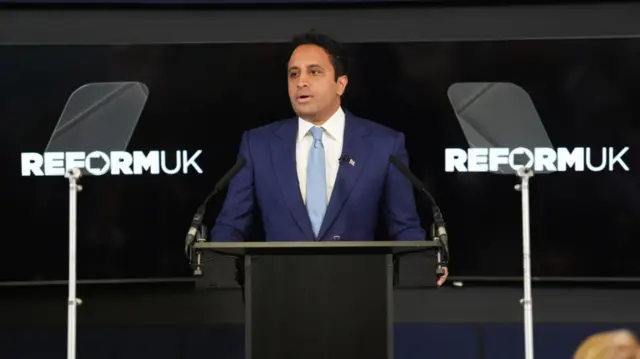
    Reform UK's Zia Yusuf delivering a speech from behind a black lectern. Behind him, two screens broadcasting the party logo (Reform UK, in white, with a black arrow serving as the central hole in the letter O)Image source, PA Media

    Reform UK's home affairs spokesman Zia Yusuf has responded to the prime minister's announcement.

    "The Tories imported 6.5 million people in 14 years and added just 455 prison places to cope," he says.

    "Labour is continuing this failure. Reform will deport all foreign nationals in our jails and use the space to end early release so violent criminals stay where they belong: in jail."

    We'll bring you more political reaction as it arises.

  18. Release non-violent women to free up spaces, Tory peer sayspublished at 16:25 BST

    A view of the entrance to HMP Bronzefield in Ashford, SurreyImage source, PA Media
    Image caption,

    HMP Bronzefield in Ashford, Surrey, is the largest female prison in Europe

    Before Andy Burnham commmited to “put a pause” on the early release of prisoners, members in the House of Lords had been expressing their thoughts on the scheme.

    Conservative former solicitor general Lord Garnier argued the government should free non-violent women from prisons instead of dangerous criminals.

    “There are 3,650 women in prison in England and Wales, and about 2,500 of those people – that’s to say, 70% of the women’s prison population – are in custody for non-violent offences," he told peers.

    He added that if the government "think it's better" to release violent criminals and sex offenders rather than non-violent female prisoners to free up space then "what the hell do they think they’re doing?”

    In response, Labour frontbencher Lord Katz said there were "more sophisticated responses to the kind of the very simplistic problem" posed by Lord Garnier.

    Leading lawyer and independent crossbencher Lord Pannick also questioned why releasing prisoners who are not subject to the most severe sentences, for example those serving 10 years or less, could not "adequately" reduce prisoner numbers.

  19. 'Correct to pause' early release scheme - prison officer union headpublished at 16:18 BST

    Steve Gillan, general secretary of prison officers' union POA, says prisons have been overcrowded for many years, blaming the previous government.

    "Whilst I understand the concerns about operational stability, it is right that the new Prime Minister Andy Burnham and the Justice Secretary Alex Norris, who has also just been appointed, examine the risk to the general public if prisoners are released too early from their sentence," he says.

    "They are correct to pause the releases under the Sentencing Act 2026 to ensure there is adequate public protection in place and that victims of crime are put first.”

  20. BBC Verify

    More than 60,000 released under ‘temporary’ Labour schemepublished at 16:10 BST

    By Lucy Gilder

    A total of 60,108 prisoners were released under the government’s early release scheme between September 2024 and December 2025, according to the latest Ministry of Justice (MoJ) figures.

    There is no breakdown by offence type, as the MoJ only publishes figures for sex, age, nationality, ethnicity, sentence length and the prison they were released from.

    This scheme, which allowed some prisoners in England and Wales serving a fixed-length term to be released after serving 40% of their sentence, was introduced as a temporary measure by Labour in September 2024.

    Justice Minister Jake Richards previously described the old scheme as a “bridge to a more sustainable solution”. This solution was to come in the form of the Sentencing Act, of which the early release provisions have now been paused by Burnham.

    A temporary scheme under the last Conservative government saw 10,082 offenders released early between October 2023 and June 2024.

    This initially allowed some prisoners to be released up to 18 days before their release date. The Conservatives gradually increased this to a maximum of 35 days before extending it to 70 days.

    Both governments said that early released prisoners would be subject to strict license conditions.