Overview of political representation in the UK
There are three parts to the Representation section of Democracy in the UK:
- role of MPs
- representation of women and minority groups
- purpose, function and composition of the House of Lords
Look through this article for a quick guide to these areas, or to revise what you have already learned.
Click on the links to get more detailed information on each section.
Role of MPs
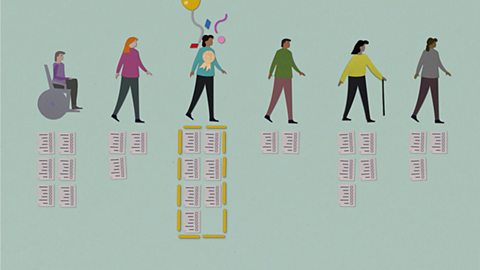
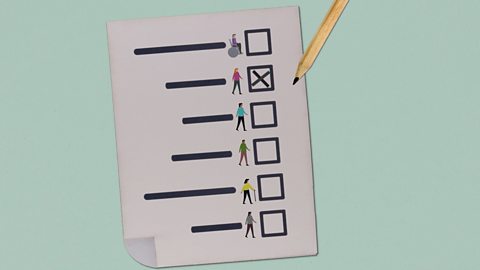
The UK public elect MPs to represent them in the UK Parliament.
The UK is divided into 650 constituencies and there are 650 MPs, one for every constituency.
A general election is usually takes place every five years and the public vote to elect their MPs.
In their constituency MPs:
- respond to letters and emails
- hold surgeries
- attend local meetings and events
- meet with other local representatives
In the UK Parliament MPs:
- organise meetings with relevant ministers
- speak in debates and ask questions during PMQs
- introduce Private Members Bills
- raise the profile of an issue in the media
- work in committees which scrutinise the work of the government
MPs can also represent their party or government:
- serving as a minister in the government
- serving as a party whip
Find out more detail about the role of MPs
How are women and minority groups represented in Parliament?
Representation of women
As of October 2025:
- There are now 263 female MPs (40%), highest ever.
- Women make up 51% of UK population but only make up 40% of MPs and hold 46% of Cabinet roles.
- Two party leaders are women; and so far there has been three female Prime Ministers and one female Speaker.
- Barriers include family responsibilities, costs of campaigning, limited maternity support, and fewer women in local politics, meaning limited experience and selection chances.
- Solutions include requiring parties to report diversity, strengthen online harassment laws, and improve facilities and flexible working in parliament.
Representation of people from ethnic minorities
- There are 90 MPs (14%) from ethnic minority backgrounds.
- Only one party leader and 12% of Cabinet from ethnic minorities.
- Barriers: racism, abuse, biased selection, financial challenges.
- Solutions: diversity targets, anti-harassment measures, Local Government Association's Be A Councillor programme aims to increase representation at local government level.
Representation of people with disabilities
- Since 2024, nine MPs (1.4%) declared themselves disabled vs 20% of population.
- Barriers: access issues, negative attitudes, additional costs of campaigning.
- Solutions: The Equality Act 2010 protects potential candidates from being discriminated against, parliament's diversity strategy aims to remove physical and social barriers, a new Access to Elected Office Steering Group could help improve representation.
Find out more detail about how women and minority groups are represented at the UK Parliament
Purpose, function and composition of the House of Lords
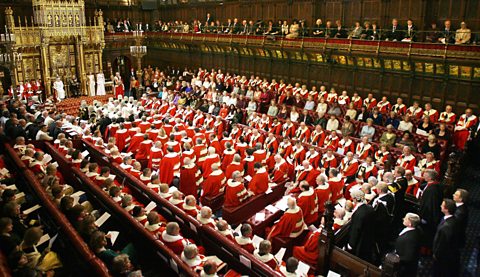
The House of Lords is part of the UK Parliament.
UK Parliament meets in Westminster, in London and has three parts:
- The House of Commons
- The House of Lords
- The Crown
Although the UK's political system can be described as a constitutional monarchy, it it the House Lords and the House of Commons which make the laws and not the Crown/monarch.
The House of Lords is the second chamber of the UK Parliament.
It's role is to scrutinise legislation and hold the government to account.
Bills pass back and forward between the House of Commons and the House of Lords.
The wording of a bill must be agreed by both houses before it is sent for royal assent and becomes law.
Most members of the House of Lords have been appointed by the monarch on the advice of a prime minister in recognition of their expertise.
Some peers represent political parties. Others are crossbench peers who represent different area of UK business, culture and society.
Some members are Church of England bishops and some are hereditary peers who have inherited their title.
Find out more detail about House of Lords
More on Democracy in the UK
Find out more by working through a topic
- count14 of 18
- count16 of 18
- count17 of 18