CCEA GCSE HE: Food and Nutrition past papers and mark schemes
Here you can find CCEA information and resources for GCSE Home Economics: Food and Nutrition. Use the links below to download question papers and mark schemes (which contain indicative content and explain how marks are awarded).
Unit 1: Food and Nutrition is assessed by a two‑hour written exam, worth 50% of your final mark.
Unit 2: Practical Food and Nutrition is a controlled assessment task, worth 50% of your final mark. Further information and guidance on this controlled assessment task is available on the CCEA website, or from your teacher. Your teacher will mark your controlled assessment before it is moderated by CCEA.
CCEA past papers and mark schemes are the intellectual property of CCEA and are copyright © CCEA. All CCEA material is linked to with their permission.
Unit 1
Food and Nutrition
Summer 2025 - Written paper | Mark scheme
Summer 2024 - Written paper | Mark scheme
Summer 2023 - Written paper | Mark scheme
More CCEA mark schemes
You can find more Home Economics: Food and Nutrition past papers and mark schemes on the CCEA website.
Past papers and mark schemes going back as far as 2019 are available there, along with many Irish Medium and modified versions of the papers.
Five top tips for your Home Economics: Food and Nutrition revision

1. Understand content and command words
Content words within a question indicate the topic the question is focusing on (what you should write about). Command words relate to how you should answer in relation to that topic – for example describe, discuss, explain, identify, evaluate or justify. If a question has two command words, make sure your answer addresses both.
Sometimes students lose marks because they describe instead of explaining. To avoid this, make sure you are familiar with the meaning of command words – it is useful to have a list of all of these, with a description of each. The CCEA Food and Nutrition Fact File on Reading and Understanding Examination Questions has a really useful glossary of command words that can help you here.
2. Know your nutrients
Make sure you know the function, sources, excesses and deficiencies of the nutrients listed in the specification. Sometimes you may be asked to relate these to a specific age group, for example adolescents or elderly people, or a health issue such as obesity, osteoporosis, coronary heart disease etc.
3. Develop your own study aids for bigger topics
It is a good idea to summarise larger topics onto one page. ‘Mind maps’ (single-page diagrams) or ‘summary sheets’ (single page bullet-point lists) are a useful way to help you make links and connections between related content. A lot of the topics in food and nutrition relate to each other.
4. Past papers, mark schemes and examiner reports
Practice doing past papers, then use the mark schemes to score your paper and identify where you gained or lost marks. Reviewing your answers in this way will help you focus on what you can improve, in order to boost your results. The mark schemes, as well as the chief examiner reports, let you know exactly what examiners are looking for when awarding marks.
For further practice, you can also create your own exam questions by changing the focus of existing questions – for example, change the nutrient, the dietary disorder or the life stage in an old question to get a new one!
5. Plan your revision
Make sure you revise everything in the specification – a revision timetable will help to ensure you have covered all of the necessary content. Try to include time in your revision sessions to create material such as ‘flash cards’ (individual pieces of card or paper with key words or terms on one side, and a definition on the other), ‘mind maps’ or ‘summary sheets’. You can then learn and memorise the content before testing your knowledge with a quiz or practise exam questions.
Five top tips for your Home Economics: Food and Nutrition exams

1. Be prepared
Make sure you have revised all topics in the specification before the exam. During the exam, pace yourself and manage your time effectively. Do not rush. If you are unsure of a question, move on and return to it later. Try not to leave any question unanswered. Stay calm and confident – the exam is your opportunity to demonstrate everything you have learned.
2. Decode the question
Read each question carefully and identify the command words and key words. Your answer must match what the command word is looking for. For example, state/identify would require a short answer. Describe/explain/evaluate would require a longer response.
3. Check the amount of marks available
The number of marks available for each question indicates how much detail is required. This will help you determine how much detail should be given and enable you to manage your time during the exam better. Questions with one or two marks will require a shorter response compared to questions worth more marks.
For questions worth more marks, you would be expected to give reasons, explanations or relevant examples to achieve the best scores. Make sure your answer directly relates to the question. You will not receive extra marks for irrelevant information.
4. Use subject-specific vocabulary and apply your knowledge
Try to use key terminology from the specification in your answers. When giving food examples, be specific. Don’t just suggest eating foods high in protein, instead say “eat foods such as chicken or nuts to increase protein intake”.
Also make sure you apply your knowledge to the context of the question, such as the relevant life stage of health conditions. For example: “Adolescents need more protein in their diet because this is a period of rapid growth and muscle development during puberty. Protein is also required to build new cells and tissues”.
5. When longer answers are needed, take time to plan
For longer questions, take a moment to plan your response. A clear structure will help you avoid repetition and manage your time. A good approach to this is to:
- Make a point
- Explain it using key terms
- Give relevant examples
Look out for questions where your Quality of Written Communication (QWC) will be assessed as you should use an appropriate form and style of writing, organise your response points and use appropriate key words and terms. Remember that good presentation, spelling, punctuation and grammar are important.
Revise specific Home Economics: Food and Nutrition topics
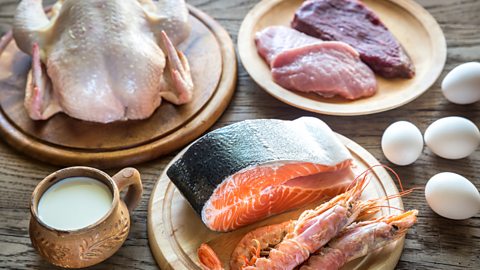
If practising with past papers has shown you an area you need more support with, then further help is available.
You can go straight to the most relevant Bitesize study guide for CCEA GCSE Home Economics: Food and Nutrition and refresh your knowledge.
All key areas of the course are covered, including nutrition and health topics such as the Eatwell Guide, energy and nutrients, macronutrients, micronutrients, water and fibre, and priority health issues. You can also explore content on food provenance, being an effective consumer, shopping options, food choice, allergies and intolerances, food labelling and food safety, as well as guidance on managing time, energy and money when planning and preparing food.
You will also find support to help you understand the skills needed for the controlled assessment, such as researching, planning, cooking and evaluating your work.
Follow the links to the topic or guidance you need. You’ll find clear revision materials written in an easy‑to‑understand way, with videos, diagrams and quick quizzes to help you boost your confidence and prepare for your assessments.
Nutrition and health
Food and nutrition for good health | Nutrition and life stages | Energy and nutrients | Macronutrients | Micronutrients | Food additives and fortification | Water and fibre | Priority health issues | Vegetarians and vegans
Shopping, storage and preparation
Food provenance | Being an effective consumer | Shopping options | Factors affecting food choice | Food allergy and food intolerance | Food labelling | Food safety | Food safety 2 | Resource management
Where can I get more help with my food and nutrition revision?
Explore more Home Economics: Food and Nutrition resources with the full range of assistance available from Bitesize.
HE: Food & Nutrition - CCEA
Pinpoint specific areas to revise from the full list of GCSE topics.
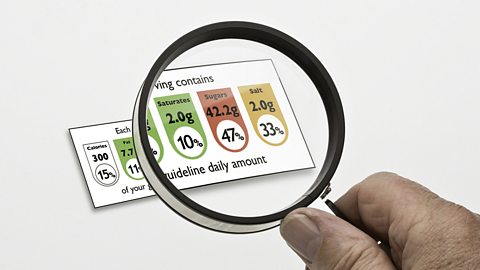
Revision: Get organised
Advice from Mind Set coaches on how to get organised with your revision.

Support - exams and revision
Handy tips and advice for keeping on top of your studies and revision.