Analysing language
Learn the skills to analyse structure for your exam with this podcast.
Featuring actor Nina Cassells and in collaboration with the National Theatre
Listen to the full series on BBC Sounds.
Discover a step‑by‑step method for analysing a writer’s language choices in this GCSE English Language podcast
Exam questions ask you to comment on how writers use language to make an impression on the reader. You should use terminology to show that you understand which features the writer is using, as well as how they affect the reader.
Language analysis framework: SQuID
S – Statement – begin with identifying the language feature or type of language being used, eg, 'King uses similes…'
Qu – Quote – next quote from the text the word or phrase you are analysing, eg ‘justice rolls down like waters’.
I – Infer – next work out what the words or images imply to you, eg ‘like waters’ implies something is flowing steadily.
D – Develop – finally, develop the analysis with a comment on the reader’s response, eg, 'The reader will imagine justice, like water, being strong and moving forward.'
Make your analysis even stronger with a focus on individual words and phrases – analyse closely what they suggest, eg ‘stony faced’ – ‘stony’ suggests the character is like a statue, hard, unfeeling and immovable.
Example
This extract is from My Family and Other Animals, a memoir by Gerald Durrell, of the five years he and his family lived on Corfu.
How does Durrell use language to describe the character of the ‘Rose-beetle Man’?
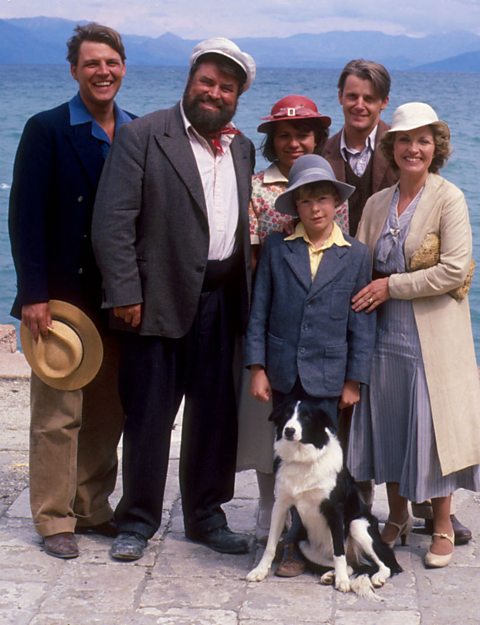
For some time the Rose-beetle Man would turn up at the villa fairly regularly with some new addition to my menagerie: a frog, perhaps, or a sparrow with a broken leg. One afternoon Mother and I, in a fit of extravagant sentimentalism, bought up his entire stock of rose-beetles and, when he had left, let them all go in the garden. For days the villa was full of rose-beetles, crawling on the beds, lurking in the bathroom, banging against the lights at night, and falling like emeralds into our laps.
The last time I saw the Rose-beetle Man was one evening when I was sitting on a hill-top overlooking the road. He had obviously been to some fiesta and had been plied with much wine, for he swayed to and fro across the road, piping a melancholy tune on his flute. I shouted a greeting, and he waved extravagantly without looking back. As he rounded the corner he was silhouetted for a moment against the pale lavender evening sky. I could see his battered hat with the fluttering feathers, the bulging pockets of his coat, the bamboo cages full of sleepy pigeons on his back, and above his head, circling drowsily round and round, I could see the dim specks that were the rose-beetles. Then he rounded the curve of the road and there was only the pale sky with a new moon floating in it like a silver feather, and the soft twittering of his flute dying away in the dusk.
My Family and Other Animals, Gerald Durrell (1956)
Analysis
- The choice of name “Rose-beetle Man” implies that the man is very close to nature – like roses and insects. The reader gets the impression he is mysterious - his real name is unknown.
- Durrell uses A 'doing' word; a word expressing action. 'Walk', 'talk', 'come', 'go', 'eat' and 'sleep' are all verbs. and A word that describes a verb (an action or a doing word). “swayed to and fro” and “waved extravagantly” to show the uncontrolled way the man moves. “Extravagantly” suggests the wave was over the top. The reader imagines he is very drunk from “much wine”.
- A sound feature; the repetition of the same sounds (mainly consonants) usually at the beginning of words. “fluttering feathers” also highlights the movements of the man.
- A describing word. “pale lavender evening sky” contrast the lively man to the calm surroundings. The reader can visualise his “battered hat” and “bulging pockets” implying he is scruffy against the beautiful sky.
- The A comparison using 'like' or 'as' to create a vivid image, eg as big as a whale; float like a butterfly, sting like a bee. “the pale sky with a new moon floating in it like a silver feather” creates a gentle atmosphere along with the onomatopoeia “soft twittering” to describe the bird like sound of the man’s flute.
- Durrell uses a A comparison made without using 'like' or 'as', eg 'sea of troubles' and 'drowning in debt'. “his flute dying away in the dusk”, the word “dying” makes the reader feel Durrell’s sadness, as it was “the last time” he ever saw the Rose-beetle Man.
