The psychology behind a bargain
Whether it's on your local high street or shopping online - many of us can't resist a bargain. Throughout the year, numerous businesses offer various bargains, sales, exclusive prices or student discounts.
And that's aside from annual events like Black Friday or Boxing Day sales that tempt us to crack open our wallets. But what happens in our brains when we see these deals?
Here, BBC Bitesize takes a closer look at how we react to a potential bargain and what some of the experts have to say. Could it (perhaps) stop us making an ill-advised buy? Let's see!
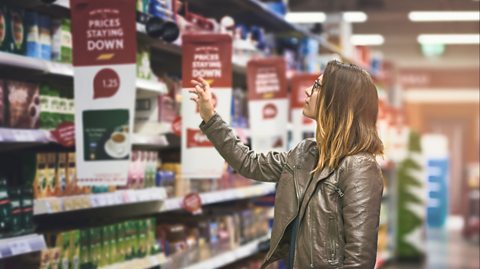
What does bargain mean?
Let's start with the definition of a bargain - a word which has a few different meanings depending how it is used.
In this context, as a noun, a bargain means an item or service that can be purchased or sold for a lower price. For instance, if you spot a pair of shoes that you've been wanting to buy that is now on sale at half price - that would be considered a bargain as you can purchase it for less than its true or original value.
As a verb, a bargain can mean to discuss terms or negotiate. When it comes to shopping, some people like to 'bargain' over the price of something they want. If they want a product for less, they may haggle with a shop owner to see if they can reach a mutual agreement on a new, lower price.
Famous idioms you may have heard are 'striking a bargain' or 'driving a hard bargain.'

Why do people get excited by a bargain?
If you’ve ever experienced a rush of excitement when finding that perfect item during an internet browse, thank your nucleus accumbens. This is the part of your brain that controls pleasure and the act of seeking out that gadget, book, pair of jeans or holiday that you really, really want is similar to the excitement our ancestors felt when on the tail of prey they were hunting for dinner.
But you’ve heard of the saying ‘the thrill is in the chase’? Once you’ve cornered that must-have item, your brain then has a heated debate with itself on whether or not to proceed with the purchase.

Why do we think twice about buying a bargain?
Say the thing you want is within your price range, perhaps it’s even been discounted in the sales. That sparks up the part of your brain called the insula. This is also the area that controls pain. Even if you can afford it, your brain will tell you to exercise caution and not take it to the till, because paying for something is a lot more painful than spotting it in the first place.
However, the rational part of your brain, the medial prefrontal cortex, still has something to say about this. It takes the pleasure you’ve had in finding this must-have, adds in the insula’s pain at paying for it and balances out the two arguments.
Have you ever stopped with a new video game, just before you add it to your online basket, wondering if you can really justify spending that much money on yourself? That’s the process your brain is undergoing. The more affordable the item is perceived to be, the more positively your brain may react, and the more likely you are to buy it.
That's not to say you'll never make an ill-advised impulse buy. Consumer psychologist Dr Dimitri Tsivrikos told the BBC in 2013: "Brain studies have shown that when we are excited by a bargain, this interferes with your ability to clearly judge whether it is actually a good offer or not."
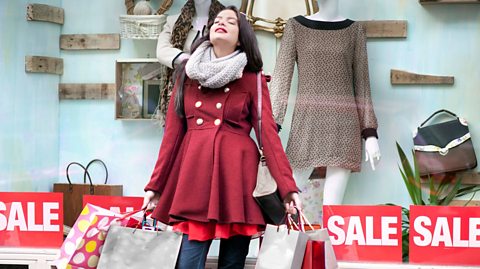
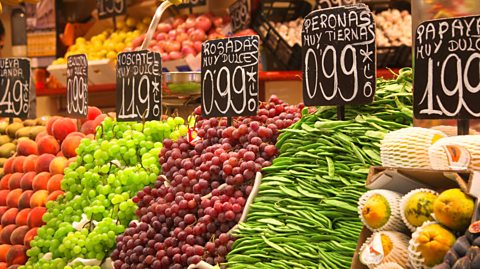
Why do bargains often include the number 9?
There’s a reason so many prices have a nine at the end. Three pounds ninety-nine; 99p - it’s called charm pricing.
The psychology behind it is known as the ‘left digit effect’. If something that costs a fiver is knocked down a penny it becomes £4.99, so our brains see it as costing four pounds rather than practically five.
Because we are so familiar with prices ending in nine, we also trust them more. In 2003, the University of Chicago ran an experiment where three items were on sale, priced at $34, $39 and $44. The item selling at $39 sold the most, despite there being a cheaper option.
As Robert Schindler, a professor at America’s Rutgers Business School, said as part of a 2011 study into '99' pricing: “When a price changes from $30 to $29.99, the change from three to two makes more of a difference than the value of that money could predict.
“It is like when a 39-year-old turns 40, the birthday feels like a big deal. Or when 1999 ends and 2000 starts. It feels like an emotional difference.”
What does BOGOF mean?
During the weekly shop, we’ll often see BOGOF offers (buy one, get one free) or BOGOHP (buy one, get one half price).
Although customers are getting something at a reduced price, studies show that when we consider a BOGOF, our brains focus on what we’re getting for free, rather than what we’re paying for in the first place. For example, you may never have thought of switching from your usual brand of toothpaste but if you see a different one in a BOGOF offer, you’re likely to be tempted as the emphasis is on having a whole tube of the stuff for absolutely nothing.
Marketing consultant Pius Boachie said in a 2016 blog post on psychological pricing strategies: “The psychological strategy at work here is, simply, greed. Once a customer comes across the offer, logic gets tossed to the wind and the main focus is making a purchase to get the free item.”

Why do people love bargain hunting?
Although there are bargains to be had out there, the experts also have some good advice to ensure that medial prefrontal cortex of yours makes the right decision every time.
When it is possible to shop in person, stores with loud music are known to be distracting and prevent you making a measured decision on whether a bargain is worth it or not. Shopping alone can also save you money, as peer-group pressure can make you buy something you never really wanted in the first place.
And before you embark on that quest for a good deal, have a snack first - shopping on a full stomach makes you less daft with your cash.
This article was published in April 2019 and last updated in October 2026
Learn more about shopping
- The impact of ICT on society - shopping online
- When is Black Friday and why does the UK have it?
- Being an effective consumer when shopping for food
- Can you guess the price of these food items from 1975?
- Black Fraud Day: How can you spot a Black Friday scam?
- Vinted creator: How my idea became a billion dollar online business
