All about Canada
It’s known for its maple syrup, ice hockey obsession and impressive wildlife – and it’s the birthplace of famous faces including Drake, Justin Bieber and Ryan Reynolds. But how well do you know Canada?
Here, BBC Bitesize takes a closer look at the country – its history, its animals and its traditions. There are so many fascinating facts we could have chosen – below are just a few!
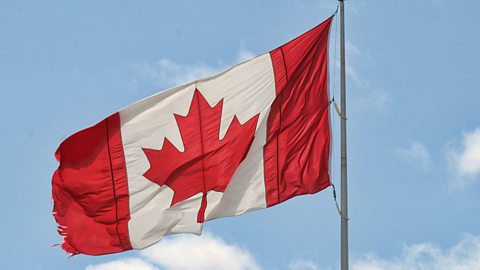
1. Its national symbol is a maple leaf
You’ve probably seen the Canadian flag before – but do you know why it features a maple leaf in the centre?
The sugar maple tree is native to eastern Canada. The flag we know today was officially adopted in 1965, but the maple leaf has been a symbol of identity since the 18th century. It appeared on coins and was worn by Canadian soldiers during both world wars.
However, the Union Jack is still an official flag of Canada, because the country is still part of the Commonwealth and has the British monarch as its head of state.
2. It's the world's biggest maple syrup producer
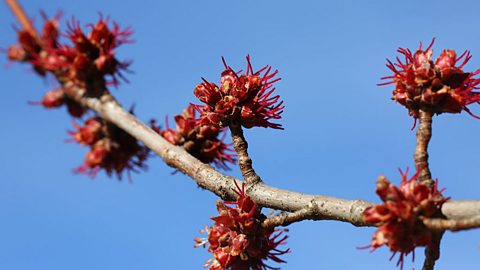
Speaking of maple trees…
Canada is responsible for about three-quarters of the world’s maple syrup production. Syrup harvesting is a practice that goes back hundreds of years, before European settlers arrived in the 15th and 16th centuries.
Indigenous peoples developed tools and techniques to harvest maple sap every spring, by tapping a small hole in the tree and hanging a handmade bucket underneath to catch the sap.
This was then left outside in the cold so that the lighter water froze and separated from the heavier sugar syrup, and was then skimmed off. Other groups would boil the sap into syrup using clay or metal pots.
Maple syrup was used as a sweetener, an anaesthetic and to preserve meats, and became a valuable trade item. Today, the maple harvest season is marked by ‘sugaring-off’ celebrations often featuring live music and maple-infused dishes.
3. Canada has the world's biggest moose population
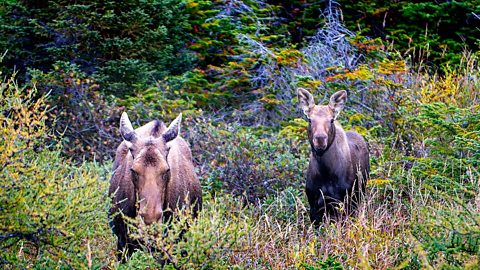
Standing at up to six-and-a-half feet tall and weighing up to 1,000 lbs, an adult moose is a fearsome thing to behold – and Canada has more of them than anywhere in the world.
It’s estimated that there are between 500,000 and 1 million moose in Canada, more than half the global population. The rest are mainly split between Alaska, Russia and Scandinavia.
The largest of the deer family has become a national symbol of Canada and features on the coats of arms of the provinces of Ontario and Newfoundland. However, they are now endangered in Nova Scotia and populations are declining elsewhere due to climate change, hunting and disease.
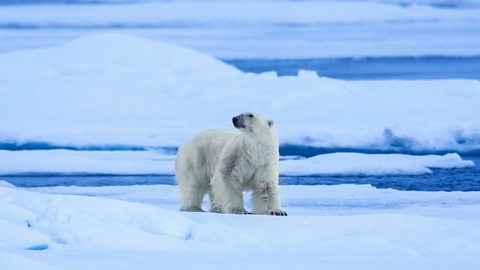
Canada also boasts the polar bear capital of the world – Churchill in Manitoba.
4. It's considered the birthplace of ice hockey
Ice hockey might be one of the first things that comes to mind when you think of Canada. It’s the country’s official winter sport, with lacrosse being its official summer sport.
The game as we know it today took off in Montreal in 1875. However, people disagree on where it originates. In February 2026, a law was proposed that would declare the small Nova Scotia town of Windsor as the first place ice hockey was played, in 1810.
This sparked strong debate, with others claiming versions of the sport were played even earlier in New York and as early as the 17th century in Scotland. There is also evidence that the Mi’kmaw indigenous people, who have lived in Canada for thousands of years, were playing a game on ice using tree roots in the mid-18th century.
Another popular sport also has Canadian origins. Basketball was created in the US in 1891, but it was a Canadian called James Naismith who had the idea. He proposed a game played with a soccer ball and peach baskets to help his students keep active indoors during harsh winters.

5. Canada is the world's second-largest country...
Canada has a land area of approximately 9.98 million square kilometres and spans six different time zones.
But it’s not the biggest country in the world – that title belongs to Russia at 17.1 million square kilometres. In third place is the US, at 9.87 million kilometres.
6. ...It has the world's longest coastline...
At over 200,000 kilometres – or over 125,000 miles – Canada’s coastline is the longest in the world.
It borders the Atlantic, Pacific and Arctic oceans, and is about two-and-a-half times longer than the coastline of Norway, the second longest in the world.
Depending on which stretch of the Canadian coast you go to, you might see wildlife including whales, sea lions, seals and walruses.
7. ...And it's one of the coldest places in the world
The record for the coldest temperature ever recorded in Canada is -63 degrees Celsius in Snag, a small village in the Yukon Territory, in 1947.
Greenland has the lowest average annual temperature at -18.5 degrees Celsius, with Russia (about -2.8 to -5.1) and Canada (about -2.9 to -5) in second and third place.
However, Russia takes the crown for the lowest temperature ever recorded – a very chilly -68.7 degrees Celsius in 1892 and 1933.
8. Canada has its own Thanksgiving
When we think about Thanksgiving, we usually think about the American national holiday in November.
But Canada has its own Thanksgiving which predates this one by 40 years. In 1578, English explorer Martin Frobisher held a ceremony in Newfoundland to give thanks for a successful voyage.
For the next few centuries, days of thanks were celebrated at different times in October and November to mark good harvests. Thanksgiving was later moved to fall during the same week as Remembrance Day after the First World War.
However, in 1957, the Canadian Parliament separated them and by stipulating that Thanksgiving had to happen on the second Monday in October – the date that is still observed today.
9. The telephone began life in Canada
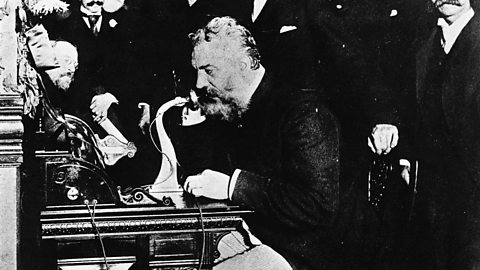
The name Alexander Graham Bell might be familiar as the man who invented the telephone in 1876.
While the first intelligible telephone conversation was made in Boston, Massachusetts on 10 March, he had the initial idea and conducted many of his first experiments at his parents’ estate in Brantford, Ontario. His family had emigrated from Scotland to Canada in 1870.
On 10 August 1876, Bell made the world’s first long-distance telephone call from Brantford to the nearby town of Paris, Ontario.
But he never intended to invent the telephone – he was initially trying to create a way for multiple telegraph messages to be sent using the same wire. He had fallen in love with Mabel Gardiner Hubbard, the daughter of the man funding his research, who said the couple couldn’t get married until Bell finished the project.
10. Santa Claus might be Canadian
The Canadian government claims sovereignty over the North Pole – meaning they have authority over the territory. Because of this, they consider Santa a Canadian citizen.
When children write to him, they address their letters to a special postcode – HOH OHO – and Canada Post processes them.
Canada may be the only country to give Santa citizenship, but others claim his homeland is elsewhere. For example, Finland claims he lives in the Korvatunturi mountain in Finnish Lapland, while the US Postal Service routes letters to the town of North Pole in Alaska.
