Baby puffin spotted on Dorset coast for first time in 30 years

- Published
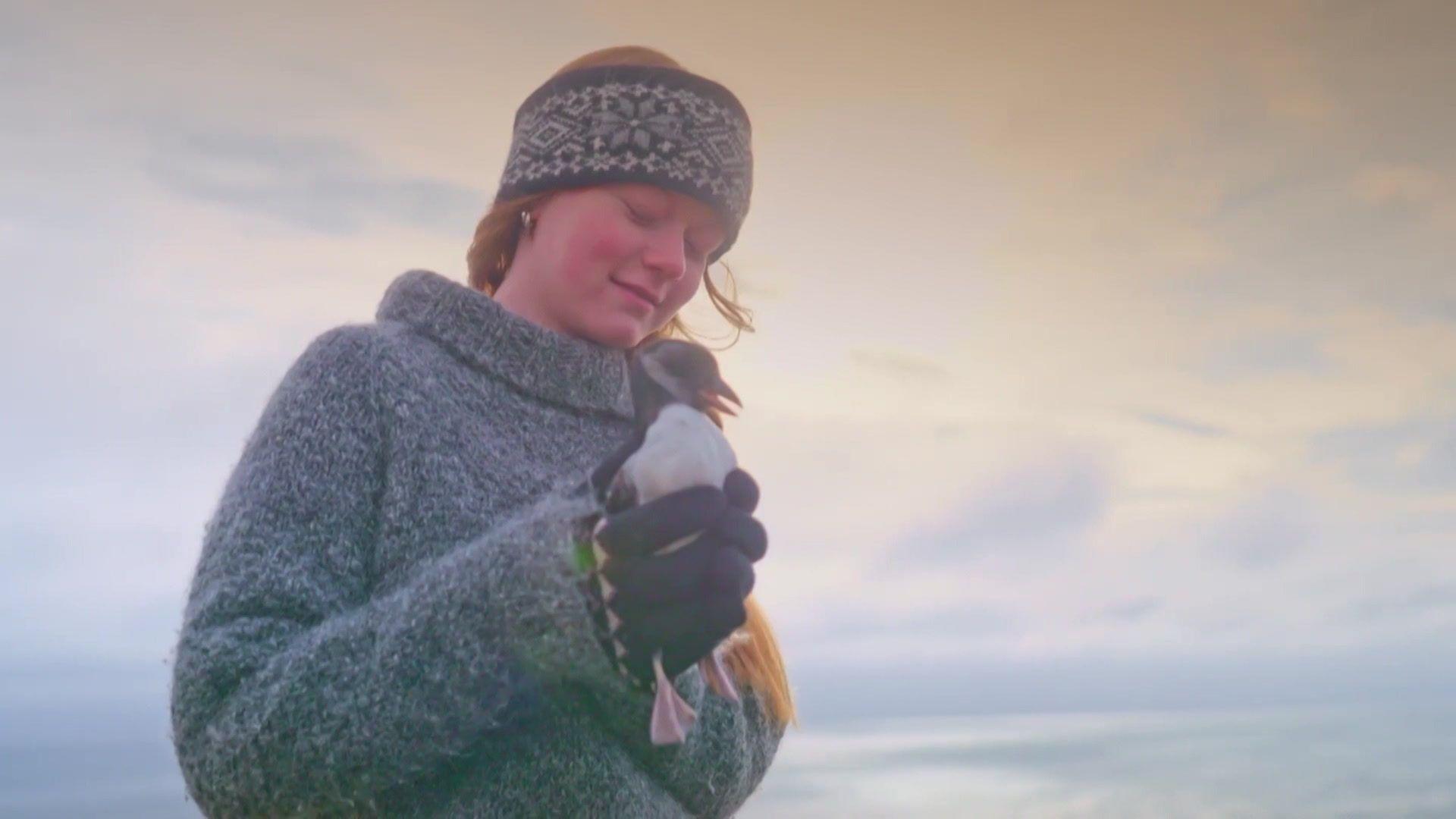
A puffin chick - known as a puffling - has been spotted on the Dorset coast in southern England for the first time in 30 years.
For years, volunteers had watched the nearby cliffs hoping to see a baby puffin, and now their wait has paid off.
Volunteers spent almost four months observing the adult puffins.
Seeing them courting, mating and carrying nesting material had given them hope that something special might be about to happen.
Record number of puffins recorded on Welsh island
- Published24 April
Puffin counting on the Isle of May. Video, 00:02:25
- Published22 July 2019
Why are people in Iceland throwing puffins off a cliff?
- Published4 September 2025

It's hoped by reviewing camera footage, the volunteers will understand more about the puffins
Dr Richard Caldow, an expert in seabirds, has estimated the puffling to be 38 to 40 days old.
Puffins typically start to grow feathers and learn to fly (a process known as fledging) between 38 and 44 days after hatching.
He said: "Seeing the puffling was a great thrill, the first puffling that's been recorded in Purbeck for a long time.
"It tells us that Purbeck puffins can still lay fertile eggs, hatch them and, at least in some years, find enough food to rear a chick and escape the attention of predators."

After the puffling leaves the ledge, it will spend several years alone at sea.
Experts say that it may return to Purbeck once it reaches about two years of age, although puffins do not normally breed until they are about four years old.
Why are there so few puffins left in the area?

Purbeck is home to the last breeding colony on mainland England's south coast, but experts say it is at risk of being lost altogether.
About 80 years ago, the colony was home to around 40 pairs of puffins, but it has now reduced to just three pairs in recent years.
The National Trust has warned the colony is still "very much in danger of extinction".

Experts say the puffling may return to breed at Purbeck once it's older
In March solar-powered motion-sensor cameras were installed deep inside the crevices in the cliff face to try and help the National Trust understand why the colony had been failing to produce chicks.
The cameras will be recovered after the breeding season so the images can be reviewed by volunteers.
In early June volunteers saw puffins carrying fish to at least two separate nesting sites, which suggested that more than one pair was attempting to raise chicks.
- Published21 May
- Published9 October 2025