Just as the domestic football season is starting to get interesting, the international break has come along and slammed the brakes on, as the UEFA Nations League gets under way. Highlights of the break include England vs Spain, Portugal vs Wales, Scotland vs Switzerland, and Northern Ireland vs Hungary.
The international break can have the potential to alter the course of a domestic season. It can disrupt a team's momentum, putting an end to winning runs through injuries, but it can also give struggling sides a chance to reset, and take stock of how they can improve. With that in mind, let's take a look at five ways you can reset your revision by taking a break while studying.

1. Reduce the micro-distractions
Micro-distractions are those little temptations that take your focus away from your studies and they can seriously derail your progress. The temptation to scroll social media, reply to a message, or check a notification can feel much more appealing than your homework, so if you want to be more productive, ditch the distractions and plan regular breaks into your study session.
Dr Carolina is a learning expert, and she recommends planning shorter, more focused study sessions. That means concentrated studying for 20-25 minutes, and then 5-10 minutes to do whatever you want, whether that's checking your phone, messaging your friends, or standing up and stretching.
Bonus tip: If you find your phone too tempting, put it in another room and switch off all notifications while you study.
You can find more tips about breaking up your studying from Dr Carolina here.
2. How to strike a study-life balance
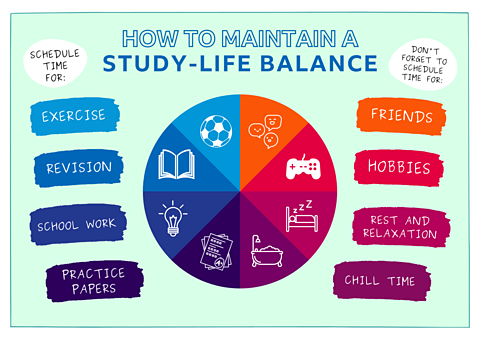
If you are currently revising for your mock GCSE or Qualification Scotland exams, then you may already have a revision timetable in place. But have you made sure to include plenty of time on it for doing the things you enjoy, like socialising and hobbies?
Scheduling time for fun activities around your revision and homework helps you remember to take breaks, and maintain a healthy study-life balance. This is important to make sure you don't burn out. Check out our useful graphic which can help you remember to strike that balance.

3. Get some exercise
We've told you that you should schedule time to do things you enjoy, but if you need some inspiration for things to do, look no further than exercise! Exercise is the perfect way to take a break from your studies. While you’re breaking a sweat, your brain produces the chemicals serotonin and dopamine, which make you feel good and improve your mood. Endorphins also rush around your body which can help you retain important information, so by popping out for a jog, you’re actually preparing your brain for your study sessions. Here are some sports you could try.
If you're not usually sporty, don't worry. Any physical activity that gets your heart pumping will help improve your fitness, and there are LOADS of ways to do just that! If you can walk or cycle to school, great! If not, can you find other ways to get active before school, like skipping, dancing, burpees or planks? Even tidying your room or playing with a pet will count if you do it with enough energy.
4. Meet up with your mates
There are a plenty of benefits to getting together with friends, spending time with your mates can add a bit of fun to your day, it can also be a great way to break up a study session. If you've arranged to go out after an intense couple of hours of revision, its a chance to let off steam, have a laugh and step away from your desk. This normality can be so valuable to your mental health during revision season.
Alternatively, you could invite a friend over to study with you. You can bounce ideas off each other, test yourselves using flashcards and help keep each other motivated. Just make sure you stay focussed while revising; you can schedule time for breaks so you can chat about other things.
5. Make a tasty treat
During study sessions you want to keep your energy up and your focus sharp. Did you know that there are certain foods that can help boost your brain for the moments you need it most? So it's a good idea to take a break to have a healthy snack. Dr Radha told us that you should choose the right kinds of snacks when revising to improve your concentration and feel alert for longer. Pair fruit with some protein or a wholegrain carbohydrate, such as an apple with nut butter or banana on toast.
Keeping hydrated whilst studying is also important. If we become dehydrated our memory and ability to focus and bring our attention to something becomes harder and is affected. Dr Radha recommends trying to drink regularly throughout the day, avoiding drinks that have a lot of sugar or have caffeine in them.
If you want to try something new to eat while you revise, check out our guide for good study foods.

Guide to School Life
Use our brand new interactive tool to help navigate the tricker areas of school life and discover some of the best content that Bitesize Study Support offers.
How to stop procrastination
Professor Fuschia Sirois gives some top tips about how to stop procrastinating when you are revising for your GCSE or Scottish exams.